
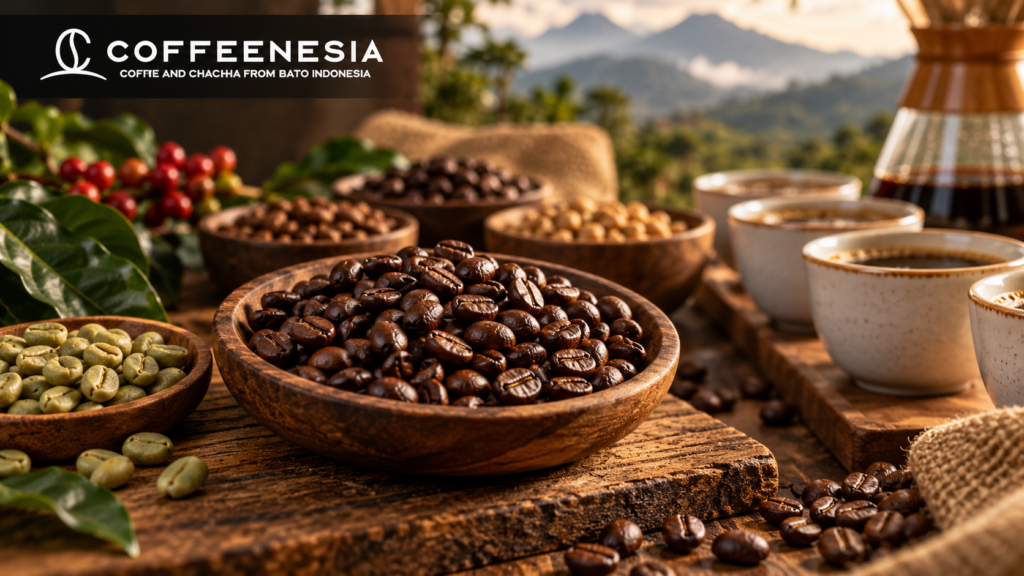
Coffee beans may look similar, but their flavor, aroma, acidity, body, and overall quality can vary significantly. These differences result from coffee genetics, growing conditions, harvesting practices, processing methods, and roasting techniques. Therefore, coffee buyers and roasters need to understand these characteristics before selecting products for their customers.
Specialty coffee beans are coffees recognized for distinctive characteristics, carefully evaluated quality, and attributes that create additional market value. Unlike products selected primarily for volume or price, specialty coffee emphasizes sensory quality, origin, processing, traceability, and product differentiation. Consequently, buyers can select coffee based on the experience they want to deliver rather than relying exclusively on commercial grades.
According to the Specialty Coffee Association (SCA), specialty coffee involves more than achieving a particular cupping score. Modern coffee evaluation considers physical characteristics, sensory attributes, perceived quality, and additional information that contributes to market value. This approach helps roasters and importers make more informed purchasing decisions.
At Coffeenesia, international buyers can explore Gayo Arabica specialty coffee from Aceh, Indonesia. Different processing methods create opportunities to evaluate distinctive flavor profiles for single-origin products, specialty cafés, and roasting businesses.
What Are Specialty Coffee Beans?
Specialty coffee beans are coffee products recognized for distinctive attributes that buyers and consumers value beyond basic commodity characteristics. These attributes may include exceptional flavor, appealing aroma, documented origin, careful processing, physical quality, and traceability. Together, they help differentiate individual coffee lots within the broader coffee market.
Historically, the specialty coffee industry commonly used a cupping score of 80 points or higher on a 100-point scale as a reference for specialty-grade coffee. However, the SCA now uses a broader approach through its Coffee Value Assessment (CVA). This framework considers physical, descriptive, affective, and extrinsic attributes to provide a more comprehensive understanding of coffee value.
Therefore, premium packaging, an attractive origin story, or a high selling price does not automatically establish specialty status. Buyers should evaluate representative samples, confirm relevant specifications, and understand the characteristics of each coffee lot. This process becomes especially important when purchasing specialty coffee beans for commercial roasting or wholesale distribution.
What Makes Specialty Coffee Beans Different from Regular Coffee?
The main difference lies in how buyers evaluate, describe, and market coffee quality. Conventional commercial coffee often emphasizes consistent supply, familiar flavor profiles, price, and purchasing volume. Meanwhile, specialty coffee generally places greater emphasis on distinctive sensory characteristics, origin information, processing methods, and detailed evaluation.
However, these categories are not absolute opposites. Commercial coffee can meet demanding quality requirements, while specialty products must still satisfy practical commercial expectations. The following comparison illustrates common differences rather than universal rules.
| Factor | Specialty Coffee | Conventional Commercial Coffee |
|---|---|---|
| Flavor | Emphasis on distinctive sensory attributes | Often prioritizes familiar, consistent profiles |
| Origin | Frequently documented in detail | May use broader origins or blends |
| Quality evaluation | Detailed physical and sensory assessment | Often follows grade and contract specifications |
| Processing | May highlight specific processing styles | Often emphasizes scale and efficiency |
| Traceability | Frequently an important selling point | Varies by supplier and contract |
| Pricing | May command a premium | Often more price-competitive |
Choosing specialty coffee beans does not guarantee that every consumer will prefer their flavor. Taste remains subjective, and different customers may prefer different levels of acidity, sweetness, bitterness, or body. Therefore, roasters should match coffee characteristics with their intended brewing methods, brand positioning, and target markets.
Arabica, Robusta, Liberica, and Excelsa: Understanding Coffee Types
Coffee species and varieties influence the potential sensory characteristics of individual lots. However, genetics alone cannot determine the final flavor because growing conditions, processing, roasting, and brewing also affect the result. Therefore, buyers should treat the following descriptions as general tendencies rather than fixed specifications.
1. Arabica Coffee: Complex and Aromatic
Arabica (Coffea arabica) is widely associated with aromatic complexity, nuanced acidity, and diverse sensory characteristics. Depending on origin and processing, Arabica coffees may display floral, citrus, berry, caramel, chocolate, or herbal notes. Their body can range from delicate to full, making the species suitable for different roasting and brewing applications.
Arabica offers considerable potential for developing specialty coffee beans with distinctive origin characteristics. For example, carefully selected lots may support premium single-origin products, filter coffee menus, and differentiated espresso offerings. However, buyers still need physical inspection and sensory evaluation to determine the actual quality of each lot.
Main advantage: Broad flavor diversity and origin differentiation.
Best suited for: Specialty cafés, single-origin roasters, and premium coffee brands.
Gayo Arabica from Aceh, Indonesia, provides one example of an origin associated with distinctive sensory characteristics. Nevertheless, the flavor depends on the particular coffee lot, variety, processing method, and roasting approach rather than the Gayo name alone.
2. Robusta Coffee: Bold and Full-Bodied
Robusta, commonly associated with Coffea canephora, generally contains more caffeine than Arabica and often produces a stronger, more bitter, and heavier-bodied cup. Depending on product quality and processing, it may develop dark chocolate, nutty, woody, or earthy characteristics. These attributes can make Robusta suitable for espresso blends and bold coffee beverages.
In addition, carefully cultivated and processed Robusta can offer distinctive sensory characteristics for higher-quality coffee programs. However, not every Robusta lot qualifies for a specialty-focused offering. Buyers should assess defects, processing quality, physical specifications, and sensory results before making commercial decisions.
Main advantage: Strong flavor intensity, body, and potential contribution to espresso crema.
Best suited for: Espresso blends, bold beverages, and customers seeking stronger coffee profiles.
3. Liberica Coffee: Distinctive and Unconventional
Liberica (Coffea liberica) has botanical and sensory characteristics that differ from Arabica and Robusta. Depending on cultivation and processing, it may offer woody, floral, fruity, or unconventional aromatic notes. These attributes can appeal to consumers interested in unusual coffee experiences.
For specialty-focused roasters, Liberica creates opportunities to introduce less familiar flavor profiles and differentiate limited product ranges. However, sourcing availability, consistency, and customer acceptance may vary. Therefore, buyers should evaluate individual samples before introducing Liberica into commercial menus.
Main advantage: Uncommon flavor characteristics and niche differentiation.
Best suited for: Experimental roasters, specialty cafés, and consumers exploring distinctive coffees.
4. Excelsa Coffee: Fruity and Layered
Excelsa is commonly classified within the broader Liberica group rather than universally recognized as a separate coffee species. It can display tart fruit characteristics, layered aromas, and distinctive flavor profiles when producers manage cultivation and processing effectively. However, actual sensory results depend on the individual lot.
Excelsa may provide opportunities for specialty coffee businesses seeking unconventional flavor experiences. Nevertheless, its characteristics can differ significantly between origins and processing methods. Consequently, sample evaluation remains essential before purchasing commercial quantities.
Main advantage: Distinctive fruity complexity and experimental blending opportunities.
Best suited for: Niche roasters and coffee businesses exploring uncommon sensory profiles.
Coffee Types Comparison
| Coffee Type | Typical Flavor Tendency | Body | Main Commercial Benefit |
|---|---|---|---|
| Arabica | Floral, fruity, chocolate, caramel | Light–full | Flavor diversity |
| Robusta | Bold, earthy, chocolate, nutty | Medium–heavy | Espresso intensity |
| Liberica | Woody, floral, fruity | Variable | Niche differentiation |
| Excelsa | Tart fruit, complex, unusual | Variable | Experimental profiles |
These characteristics provide general references rather than guaranteed tasting specifications. Importantly, Coffeenesia’s commercial focus described in its published materials is Gayo Arabica specialty coffee and cascara. Therefore, the discussion of Robusta, Liberica, and Excelsa is educational and does not imply that Coffeenesia currently supplies every type.
How Do Coffee Varieties Affect Specialty Coffee Flavor?
Within Arabica, genetic varieties influence plant characteristics and potential sensory quality. However, altitude, soil conditions, ripeness, fermentation, drying, and roasting also contribute to the finished cup. Consequently, two coffees from the same variety may deliver different flavor experiences when grown or processed under different conditions.
For buyers sourcing specialty coffee beans from Indonesia, variety information can provide useful context alongside origin and processing details. Nevertheless, the most reliable purchasing decisions still depend on evaluating representative coffee samples.
1. Bourbon: Sweetness and Balanced Complexity
Bourbon is an established Arabica variety associated with strong cup-quality potential. Depending on cultivation and processing, Bourbon coffees may develop sweetness, fruit complexity, and balanced acidity. These characteristics make the variety attractive for origin-focused roasting programs.
However, variety alone does not guarantee a particular flavor profile. Roasters should evaluate actual lots and confirm that their sensory characteristics match the intended product positioning.
2. Typica: Refined and Nuanced Characteristics
Typica is an important historical Arabica lineage with the potential to produce refined and nuanced sensory profiles. Under suitable conditions, it may develop delicate sweetness, floral notes, and balanced characteristics. Nevertheless, growing conditions and post-harvest handling significantly influence the final result.
Therefore, buyers should avoid assuming that every Typica lot delivers identical flavor characteristics. Physical quality and cupping results remain important purchasing considerations.
3. Sigararutang: An Indonesian Arabica Variety
Sigararutang is an Arabica variety cultivated in Indonesia and mentioned in Coffeenesia’s Gayo coffee product descriptions. Its characteristics depend on local growing conditions, harvesting practices, post-harvest processing, and roasting.
For international buyers, this variety may contribute to distinctive Indonesian single-origin offerings. However, roasters should confirm the variety information and sensory profile of the specific lot they intend to purchase.
4. Ateng: Variety Identification and Origin Characteristics
Ateng is a name used in Indonesian coffee production for certain compact-growing Arabica types or related planting materials. Coffeenesia includes Ateng among the varieties associated with selected Gayo processing styles. However, the name may require further clarification when precise genetic identity matters.
Consequently, buyers should request available variety and origin information before purchasing specialty coffee beans marketed under this name. Accurate product identification supports better sourcing decisions and clearer communication with customers.
For additional botanical information, read Coffee Bean Varieties: Arabica, Robusta & Other Types Explained.
How Processing Methods Change Specialty Coffee Beans
Processing methods significantly influence specialty coffee flavor by affecting fruit removal, fermentation, drying, and post-harvest handling. Even beans from the same origin may develop different sensory profiles when producers use different processing techniques. Therefore, coffee buyers should evaluate processing methods alongside variety, origin, and physical quality.
Coffeenesia publishes several processing styles for Gayo Arabica coffee, including natural, full wash, semi wash, honey aerobic, honey anaerobic, and wine-style processing. These methods create opportunities for buyers to explore different sensory expressions within the same Indonesian origin.
1. Natural Process: Fruity and Sweet
Natural processing involves drying coffee cherries while the fruit remains around the beans. This approach can develop pronounced fruit characteristics, sweetness, and a rich mouthfeel. However, producers must carefully control drying conditions to reduce the risk of defects and undesirable fermentation.
Coffeenesia describes its Gayo natural-process coffee with tropical fruit, ripe berry, floral, and milk chocolate notes. Its published sensory profile also emphasizes a full, juicy body and sweet aftertaste. These characteristics may appeal to roasters seeking expressive specialty coffee beans for single-origin offerings.
Main advantage: Fruit-forward sweetness and rich sensory expression.
Best suited for: Filter coffee, distinctive espresso, and fruit-focused specialty menus.
2. Full Wash Process: Clean and Bright
Washed processing removes the coffee skin and much of the fruit material before drying. This method often produces cleaner sensory characteristics that allow acidity and origin attributes to become more noticeable. Nevertheless, the final result still depends on bean quality, fermentation management, and drying practices.
Coffeenesia publishes lime, jasmine tea, and brown sugar notes for its Gayo full-wash offering. The company’s profile describes bright acidity, a light-to-medium body, and a clean finish. Therefore, this processing style may suit roasters seeking clarity and balanced flavor differentiation.
Main advantage: Clean flavor expression and noticeable acidity.
Best suited for: Filter coffee, specialty cafés, and origin-focused roasting.
3. Semi Wash Process: Rich and Heavy-Bodied
Semi-wash processing in Indonesia often refers to the wet-hulled tradition, although terminology and processing details can vary between producers. This approach may create a heavier body and distinctive earthy or spicy sensory characteristics. However, processing quality remains important because inadequate handling can also introduce undesirable flavors.
Coffeenesia describes dark chocolate, cedar, tobacco, and spice notes in its semi-wash Gayo coffee profile. The company also highlights relatively low acidity and a heavy mouthfeel. Consequently, these specialty coffee beans may suit buyers seeking a bold Indonesian origin profile.
Main advantage: Heavy body and rich flavor intensity.
Best suited for: Full-bodied coffee menus and selected espresso blends.
4. Honey Aerobic Process: Balanced Sweetness
Honey processing retains some mucilage around coffee beans during drying. The remaining mucilage, drying conditions, and fermentation management can influence sweetness, texture, and sensory development. However, the term does not guarantee a particular flavor or sweetness level.
Coffeenesia’s Gayo honey aerobic profile includes honey, stone fruit, raisin, and black tea notes. Its published description also emphasizes a rounded body and balanced sweetness. Therefore, roasters may consider this processing style when seeking a balance between fruit expression and flavor clarity.
Main advantage: Balanced sweetness and approachable sensory complexity.
Best suited for: Specialty filter coffee and versatile single-origin menus.
5. Honey Anaerobic Process: Complex and Expressive
Honey anaerobic processing combines mucilage retention with fermentation under controlled low-oxygen conditions. When producers manage fermentation carefully, this approach can create distinctive sensory characteristics. However, poor fermentation control may introduce unwanted flavors or inconsistencies.
Coffeenesia describes its honey anaerobic Gayo micro-lot with honey, red wine, fermented pineapple, and sweet spice notes. The company also presents this coffee as a limited-availability offering. Consequently, buyers should confirm current inventory and assess representative samples before commercial purchasing.
These specialty coffee beans may appeal to roasters developing experimental products or limited-edition menus. Nevertheless, buyers should verify whether the actual flavor profile matches their customers’ preferences.
Main advantage: Complex fermentation-driven sensory characteristics.
Best suited for: Experimental roasters, limited releases, and distinctive specialty café menus.
6. Wine-Style Process: Intense Fruit Character
Wine-style coffee processing involves fermentation approaches designed to create wine-like sensory characteristics. The term does not necessarily indicate the addition of wine or alcohol. Furthermore, production techniques and terminology may vary between suppliers.
Coffeenesia describes its wine-process Gayo coffee with red wine, fermented pineapple, cinnamon, and black cherry notes. Its published profile also emphasizes complex acidity and a long finish. These characteristics may appeal to specialty coffee buyers seeking unusual products for limited-release offerings.
However, buyers should not assume that all wine-style specialty coffee beans have the same sensory profile. Sample evaluation and clarification of the processing method remain important before confirming an order.
Main advantage: Intense fruit expression and distinctive fermentation characteristics.
Best suited for: Limited-edition releases and experimental specialty coffee programs.
Specialty Coffee Processing Comparison
| Processing Method | Published Coffeenesia Flavor Notes | Main Advantage |
|---|---|---|
| Natural | Tropical fruit, berries, milk chocolate | Fruit-forward sweetness |
| Full Wash | Lime, jasmine tea, brown sugar | Clean flavor clarity |
| Semi Wash | Dark chocolate, cedar, spices | Heavy body |
| Honey Aerobic | Honey, stone fruit, raisin | Balanced sweetness |
| Honey Anaerobic | Honey, red wine, pineapple | Complex fermentation character |
| Wine Process | Black cherry, cinnamon, wine-like fruit | Distinctive experimental flavor |
These descriptions summarize Coffeenesia’s published sensory profiles rather than independent cupping results. Actual flavor characteristics may vary between harvests, production lots, and roasting conditions. Therefore, international buyers should request current specifications and representative samples before purchasing specialty coffee beans in bulk.
Official Specialty Coffee Quality Standards: What Does the SCA Say?
The Specialty Coffee Association (SCA) provides an internationally recognized framework for understanding specialty coffee and evaluating its characteristics. Its Coffee Value Assessment (CVA) approach considers multiple dimensions of coffee value rather than relying exclusively on a traditional cupping score. This broader assessment helps industry professionals describe coffee more systematically.
For companies purchasing specialty coffee beans, the framework supports clearer discussions about physical quality, sensory characteristics, perceived quality, and origin-related information. Therefore, importers and roasters can evaluate coffee using criteria that extend beyond a single numerical score.
| SCA Assessment | What It Evaluates | Why It Matters |
|---|---|---|
| Physical | Bean appearance, moisture, size, defects | Green coffee quality |
| Descriptive | Aroma, flavor, texture, aftertaste | Sensory characteristics |
| Affective | Evaluator’s assessment of coffee quality | Buyer preferences and perceived value |
| Extrinsic | Origin, traceability, processing information | Product differentiation |
These four assessment dimensions provide complementary information rather than interchangeable measurements. Physical assessment examines green coffee characteristics, while descriptive assessment documents sensory attributes. Meanwhile, affective assessment captures evaluators’ judgments, and extrinsic assessment considers information beyond the sensory properties of the beverage.
On May 16, 2025, the SCA also announced a collaboration with the Specialty Coffee Association of Indonesia (SCAI) to advance Coffee Value Assessment implementation in Indonesia. This initiative provides additional context for the evolving evaluation and communication of Indonesian specialty coffee in international markets.
For importers and roasters, the practical recommendation is straightforward: evaluate specialty coffee beans using relevant physical specifications, representative samples, and appropriate sensory assessment. Additionally, buyers should confirm origin information, processing details, product availability, and commercial requirements before finalizing procurement decisions.
Official references: SCA – What Is Specialty Coffee? and SCA – Coffee Value Assessment.
How to Choose the Right Specialty Coffee Beans
Choosing specialty coffee beans requires buyers to consider target customers, brewing applications, flavor preferences, product quality, and commercial requirements. For example, a delicate coffee with bright acidity may perform well as a filter offering but may not suit every milk-based espresso menu. Therefore, purchasing decisions should balance sensory characteristics with practical business needs.
The following five steps can help roasters, coffee importers, and specialty café operators select suitable products.
1. Identify Your Preferred Flavor Profile
Start by determining the sensory experience your coffee business wants to offer. For bright and floral profiles, consider suitable washed Arabica lots. Meanwhile, natural or honey-processed coffees may appeal to customers who enjoy pronounced fruit characteristics and sweetness.
However, processing method alone cannot guarantee a specific flavor. Buyers should compare actual samples and evaluate how each coffee performs under the intended roasting and brewing conditions.
2. Evaluate Body and Acidity
Body refers to the perceived weight and texture of coffee, while acidity contributes brightness and sensory complexity. Neither characteristic is automatically better at a particular intensity. Instead, buyers should select a balance that matches their product positioning and customer preferences.
For example, some consumers prefer light-bodied coffee with noticeable acidity, while others favor a heavier mouthfeel and lower perceived acidity. Therefore, roasters should define their target sensory profile before comparing specialty coffee beans from different suppliers.
3. Understand Origin and Processing
Ask suppliers about the coffee’s growing origin, Arabica variety, processing method, and available harvest information. These details help buyers understand the product’s background and communicate its identity more accurately. Additionally, origin and processing information can support storytelling when the claims are documented.
However, buyers should not rely exclusively on origin descriptions or processing labels. Instead, they should connect this information with physical specifications and cupping results.
4. Request Samples and Conduct Cupping
Evaluate representative samples before confirming commercial purchasing quantities. During cupping, compare aroma, flavor, sweetness, acidity, body, and aftertaste under consistent preparation conditions. In addition, examine physical quality parameters such as defects, moisture content, and storage condition when relevant.
A structured evaluation helps buyers distinguish personal preference from measurable product characteristics. Consequently, roasters can make more informed decisions when selecting specialty coffee beans for wholesale procurement or retail roasting.
5. Match Coffee Quality with Commercial Requirements
Finally, confirm the requested grade, quantity, packaging, available inventory, and shipment arrangements. Even a coffee with desirable sensory characteristics may not suit a purchasing program if its available volume or commercial terms do not match the buyer’s requirements.
Therefore, a successful specialty coffee program needs both product quality and dependable procurement planning. Buyers should clarify minimum purchasing quantities, lead times, sample approval procedures, and delivery conditions before finalizing an order.
The sourcing process can be summarized as:
Origin → Variety → Processing → Physical Quality → Cupping → Price → Purchase Decision
For additional guidance, read Indonesia Coffee Supplier: How to Choose a Reliable Coffee Partner.
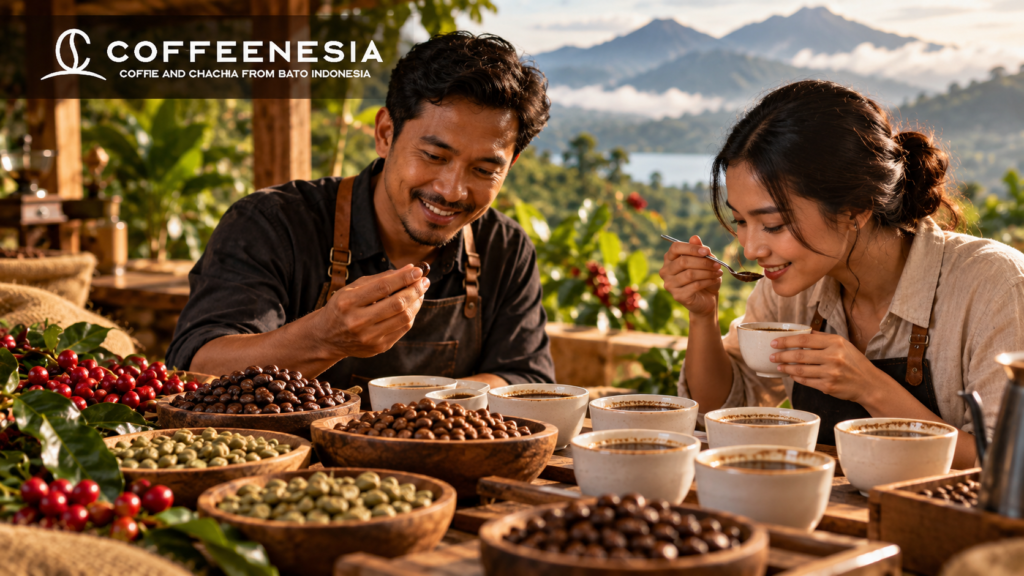
Coffeenesia Expertise in Indonesian Specialty Coffee Beans
Coffeenesia focuses on premium specialty coffee beans and cascara sourced from the Gayo Highlands of Aceh, Indonesia. Its official website describes involvement with the Gayo Coffee Cooperative, farm-level sourcing, post-harvest processing, quality control, and traceability. These activities support the company’s positioning as a supplier of Indonesian single-origin Gayo coffee for domestic and international buyers. Furthermore, its published product profiles help roasters evaluate different processing methods and sensory characteristics before purchasing.
For coffee businesses, choosing a supplier involves more than identifying the country of origin. Buyers also need information about available processing options, physical quality, sourcing conditions, and packaging. Therefore, Coffeenesia’s published portfolio provides a starting point for evaluating Gayo coffee according to specific commercial requirements.
1. Single-Origin Gayo Specialty Coffee Sourcing
Coffeenesia identifies the Gayo Highlands in Aceh as the origin of its specialty coffee beans. The company publishes information about Arabica varieties, processing methods, and sensory characteristics associated with selected Gayo offerings. Consequently, roasters and coffee distributors can explore products based on origin, processing, and their intended flavor profiles.
Single-origin sourcing also provides opportunities for product differentiation and origin-focused marketing. However, the Gayo origin alone does not guarantee particular sensory characteristics or quality specifications. Therefore, buyers should review the details of each lot and request representative samples before making purchasing decisions.
2. Multiple Specialty Coffee Processing Options
Coffeenesia offers information about natural, full-wash, semi-wash, honey aerobic, honey anaerobic, and wine-style processing methods. Unlike product descriptions that focus only on coffee species or geographic origin, these individual profiles help buyers understand how different processing approaches may influence flavor. Additionally, the company publishes sensory descriptions that roasters can use for initial product comparisons.
For example, specialty cafés developing fruit-forward filter menus may explore natural-process Gayo Arabica. Meanwhile, roasters seeking heavier-bodied espresso profiles can evaluate semi-washed coffee. However, processing labels do not guarantee a specific taste, so buyers should confirm their preferences through cupping.
These processing options allow coffee businesses to compare specialty coffee beans for different brewing applications. As a result, roasters can identify suitable candidates for single-origin releases, espresso programs, and specialty café menus.
3. Quality Control and Coffee Traceability
Quality control and traceability are important when sourcing specialty coffee for commercial use. Coffeenesia states that it oversees coffee processing and applies quality control procedures to its products. Moreover, the company publishes technical parameters for selected offerings, including altitude, moisture ranges, screen sizes, and defect information.
These details help buyers begin technical discussions about green coffee quality. However, published product descriptions do not automatically represent the specifications of every future shipment. Therefore, importers and roasters should request current lot information, available inspection records, and representative samples before confirming commercial quantities.
When evaluating specialty coffee beans, buyers should consider physical quality alongside sensory characteristics. Clear specifications help procurement teams establish expectations and compare available products more consistently.
4. Wholesale Specialty Coffee Supply and Packaging
Coffeenesia publishes partnership options for coffee and cascara, including merchant, wholesale, and distributor quantities. These categories provide an initial reference for businesses considering different purchasing volumes. However, current availability and minimum purchasing requirements should be confirmed directly with the company.
| Partnership Tier | Published Quantity |
|---|---|
| Merchant | 25 kg |
| Wholesale | 100 kg |
| Distributor | Above 250 kg |
In addition, Coffeenesia describes packaging options such as smaller pouches, airtight packaging, and larger coffee bags. Buyers sourcing specialty coffee beans in bulk should discuss packaging specifications, available quantities, storage requirements, and shipment arrangements before ordering. These considerations become particularly important for limited-production micro-lots.
Furthermore, wholesale buyers should clarify whether the requested processing method and coffee grade are available in their required volume. This approach helps prevent misunderstandings between product interest and confirmed commercial supply.
5. Agricultural Sourcing Support Through EFBA Agro
EFBA Agro International publishes information about Indonesian Arabica coffee sourcing for international buyers. Its agricultural commodity activities provide additional context for procurement, wholesale supply, and export coordination within the EFBA business ecosystem. Consequently, businesses exploring Indonesian agricultural products can use EFBA Agro as a related sourcing reference.
However, Coffeenesia’s published Gayo specialty coffee and cascara portfolio should remain the primary reference for products offered directly through Coffeenesia. Buyers should not assume that the two businesses share identical inventories, purchasing conditions, or export responsibilities.
Therefore, international buyers seeking Indonesian specialty coffee beans should confirm product specifications, supply availability, packaging, and commercial arrangements with the company responsible for their transaction.
FAQ About Specialty Coffee Beans
1. What are specialty coffee beans?
Specialty coffee beans are coffees recognized for distinctive attributes that create additional value for buyers and consumers. These attributes may include flavor, aroma, physical quality, geographic origin, processing methods, and traceability. The Specialty Coffee Association’s current Coffee Value Assessment framework considers multiple dimensions rather than relying exclusively on a traditional numerical cupping score. Therefore, buyers should evaluate the characteristics of individual coffee lots before purchasing.
2. Are specialty coffee beans always Arabica?
No. Specialty coffee can include different coffee species when their characteristics and evaluated quality create distinctive value. Arabica is widely associated with specialty coffee because of its flavor diversity, but carefully cultivated and processed Robusta or other coffee types may also demonstrate specialty potential. However, coffee species alone does not determine final quality. Therefore, buyers should examine physical specifications, processing methods, and sensory evaluation results.
3. What makes Arabica different from Robusta?
Arabica often exhibits greater aromatic complexity and nuanced acidity, while Robusta generally contains more caffeine and can produce a heavier, more intense cup. Nevertheless, both species can develop different sensory profiles depending on cultivation, processing, roasting, and brewing methods. Additionally, individual coffee lots may differ significantly within the same species. For this reason, roasters should evaluate representative samples rather than relying exclusively on general species characteristics.
4. Which specialty coffee processing method tastes the sweetest?
Natural and honey processing can produce pronounced fruit characteristics and perceived sweetness. However, neither method guarantees the sweetest cup because coffee genetics, cherry ripeness, fermentation, drying, roasting, and brewing also influence sensory results. Coffeenesia publishes natural and honey-process Gayo specialty coffee beans with different flavor descriptions. Therefore, buyers should compare representative samples to determine which profile matches their preferences.
5. Is Gayo coffee considered specialty coffee?
Gayo Arabica can qualify as specialty coffee when an individual lot demonstrates distinctive attributes and quality under relevant evaluation criteria. However, geographic origin alone does not automatically establish specialty status. Coffeenesia publishes Gayo specialty coffee offerings with various processing methods and sensory descriptions. Consequently, buyers should evaluate actual lot characteristics, physical quality, and cupping results before confirming commercial purchases.
6. What are the best specialty coffee beans for espresso?
The best specialty coffee beans for espresso depend on the desired balance of acidity, sweetness, body, and flavor intensity. Washed Arabica may provide clean and bright sensory characteristics, while natural or semi-washed coffees can offer pronounced fruit notes or fuller body. However, espresso performance also depends on roasting, grinding, extraction, and beverage recipes. Therefore, coffee businesses should test candidate beans using their intended equipment and preparation methods.
7. Can I buy specialty coffee beans in bulk from Coffeenesia?
Coffeenesia publishes wholesale purchasing options for Gayo coffee, including merchant, wholesale, and distributor categories. International buyers can inquire about available processing methods, product specifications, sampling, purchasing volumes, packaging, and export arrangements. However, current stock, MOQ, prices, and shipment terms require direct confirmation. Therefore, businesses should provide detailed procurement requirements before requesting a commercial quotation.
Source Premium Gayo Specialty Coffee Beans from Coffeenesia
Choosing premium specialty coffee beans requires more than selecting an attractive origin or premium product label. Coffee buyers need to evaluate sensory characteristics, physical quality, processing methods, traceability, and commercial suitability. Moreover, different roasting programs and customer preferences require different flavor profiles. Therefore, representative sample evaluation remains an important step before purchasing.
Coffeenesia focuses on single-origin Gayo Arabica coffee and cascara sourced from Aceh, Indonesia. Its published coffee range includes natural, full-wash, semi-wash, honey aerobic, honey anaerobic, and wine-style processing options. These profiles provide opportunities for specialty cafés, roasters, distributors, and wholesale buyers to explore Indonesian coffee according to their product requirements.
Whether your business needs bright washed Arabica, fruit-forward natural coffee, or distinctive fermentation-driven profiles, Coffeenesia can discuss available specialty coffee beans, product specifications, sample requirements, and purchasing conditions. However, buyers should confirm current lot availability and commercial terms before making procurement commitments.
Looking for premium Gayo specialty coffee beans for your business? Explore Coffeenesia’s Indonesian Coffee Products or visit Coffeenesia to discuss your sourcing needs.

Explore Coffeenesia’s Gayo Coffee Collection and discuss your preferred processing method, flavor profile, quantity, and packaging requirements with its team.
For inquiries and wholesale quotations, visit Coffeenesia or contact the team through its published WhatsApp channel.
Discover the distinctive flavor of Indonesian specialty coffee and choose the right Gayo beans for your business.