
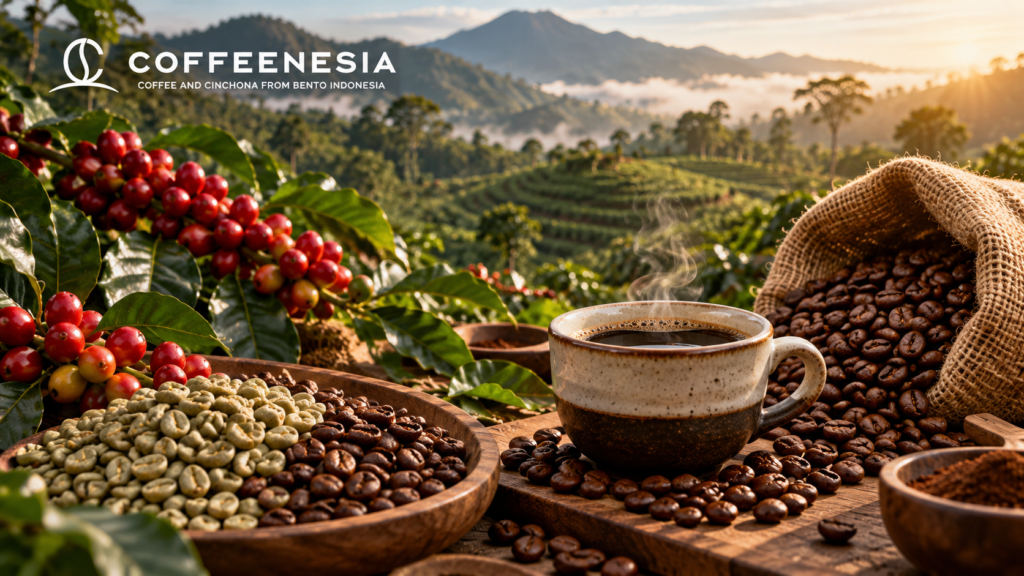
Arabica coffee beans are known for their complex aromas, natural sweetness, and diverse flavor profiles. From floral and fruity notes to chocolate, caramel, and nuts, Arabica offers a wide range of sensory experiences. Origin, cultivation, processing methods, and roasting techniques all influence these characteristics.
These beans come from the Coffee arabica plant, a coffee species associated with cooler growing conditions, aromatic complexity, and generally lower caffeine content than Robusta. However, growing altitude, coffee variety, post-harvest processing, and roast development create different flavor profiles across production regions.
Indonesia offers distinctive Arabica origins, including the Gayo Highlands of Aceh, North Sumatra, Java, Sulawesi, and Flores. For businesses seeking Indonesian single-origin coffee, Coffeenesia supplies Gayo Arabica and related coffee products for roasters, cafés, distributors, and international buyers.
What Are Arabica Coffee Beans?
Arabica coffee beans are the seeds of coffee cherries produced by the Coffea arabicaplant. The species originated in Ethiopia’s highland environments and is now cultivated across major coffee-producing countries in Africa, Asia, and the Americas.
Arabica plays an important role in the specialty coffee industry because different varieties can develop distinctive aromas, acidity, sweetness, and body. Nevertheless, coffee quality depends on more than species. Cultivation practices, cherry maturity, processing, sorting, roasting, and brewing all influence the final cup.
The species includes cultivated varieties such as Typica, Bourbon, and Gesha. World Coffee Research’s Arabica catalog documents differences in agronomic performance, adaptability, and cup-quality potential. These characteristics help farmers and buyers evaluate varieties according to growing conditions and commercial requirements.
What Are the Main Characteristics of Arabica Coffee Beans?
Arabica has several recognizable physical, chemical, and sensory characteristics. However, these traits represent common tendencies rather than fixed specifications for every coffee lot. Buyers should evaluate individual samples to confirm the quality and flavor profile they require.
1. Complex Aroma and Flavor
Arabica can develop floral, fruity, citrus, chocolate, caramel, and nutty notes. Its aromatic diversity makes it particularly suitable for specialty coffee and single-origin offerings.
However, the actual flavor profile depends on origin, variety, processing, and roasting. Therefore, roasters should evaluate representative samples instead of assuming that every Arabica lot offers identical sensory characteristics.
2. Noticeable Acidity and Natural Sweetness
Arabica often displays more noticeable acidity than conventional commercial Robusta. In coffee tasting, acidity refers to sensory brightness rather than necessarily indicating an unpleasant sour taste.
A balanced cup may combine bright acidity, natural sweetness, and a pleasant aftertaste. However, immature cherries, uncontrolled fermentation, or unsuitable roasting can also produce undesirable flavors.
3. Generally Lower Caffeine Content
Arabica typically contains less caffeine than Robusta. A coffee chemistry reference available through Indonesia’s Ministry of Tourism digital library lists indicative caffeine concentrations of approximately 1.2–1.5% for Arabica and 2.2–2.7% for Robusta in green beans.
These figures describe general chemical differences rather than fixed values for every brewed cup. Actual caffeine intake also depends on coffee dosage, roast conditions, brewing methods, and serving size.
4. Adaptation to Highland Growing Conditions
Arabica generally performs well in cooler highland environments. A scientific review of coffee terroir identifies commonly suitable growing conditions at approximately 1,000–2,100 meters above sea level, with average daily temperatures around 18–22°C.
Nevertheless, suitable elevation varies with latitude, local climate, variety, and farming practices. Higher altitude alone cannot guarantee superior coffee quality because cultivation, cherry maturity, and processing also influence the final product.
5. Distinct Physical Bean Characteristics
Arabica green beans often have an elongated appearance and a curved central crease. Robusta beans tend to look rounder, although varieties and grading practices can create considerable differences.
Physical appearance can support preliminary identification, but buyers should not rely on bean shape alone to verify species or origin. Supplier documentation, traceability, and appropriate testing offer stronger verification when product identity matters.
What Do Arabica Coffee Beans Taste Like?
Arabica coffee does not have one universal flavor. Its sensory characteristics range from delicate floral and citrus notes to chocolate, nuts, spices, and richer earthy profiles. Growing conditions, varieties, post-harvest processing, and roasting influence these differences.
| Flavor characteristic | Possible tasting notes | Sensory description |
|---|---|---|
| Floral | Jasmine, blossom | Fragrant and delicate |
| Fruity | Berry, stone fruit | Sweet or fruit-forward |
| Citrus | Orange, lemon | Bright and refreshing |
| Chocolate | Cocoa, dark chocolate | Rich and rounded |
| Nutty | Almond, hazelnut | Warm and smooth |
| Caramel | Toffee, brown sugar | Sweet and rounded |
| Herbal | Herbal or tea-like | Aromatic and distinctive |
These descriptions refer to possible tasting notes rather than ingredients added to the coffee. Roasting and brewing can emphasize different characteristics, so buyers should verify flavor profiles through cupping and sample evaluation.
How Do Processing Methods Affect Arabica Flavor?
Post-harvest processing significantly influences coffee’s sensory characteristics. Washed, natural, honey, and wet-hulled methods can create different flavor experiences, although outcomes vary depending on producer practices and batch conditions.
| Processing method | Common sensory tendency |
|---|---|
| Washed | Cleaner flavor clarity and distinct acidity |
| Natural | More pronounced fruit sweetness or fermented-fruit characteristics |
| Honey | Sweetness and body, depending on processing control |
| Wet-hulled | Often substantial body with earthy, herbal, or spicy notes |
Coffeenesia’s published Gayo coffee portfolio includes washed, honey, and natural processing options. These selections accommodate different sourcing preferences among specialty roasters and distributors. However, buyers should confirm current availability and request samples before purchasing.
Arabica vs. Robusta: What Is the Difference?
Arabica and Robusta are two commercially important coffee types. Arabica comes from Coffea arabica, while Robusta refers to coffee from Coffea canephora. Their common growing conditions, caffeine concentrations, and sensory profiles differ.
| Comparison | Arabica | Robusta |
|---|---|---|
| Species | Coffea arabica | Coffea canephora |
| Typical flavor | Complex, sweet, fruity, or floral | Stronger, often bitter, nutty, or earthy |
| Acidity | Often more noticeable | Often lower perceived acidity |
| Body | Light to full | Frequently medium to full |
| Caffeine | Generally lower | Generally higher |
| Growing conditions | Commonly cooler highlands | Often warmer, lower elevations |
| Applications | Specialty coffee, single origin, espresso | Espresso blends, instant coffee, specialty Robusta |
Roasters frequently choose Arabica for origin-focused specialty offerings, while Robusta can contribute desirable body and other characteristics to espresso blends and commercial products. Nevertheless, well-produced Fine Robusta can also deliver excellent sensory quality.
For a broader comparison, explore Coffee Bean Varieties: Arabica, Robusta & Other Types Explained.
Where Are Arabica Coffee Beans Grown?
Arabica grows across major coffee-producing regions, particularly in suitable highland environments. Brazil, Colombia, Ethiopia, and several countries across Central America, Africa, and Asia contribute to global production.
However, geographic origin alone does not determine coffee flavor. Research on coffee terroir highlights the influence of genetics, climate, altitude, cultivation practices, and post-harvest processing. Therefore, buyers should consider both origin characteristics and actual lot quality.
1. Ethiopia – Floral and Fruity Arabica
Ethiopia is historically important as the native region of Coffea arabica. Coffee from Ethiopian growing regions may display floral, citrus, tea-like, or fruity characteristics.
However, these profiles vary considerably across production areas and processing methods. Buyers should compare individual lots rather than assuming that all Ethiopian coffee shares identical tasting notes.
2. Colombia – Balanced and Aromatic Coffee
Colombia is widely recognized for highland Arabica cultivation. Depending on origin and processing, Colombian coffee can demonstrate fruit acidity, caramel sweetness, chocolate notes, and balanced body.
Nevertheless, regional microclimates, coffee varieties, and post-harvest practices influence each batch. For this reason, origin identification should complement rather than replace sensory evaluation.
3. Brazil – Nutty and Chocolate-Oriented Profiles
Brazil is a major supplier of Arabica for commercial and specialty markets. Depending on region, variety, and processing, Brazilian coffee may develop nutty, chocolate, caramel, or fruit-oriented characteristics.
These profiles can suit espresso blends and single-origin products. However, roasters should compare available grades, processing styles, and cupping results before selecting beans for specific applications.
4. Indonesia – Distinctive Highland Arabica
Indonesia produces Arabica across several regions, including Aceh Gayo, North Sumatra, Java, Sulawesi, Bali, and Flores. These origins feature different varieties, processing traditions, microclimates, and growing conditions.
For international buyers, Indonesian Arabica coffee beans offer diverse sensory options, ranging from full-bodied profiles to cleaner and fruit-forward characteristics. Coffeenesia focuses on Gayo Arabica from Aceh, making this origin particularly relevant to its wholesale coffee offering.
Indonesian Gayo Arabica Coffee: Origin and Characteristics
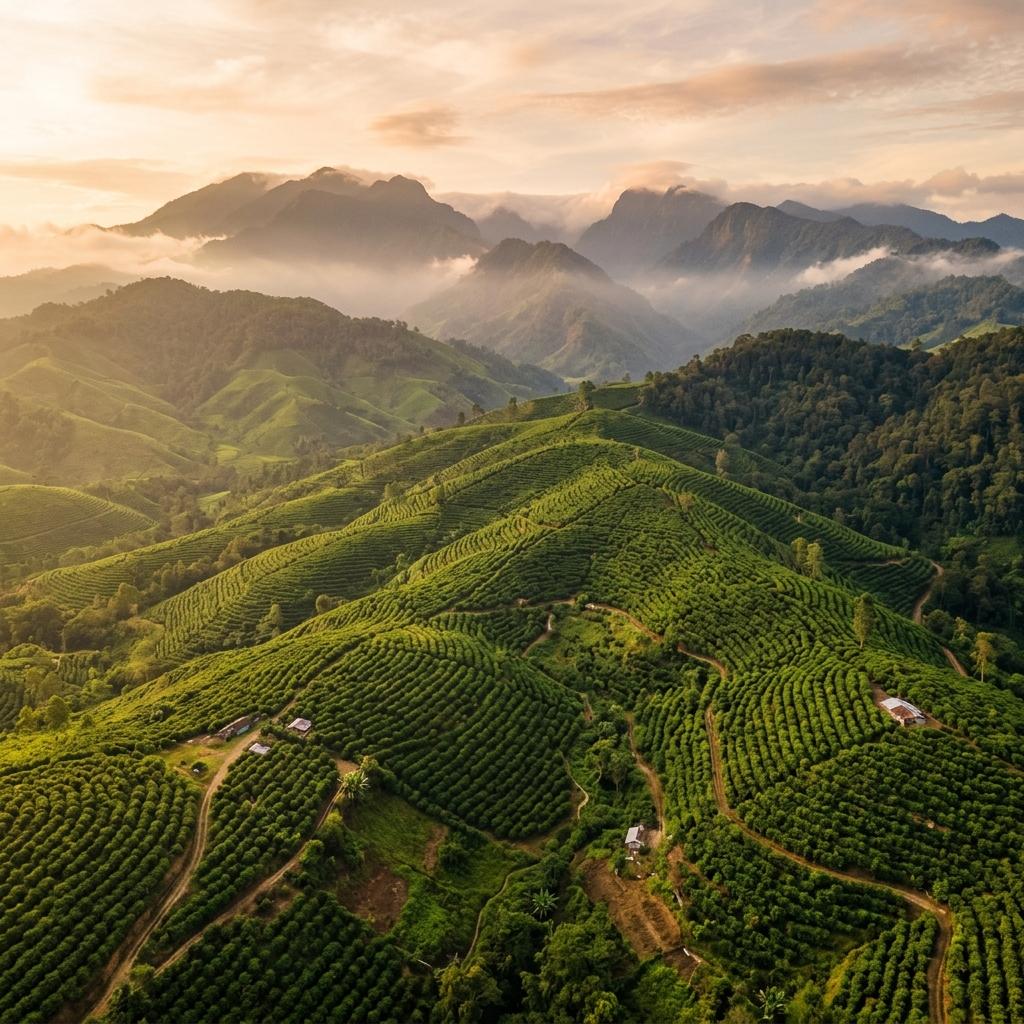
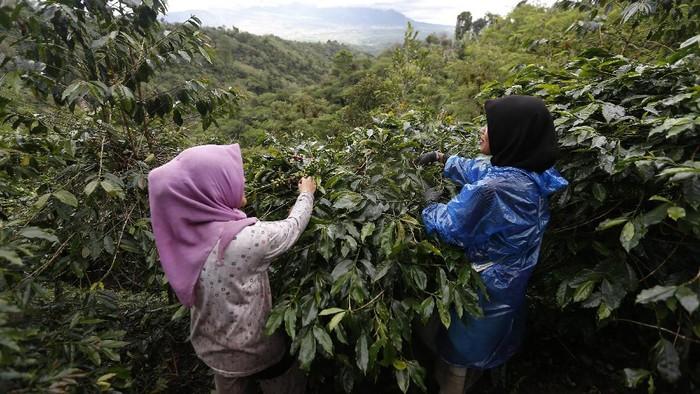
Gayo Arabica coffee originates from the highlands of Aceh, northern Sumatra, Indonesia. The region is recognized for highland coffee cultivation and a diverse range of profiles influenced by local environments and processing practices.
EFBA Agro’s published Gayo product information describes cultivation at approximately 1,200–1,600 meters above sea level, together with medium-to-full body, balanced acidity, and floral or herbal aromatic characteristics. A separate wet-hulled specification describes full body, lower acidity, and notes such as dark chocolate, spice, and earthiness.
These descriptions illustrate how processing and lot selection can influence the final profile. International buyers should verify the actual crop, processing method, and cupping result before assuming a particular tasting note.
Why Do Coffee Buyers Choose Gayo Arabica?
Gayo Arabica can offer origin differentiation for specialty roasters, premium cafés, distributors, and private-label coffee brands. Its commercial appeal includes a recognized Indonesian origin, a range of processing methods, and the potential for distinctive sensory characteristics.
For roasters seeking premium Indonesian coffee, Gayo can provide an alternative to more commonly sourced international origins. However, successful sourcing still depends on verified grades, representative samples, current inventory, and reliable logistics.
Buyers can explore Coffeenesia Coffee from Gayo for product and processing information.
Official Data: Arabica Coffee Production and Market Conditions
Indonesia remains an important producer of Arabica and Robusta coffee. However, the two species represent different proportions of the country’s production, which affects sourcing availability and commercial planning.
According to the USDA Foreign Agricultural Service’s May 2026 Indonesia Coffee Annual, total Indonesian green coffee production is forecast at approximately 11.38 million 60-kilogram bags for the 2026/27 marketing year. Of this total, approximately 1.38 million bags are Arabica and 10 million bags are Robusta.
Indonesia Coffee Production Forecast — 2026/27
11.38M
Total 60-kg bags
1.38M
Arabica bags
10.0M
Robusta bags
Estimated production composition
Arabica 12.1% · Robusta 87.9%
Source: USDA FAS, Indonesia Coffee Annual, May 15, 2026. Forecast figures, not finalized harvest totals.
For coffee importers and roasters, these figures illustrate an important distinction: Indonesia produces substantial Robusta volumes, while Arabica represents a smaller, commercially valuable segment. However, national production forecasts do not establish the availability, quality, or export readiness of a particular Arabica lot.
The International Coffee Organization (ICO) also publishes monthly coffee market reports covering international coffee prices, trade, and supply-demand conditions. Its September 2026 report was available by October 9, 2026, providing a timely reference for buyers evaluating the broader market.
Why Choose Arabica Coffee Beans for Your Business?
Arabica offers opportunities for businesses seeking differentiated coffee profiles. Its diverse origins and processing methods allow roasters and coffee brands to design offerings that suit different customer preferences.
1. Single-Origin Product Differentiation
Single-origin Arabica allows businesses to communicate a coffee’s geographic source and relevant production characteristics. This can support cafés and coffee brands that want to offer distinctive products rather than relying exclusively on conventional blends.
For example, Gayo Arabica can provide a clear Indonesian origin story combined with multiple processing options. However, origin claims should follow traceable sourcing information and the actual lot being sold.
2. Flexible Roasting Applications
Arabica coffee can support light, medium, and dark roasting approaches. Lighter roasting may preserve more recognizable origin characteristics, while greater roast development can emphasize chocolate, roasted, and caramelized flavors.
Roasters should select the roast profile according to bean density, processing method, green coffee quality, and intended brewing application. No single roast level produces the best result for every Arabica coffee.
3. Premium Café and Retail Opportunities
Arabica can support specialty espresso, pour-over coffee, filter brewing, and premium packaged coffee products. These applications allow businesses to develop different price points and consumer experiences.
Nevertheless, the Arabica name alone does not justify premium pricing. Consistent roasting performance, suitable flavor, reliable supply, and product differentiation are essential to achieving sustainable commercial value.
Coffeenesia’s Expertise as an Indonesian Arabica Coffee Supplier
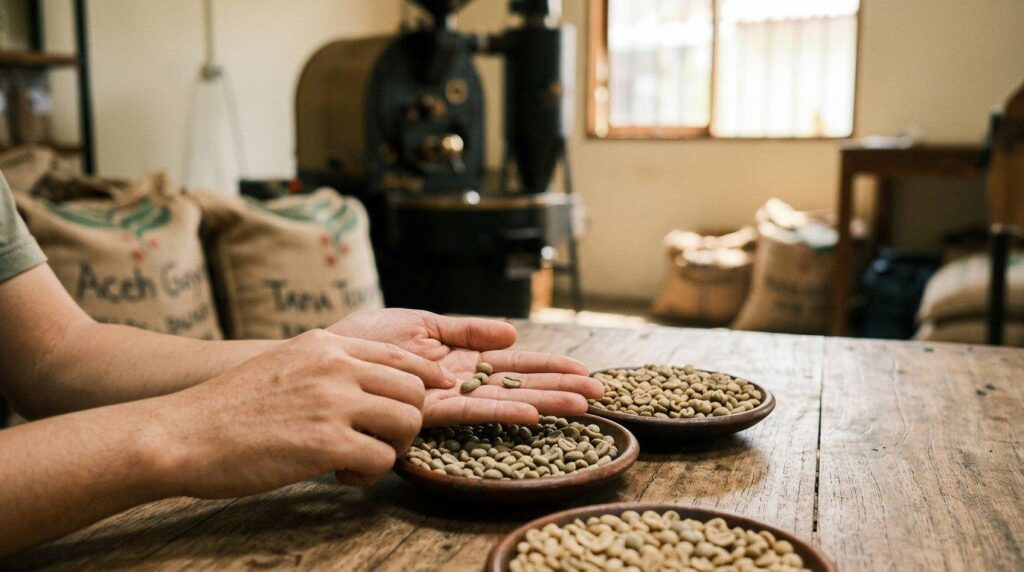
Coffeenesia focuses on Indonesian single-origin coffee and cascara, particularly products sourced from the Gayo Highlands of Aceh. Its official website describes direct sourcing relationships, quality control, traceability, customizable packaging, and wholesale supply arrangements.
These capabilities are relevant for coffee roasters, cafés, importers, and distributors seeking Indonesian Arabica with identifiable origins. However, buyers should verify current inventory, lot specifications, and commercial conditions before confirming purchases.
1. Gayo Arabica Coffee Sourcing
Coffeenesia publishes Gayo Arabica among its principal coffee offerings. Its product pages describe options for green coffee beans, roasted beans, and various processing methods, including washed, honey, and natural processing.
This provides buyers with opportunities to compare different sensory profiles from the same producing region. For more details, see Gayo Coffee Arabica Beans Wholesale from Indonesia.
2. Coffee Quality Control and Processing
Coffeenesia describes a sourcing and handling process involving selective ripe-cherry harvesting, prompt post-harvest handling, drying, and quality evaluation. Its website also emphasizes transparency regarding coffee origin and processing information.
These published practices are relevant to maintaining coffee quality. However, commercial buyers should request the actual lot’s moisture specification, defect grading, processing details, and representative samples before approving an order.
3. Wholesale Supply and Packaging Options
Coffeenesia lists several wholesale purchasing tiers on its official website.
| Partnership tier | Published minimum quantity |
| Merchant | 25 kg |
| Wholesale | 100 kg |
| Distributor | Above 250 kg |
These are Coffeenesia’s published general partnership tiers for its coffee and cascara portfolio, not guaranteed availability for every Arabica product. Buyers should confirm the applicable MOQ, packaging, current stock, and delivery arrangements for the requested lot.
Coffeenesia also advertises packaging options from smaller pouches to bulk bags. Businesses seeking retail-ready packaging or private-label coffee should discuss specifications and minimum volumes before placing an order.
4. Connection to EFBA Agro International
EFBA Agro International publishes sourcing and export information for Indonesian agricultural commodities, including Gayo Arabica coffee. Its official product page lists an example Gayo green coffee specification covering grade, moisture, screen size, processing method, packaging, and loading arrangements.
This information complements Coffeenesia’s coffee-focused offering by providing additional context about agricultural commodity procurement and export preparation. However, specifications and minimum orders published by EFBA Agro should not be automatically applied to Coffeenesia quotations.
The wider EFBA Digital Mulia ecosystem also publishes business development and partnership services. These activities are relevant to commercial coordination, but they should not be presented as independent proof of the quality of a particular Arabica shipment.
How to Choose Arabica Coffee Beans for Wholesale Purchasing
Commercial coffee buyers should evaluate technical quality and business suitability before purchasing Arabica in larger volumes. A structured sourcing process helps reduce the risk of selecting beans based only on origin descriptions or attractive tasting notes.
1. Define Your Coffee Application
Determine whether the beans will be used for specialty filter coffee, espresso, blends, retail packaging, or resale. Each application may require a different flavor, roast performance, and commercial price point.
2. Confirm the Origin and Processing Method
Request the geographic origin, available variety information, harvest period, and processing method. These factors provide context for evaluating flavor and planning consistent purchasing.
3. Review Green Coffee Specifications
For green coffee orders, buyers should discuss moisture content, defect count, screen size, physical condition, and storage requirements. Specifications should follow the actual product and purchasing agreement rather than general descriptions of premium Arabica.
4. Request Samples and Conduct Cupping
Representative samples allow buyers to assess aroma, acidity, sweetness, body, balance, aftertaste, and potential defects. Ideally, the purchasing team should evaluate samples under consistent roasting and cupping conditions.
5. Confirm Commercial and Delivery Terms
Before ordering, establish available volume, packaging, price, lead time, shipping method, payment terms, and responsibilities for applicable export documentation. Buyers should also confirm relevant import requirements in their destination markets.
The recommended process is:
Coffee Origin → Processing Method → Quality Specification → Sample Cupping → Price Evaluation → Supply Confirmation → Shipment Planning
Frequently Asked Questions About Arabica Coffee Beans
What are Arabica coffee beans?
Arabica coffee beans are seeds produced by the Coffea arabica plant. They are commonly associated with complex aromas, natural sweetness, and diverse flavor profiles. Actual characteristics depend on variety, cultivation, processing, roasting, and brewing.
What do Arabica coffee beans taste like?
Arabica can display floral, fruity, citrus, caramel, chocolate, nutty, and other flavor notes. Its acidity is often more noticeable than that of conventional Robusta. However, the final flavor varies considerably between origins and processing methods.
Are Arabica coffee beans better than Robusta?
Neither species is automatically better for every application. Arabica often provides aromatic complexity and distinctive acidity, while Robusta can offer stronger bitterness, higher caffeine content, and substantial body. Buyers should evaluate quality and intended use rather than relying only on species.
Do Arabica coffee beans contain less caffeine?
Generally, yes. Arabica commonly has a lower caffeine concentration than Robusta in green beans. However, caffeine in a brewed serving depends on the coffee dose, brewing method, extraction, and serving size.
Where are Arabica coffee beans grown?
Arabica grows in many coffee-producing countries, including Brazil, Colombia, Ethiopia, and Indonesia. In Indonesia, important Arabica regions include Aceh Gayo, North Sumatra, Java, Sulawesi, and Flores. Growing conditions and processing influence the characteristics of each origin.
What is special about Gayo Arabica coffee?
Gayo Arabica comes from the highlands of Aceh, Indonesia. It is associated with a range of profiles that may include substantial body, balanced acidity, chocolate, herbal, or floral notes depending on processing and lot characteristics. Its distinct geographic identity also makes it attractive to single-origin coffee buyers.
Does Coffeenesia supply Arabica coffee beans?
Yes. Coffeenesia publishes Gayo Arabica coffee beans as part of its specialty coffee portfolio. The company provides information about origin, processing options, packaging, and wholesale purchasing. Buyers should confirm current product availability and specifications before ordering.
Can I order Arabica coffee beans in bulk from Coffeenesia?
Coffeenesia publishes general wholesale partnership tiers beginning at 25 kg, with larger tiers for wholesale and distributor customers. Actual quantities and prices depend on the selected coffee, inventory, and commercial arrangements. Buyers can contact Coffeenesia for quotations and sample discussions.
Source Premium Indonesian Arabica Coffee with Coffeenesia
Arabica coffee beans offer diverse sensory characteristics, from floral and fruity aromas to rich chocolate and caramel notes. However, successful sourcing requires more than selecting a coffee species because origin, processing, quality control, roasting performance, and supply reliability determine commercial suitability.
For specialty roasters, cafés, and international buyers, Indonesian Gayo Arabica provides a distinctive option supported by its highland origin and processing diversity. Coffeenesia connects buyers with Gayo coffee sourcing information, wholesale options, and packaging arrangements.
Origin Selection → Flavor Evaluation → Quality Verification → Wholesale Planning → Reliable Coffee Sourcing

Looking for premium Arabica coffee beans from Indonesia? Explore Coffeenesia’s Gayo coffee products and contact the team to discuss available lots, processing methods, samples, wholesale quantities, packaging, and delivery requirements.