
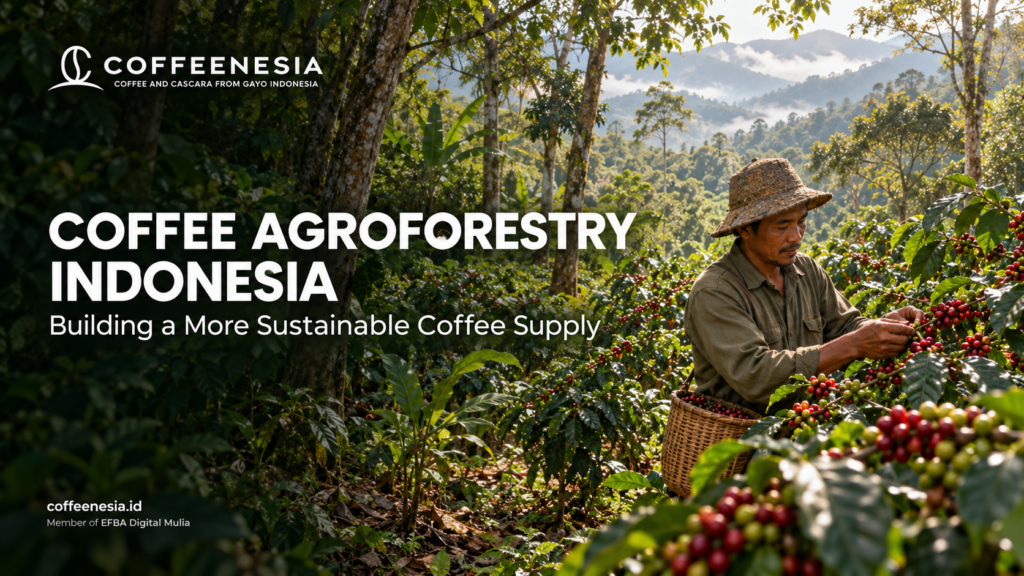
Coffee agroforestry Indonesia refers to farming systems that integrate coffee plants with trees and other compatible vegetation. This approach connects coffee production with the management of the wider farm environment. However, shade trees alone do not establish that a coffee lot meets a buyer’s sustainability requirements. Buyers should examine farm practices, origin records, product quality, and the evidence supporting specific claims.
Building a more sustainable coffee supply also requires coordination beyond the farm. Producers need practical management plans, while processors and exporters need consistent handling and clear lot identification. Meanwhile, buyers should communicate their quality requirements, documentation expectations, and purchasing schedules. Together, these responsibilities turn sustainability goals into actions that businesses can review.
For buyers exploring coffee agroforestry Indonesia, the starting point should be a clearly defined sourcing requirement. Identify the environmental or social practices you want to understand before requesting supporting information. Next, ask suppliers what evidence they can provide for the proposed coffee lot. This approach keeps purchasing discussions focused on verifiable practices rather than broad descriptions.
What Does Coffee Agroforestry Mean for Indonesian Supply?
Coffee agroforestry Indonesia encompasses different production systems rather than one uniform farming method. Farms may combine coffee with different tree species and use different approaches to canopy management. Consequently, a general “shade-grown” description cannot explain every aspect of farm performance. Buyers should ask how producers manage the system and which records support their explanation.
Research from Malang provides a relevant Indonesian example. A study in Pelita Perkebunan, Volume 41, Number 3 (2025), examined soil organic carbon across different coffee-based agroforestry systems. Its comparison highlights why tree composition and management deserve attention when evaluating environmental outcomes. However, findings from one study should not become a nationwide benchmark or a carbon claim for an unrelated coffee lot. Readers can consult the published study on soil organic carbon in Malang. mail.ccrjournal.com
In practical sourcing discussions, coffee agroforestry Indonesia should connect farm information with the coffee available for purchase. Ask suppliers to explain the production origin, participating farms or producer groups, and available descriptions of farming practices. Then confirm how they link that information to the proposed lot. Without this connection, a farm story may provide useful context but leave the shipment’s sourcing claim unresolved.
Commercial suitability also requires a separate review. Buyers should assess samples, processing information, specifications, available quantities, and delivery arrangements against their requirements. Environmental information does not replace product evaluation, just as an acceptable sample does not verify every sustainability claim. Reviewing both areas gives procurement teams a more complete basis for approval.
Ultimately, a credible coffee agroforestry Indonesia sourcing approach combines clear claims with relevant evidence. Producers explain their practices, suppliers maintain the connection between origin and product, and buyers define their acceptance requirements. Where information remains incomplete, identify the gap and agree on the next verification step. This creates a practical foundation for developing a more transparent coffee supply relationship.
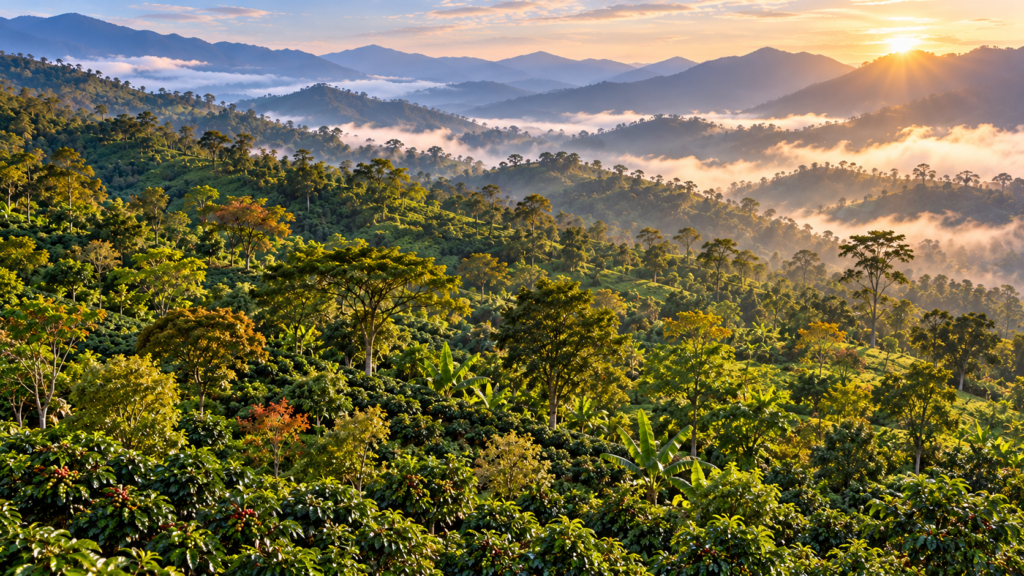
How Agroforestry Can Support a More Sustainable Coffee Supply
1. Connect Tree Management with Farm Performance
Tree cover should form part of a broader farm-management plan. Farmers and technical advisers need to consider coffee performance alongside the functions of other trees. Research involving 179 farms in Costa Rica and Guatemala found that productive coffee farming could coexist with moderate shade under the studied conditions. However, those findings do not establish a universal shade prescription for Indonesian farms. Read the published research on shade and coffee productivity for its methods and limitations. frontiersin.org
For buyers exploring coffee agroforestry Indonesia, ask how producers manage trees within their particular farming system. Request information about tree species, management practices, and available production records. Next, distinguish documented observations from expected benefits that still require assessment. This keeps sourcing discussions connected to actual farm conditions.
2. Evaluate Soil Outcomes with Local Evidence
The Malang study reported soil organic carbon stocks of 42.7 tonnes of carbon per hectare under complex agroforestry, compared with 39.9 tonnes under unshaded coffee. The other two shade systems recorded lower stocks, illustrating why the presence of trees alone cannot predict the same outcome everywhere. These measurements describe the study’s sites and methods rather than a national average. They also do not establish carbon credits for another farm. Consult the Malang soil organic carbon study before interpreting its findings. ccrjournal.com
When evaluating coffee agroforestry Indonesia, ask whether an environmental claim refers to measurements from the actual production area. Check who collected the information, when the assessment occurred, and what it measured. If a supplier cites research from another location, treat it as background rather than proof of the offered lot’s performance. This distinction supports more precise sustainability communication.
3. Include Farmers’ Commercial Requirements
A sustainable sourcing plan should consider the work and resources farmers need to maintain production. Buyers can begin by discussing quality expectations, purchasing schedules, and delivery assessment procedures. Clear requirements help producers understand the commercial commitment before agreeing to supply. Meanwhile, buyers should evaluate actual outcomes rather than assume that a sustainability description automatically improves farmer income.
For coffee agroforestry Indonesia sourcing, explain which requirements are essential and which need further discussion. Ask producers or suppliers about available quantities and realistic preparation schedules. Then document the agreed specifications, responsibilities, and commercial terms. This gives both parties a clearer basis for managing the purchasing relationship.
4. Maintain Quality through Processing and Storage
An agroforestry description and a product-quality assessment answer different questions. Buyers still need to review processing information, physical specifications, and representative samples. Therefore, agree on acceptance procedures before confirming a commercial order. Keep the approved sample linked to the relevant lot and supporting records.
Ask suppliers how they identify material during processing, storage, and preparation for shipment. Confirm whether the final order will contain the same lot that the buyer evaluated. If the supplier proposes a substitution, review the replacement before approval. These checks connect farm information with the product the customer will actually receive.
5. Make Sourcing Claims Specific and Verifiable
Define the evidence behind terms such as agroforestry, organic, traceable, or certified. A photograph of trees may illustrate a farm, but it cannot establish every practice associated with a shipment. Ask which farms supplied the lot and what records support the description. Where certification matters, verify its scope and applicability separately.
Credible coffee agroforestry Indonesia communication should explain what the available evidence supports. Use specific descriptions of origin or documented practices when broader claims remain unverified. Next, identify information gaps and agree on any further checks. This approach helps businesses communicate clearly without promising outcomes their records cannot establish.
Official Resources and Research: What Buyers Can Conclude
Technical resources can help buyers understand agroforestry and prepare more useful supplier questions. For example, FAO’s Family Farming Knowledge Platform lists a Coffee Agroforestry Training Handbook. Such guidance provides background for discussing farming systems and management objectives. However, a technical handbook does not certify a supplier or validate a particular shipment.
For Indonesian sector context, buyers can also consult BPS’s Indonesian Permanent Estate Crops Statistics 2024. National statistics and farm-level evidence serve different purposes. Sector publications provide broader context, while producer records help explain the source of an individual lot. Neither should replace the other when reviewing a sourcing claim.
When researching coffee agroforestry Indonesia, separate general guidance, local research, and transaction-specific information. Guidance explains approaches, research reports findings under defined conditions, and supplier records describe the proposed supply. Compare each statement with the evidence relevant to it. This makes purchasing decisions easier to explain and review.
What Global Buyers Should Ask Before Purchasing
Before approving an order, translate sustainability objectives into specific sourcing questions. Request information that relates to the proposed lot rather than the supplier’s portfolio in general. Then review farm information alongside product specifications and commercial commitments. The following questions provide a practical starting point.
| Sourcing question | Information to request |
|---|---|
| Where did the coffee originate? | Production area and available producer or supplier records |
| What supports the agroforestry description? | Farm-specific information about trees and management practices |
| Which lot will the buyer receive? | Lot identification, harvest information, and processing method |
| Does the coffee meet purchasing requirements? | Specifications, representative samples, and acceptance criteria |
| What supports a certification claim? | Relevant certificate, scope, and verification details |
| Can the supplier fulfil the order? | Confirmed quantity, packaging, lead time, and commercial terms |
| What happens if the proposed supply changes? | Substitution approval process and updated supporting information |
Use these questions before making coffee agroforestry Indonesia claims in your own marketing. Match each statement to information the supplier can substantiate. If evidence remains incomplete, describe the known origin or practices more precisely. Keep the supporting records with the purchasing documentation so future reviews can follow the same reasoning.
Coffeenesia’s Expertise in Gayo Coffee and Cascara
Coffeenesia presents its business around Indonesian coffee and cascara from the Gayo Highlands of Aceh. Its published information describes sourcing, sorting, processing, and origin transparency as parts of its approach. Buyers can use this information to begin discussions about product quality and available sourcing records. However, any farm-specific agroforestry claim requires supporting evidence for the proposed supply.
The Coffeenesia Gayo coffee portfolio lists processing options including natural, full wash, semi wash, and honey processes. Buyers can use these options to identify products for sample evaluation. Next, ask the team to confirm the processing method and specifications available for the proposed lot. Assess the sample against your intended application rather than assuming that every lot will match a general product description. coffeenesia.id
Coffeenesia also publishes Gayo cascara product information, providing a separate product category for buyer consideration. Cascara can form part of a discussion about using coffee cherry material. Nevertheless, its availability alone does not prove zero waste or farm sustainability. Buyers should evaluate the product’s intended use, specifications, and relevant supporting information separately.
For broader purchasing requirements, explore the procurement and export information published by EFBA Agro International. Separately, EFBA Digital Mulia provides information about business consultation and management services. Confirm the relevant team’s responsibilities before combining sourcing and commercial planning discussions. For coffee agroforestry Indonesia enquiries, clarify which origin records and farm information are available for the actual order.
FAQ About Coffee Agroforestry Indonesia
1. Does agroforestry always increase coffee yields?
No, agroforestry does not guarantee higher coffee yields. Results depend on growing conditions and management practices. Research shows that shade and productive coffee farming can coexist under particular conditions, while outcomes still vary. Therefore, Indonesian farms need assessments that reflect their own circumstances rather than a universal yield promise.
2. Does shade-grown coffee automatically mean organic coffee?
No, buyers should treat shade-grown and organic as separate claims. The presence of trees does not establish organic certification. Ask the supplier what evidence supports each description and whether it applies to the proposed lot. If certification forms part of your purchasing requirements, verify the relevant certificate and scope before approval.
3. Can buyers request agroforestry information from Coffeenesia?
Buyers can include agroforestry questions when discussing a coffee requirement with Coffeenesia. Ask which farm information, origin records, and supporting documents are available for the proposed lot. Review those records alongside samples, specifications, and commercial terms. Confirm the evidence before using coffee agroforestry Indonesia claims in customer-facing materials.
Discuss Your Indonesian Coffee Requirements with Coffeenesia

A stronger coffee agroforestry Indonesia sourcing strategy connects purchasing requirements with evidence from the proposed coffee lot. Explore Coffeenesia’s Gayo coffee sourcing information to begin discussing suitable products. Share your preferred processing method, order volume, destination, quality criteria, and purchasing schedule. Additionally, explain which farm practices or sustainability claims require supporting documentation.
Ask the Coffeenesia team to confirm available lots, representative samples, specifications, and commercial terms. Where agroforestry forms part of your requirements, request the available origin records and farm-specific information. Then review whether those records support the claims you intend to communicate to customers. Confirm the proposed supply and documentation before approving your order.