
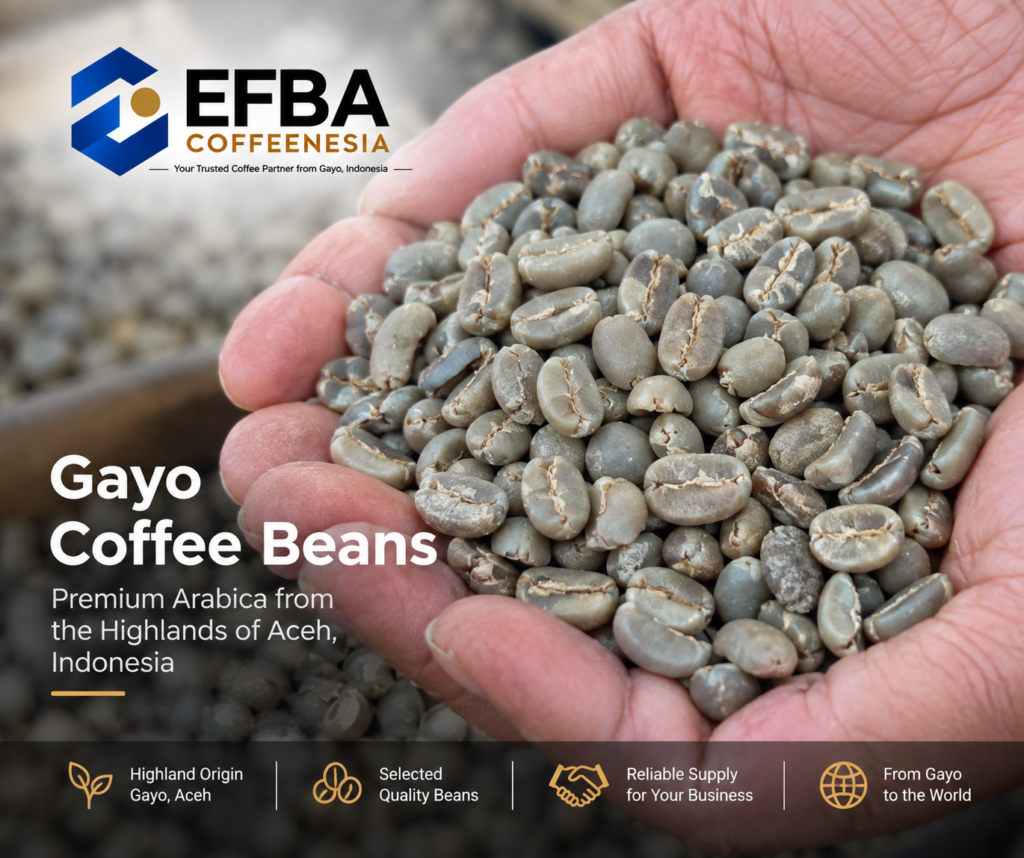
Gayo coffee beans are a sought-after Indonesian Arabica coffee originating from the Gayo Highlands of Aceh. For coffee roasters, importers, distributors, cafés, and private-label businesses, Gayo coffee offers an attractive combination of distinctive origin, versatile flavor characteristics, multiple processing options, and commercial sourcing potential.
However, buying coffee based only on the name “Gayo” is not enough. Buyers should evaluate origin, processing method, moisture, defects, screen size, crop information, packaging, traceability, samples, and supplier capability before placing a commercial order.
For businesses looking to source Indonesian coffee, Coffeenesia provides Gayo coffee and cascara from Indonesia for buyers seeking a reliable sourcing partner.
Table of Contents
ToggleWhat Are Gayo Coffee Beans?
Gayo coffee beans are coffee beans produced in the Gayo Highlands of Aceh, Indonesia. The region is particularly associated with Arabica coffee cultivated in highland environments.
The origin is more than a geographical name. Indonesia’s Directorate General of Intellectual Property lists Kopi Arabika Gayo as a registered Geographical Indication, reinforcing the connection between the coffee and its recognized geographical origin.
Buyers can verify information about registered geographical indications through the official Geographical Indication database of Indonesia’s Directorate General of Intellectual Property.
For commercial buyers, understanding origin is useful because it provides context for evaluating traceability, processing, expected cup characteristics, and supplier documentation.
To explore the origin in greater depth, read Gayo Coffee Origin: Exploring the Highlands of Aceh, Indonesia.
Where Do Gayo Coffee Beans Come From?
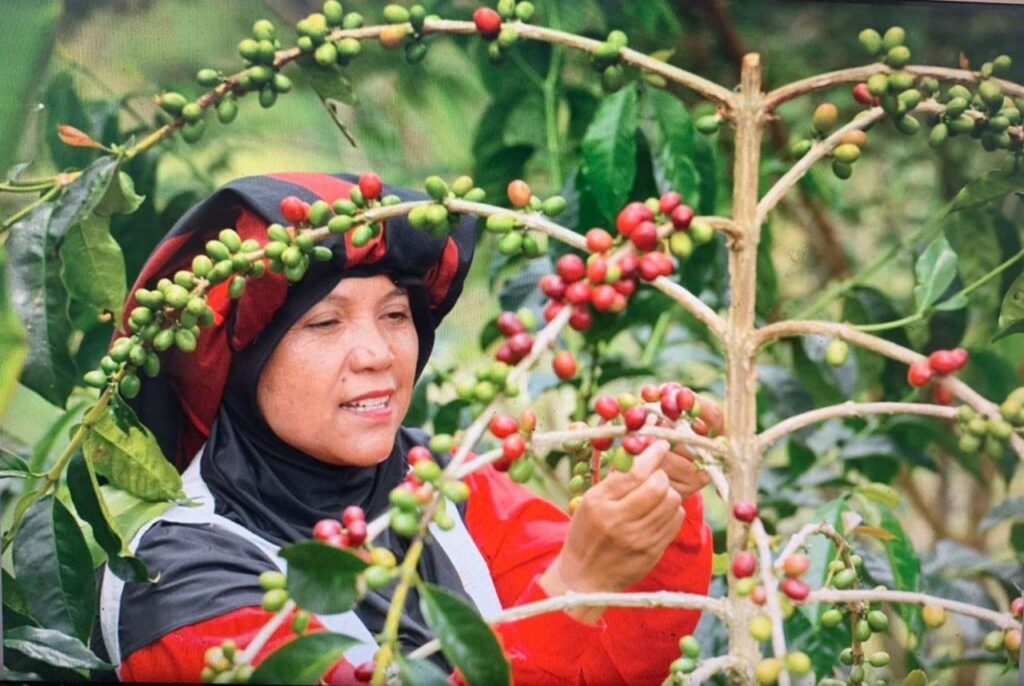
Gayo coffee comes from the highlands of Aceh in northern Sumatra, Indonesia.
Coffee production in the region is closely connected with highland farming communities and local processing practices. Differences in location, elevation, variety, harvest conditions, and post-harvest processing can contribute to variation between individual lots.
Therefore, commercial buyers should avoid assuming that every coffee carrying the Gayo name will have exactly the same characteristics.
The better approach is to evaluate Gayo coffee beans lot by lot.
Before purchasing, ask the supplier about the production area, crop or harvest information, processing method, physical specifications, and available traceability.
This information gives roasters and importers a clearer understanding of what they are actually buying.
What Do Gayo Coffee Beans Taste Like?
The flavor of Gayo coffee beans can vary depending on variety, growing conditions, processing, roast profile, and individual lot.
Gayo coffees are often associated with a balanced cup, substantial body, moderate acidity, sweetness, and combinations of earthy, herbal, chocolate, spice, nutty, or fruity characteristics.
However, these descriptors should be treated as general references rather than guaranteed characteristics for every shipment.
A washed lot can present differently from a wet-hulled or natural lot. Likewise, differences in roast development can substantially change how the same green coffee tastes in the cup.
For commercial sourcing, the most reliable approach is simple:
Request a sample and cup the actual lot before committing to a bulk order.
This allows your team to determine whether the coffee fits your intended roast profile, menu, blend, or target customer.
Why Processing Matters When Buying Gayo Coffee
Processing is one of the most important factors buyers should evaluate.
After harvesting, coffee cherries must undergo several post-harvest stages before becoming exportable green coffee beans.
Different processing approaches can influence sweetness, acidity, body, clarity, aroma, and overall cup character.
Wet-Hulled Gayo Coffee
Wet-hulling, commonly associated with Indonesian coffee production, can produce characteristics that many buyers associate with traditional Sumatran coffees.
Depending on the lot and processing quality, the cup may show a fuller body and deeper flavor characteristics.
For buyers seeking a recognizable Indonesian profile, wet-hulled coffee can be worth evaluating.
Washed Gayo Coffee
Washed processing can produce a cleaner presentation of the coffee’s characteristics.
Roasters looking for greater clarity or a profile suitable for certain specialty applications may consider washed lots.
Again, actual results depend on the individual coffee.
Natural Gayo Coffee
Natural processing dries the coffee cherry with the seed inside before further processing.
This approach can contribute to more pronounced fruit and sweetness characteristics in some lots.
Natural Gayo can therefore offer an interesting option for roasters seeking differentiated profiles.
Honey and Other Processing Methods
Some producers may also offer honey or other controlled processing approaches.
For buyers, this creates additional possibilities for building a differentiated coffee portfolio.
Instead of asking only:
“Do you sell Gayo coffee?”
Ask:
“Which origins, processes, grades, specifications, and lots of Gayo coffee are currently available?”
That question will produce far more useful sourcing information.
Green Gayo Coffee Beans vs. Roasted Gayo Coffee Beans
Commercial buyers should determine whether they require green or roasted coffee before contacting suppliers.
Green Gayo Coffee Beans
Green coffee is generally the more relevant option for professional roasters and importers.
Buying green beans gives the buyer control over roast development.
A roaster can adjust the roast profile based on intended use, such as espresso, filter coffee, house blends, or single-origin offerings.
For international sourcing, green coffee also allows businesses to integrate Indonesian beans into their existing roasting operation.
Roasted Gayo Coffee Beans
Roasted coffee may be more appropriate for cafés, distributors, hospitality businesses, retailers, or brands that do not operate their own roasting facility.
However, buyers should discuss roast level, packaging, freshness, order volume, and product specifications with the supplier.
The right format ultimately depends on your business model.
What Makes Gayo Coffee Attractive for Commercial Buyers?
Commercial coffee sourcing involves more than finding an interesting flavor.
Buyers also need products that fit their business model.
Gayo coffee beans can appeal to businesses because the origin carries a recognizable Indonesian identity while offering flexibility across different coffee applications.
A specialty roaster might present Gayo as a single-origin offering. Another company might use it as a component in a blend. Importers may distribute green coffee to local roasters, while retailers can develop consumer-facing products around Indonesian origin.
The commercial opportunity therefore depends on how the coffee fits your market.
For a broader overview of Indonesian sourcing, read 7 Powerful Reasons Indonesian Coffee for Export Is Winning Global Markets.
Gayo Coffee Beans for Specialty Coffee Roasters
For specialty roasters, buying decisions typically begin with cup quality.
A roaster may evaluate aroma, sweetness, acidity, body, balance, aftertaste, cleanliness, and other sensory characteristics before approving a lot.
However, the buying process should not end with cupping.
Roasters should also consider consistency.
A sample can perform well, but commercial buyers need to understand whether the supplier can maintain agreed specifications when fulfilling the actual order.
Therefore, compare the pre-shipment or representative sample with agreed product specifications whenever applicable.
This reduces the risk of receiving coffee that differs significantly from expectations.
Gayo Coffee Beans for Importers and Distributors
Importers usually evaluate coffee from a broader commercial perspective.
Cup quality remains important, but importers may also consider volume availability, shipment planning, documentation, packaging, traceability, and supply continuity.
Before purchasing, clarify whether the supplier can provide the information and documents required for the intended destination.
Import requirements differ between countries. Buyers should therefore confirm applicable customs, food safety, labeling, phytosanitary, and other import requirements with the relevant authorities in their market.
Coffeenesia’s guide on Indonesian Coffee Exporter: 7 Proven Tips for Successful Coffee Sourcing provides additional considerations for businesses sourcing coffee internationally.
Gayo Coffee Beans for Cafés and Coffee Brands
Cafés and consumer brands may have different requirements from green coffee importers.
A café may prioritize flavor consistency, roast profile, delivery frequency, and price stability.
Meanwhile, a retail coffee brand may also need to consider packaging format, product positioning, storytelling, and target retail price.
Gayo provides a strong origin story that can support marketing, but origin should never replace product quality.
Consumers who purchase a coffee because of its story still expect the product to deliver a satisfying cup.
Therefore, build the commercial proposition around both origin and quality.
7 Things to Check Before Buying Gayo Coffee Beans
1. Confirm the Origin
Ask where the coffee was produced and what traceability information is available.
The term “Gayo” should not be treated merely as a marketing label.
For buyers seeking origin-specific coffee, information about the production area and supply chain helps establish greater transparency.
2. Check the Processing Method
Determine whether the coffee is wet-hulled, washed, natural, honey processed, or produced using another method.
Processing can significantly influence the resulting coffee profile.
Make sure the processing method fits your intended application.
3. Request Product Specifications
Commercial buyers should request specifications rather than purchasing based solely on photographs or marketing descriptions.
Relevant information may include moisture content, screen size, defect tolerance or grade, crop information, processing method, and other specifications available for the lot.
Requirements vary between buyers, so establish your acceptance criteria before ordering.
4. Request a Coffee Sample
Sampling is one of the most important stages in coffee sourcing.
A product description can tell you what the supplier intends to offer. A sample allows you to evaluate the actual coffee.
Roast the sample using an appropriate evaluation profile and conduct cupping or sensory assessment.
If the coffee meets your requirements, move to commercial discussions.
For additional sourcing considerations, see How to Source Premium Coffee Beans from Indonesia: 7 Powerful Tips.
5. Discuss Quantity and Packaging
Ask about available quantity, minimum order requirements where applicable, packaging format, and shipment options.
Green coffee is commonly transported using formats designed to protect the beans during storage and logistics, but the available packaging can differ between suppliers and contracts.
Discuss the exact specification before confirming your purchase.
6. Evaluate Quality Consistency
Buying one excellent sample is not enough for a long-term sourcing relationship.
Commercial buyers need consistency.
Discuss how the supplier manages sourcing, sorting, quality evaluation, storage, and preparation before shipment.
If you intend to order repeatedly, ask how seasonal variations and lot differences will be communicated.
7. Evaluate the Supplier
The final factor is the supplier itself.
A good sourcing partner should communicate clearly about specifications, availability, samples, pricing, documentation, packaging, and shipment terms.
Transparency is particularly important for international transactions because misunderstanding specifications can become expensive once a shipment has moved.
If you are considering larger volumes, read Wholesale Coffee Beans Indonesia: 7 Powerful Sourcing Tips.
How to Evaluate a Gayo Coffee Sample
Once the sample arrives, avoid evaluating it casually.
Create a repeatable process.
Start with a visual inspection of the green coffee. Look at bean appearance, uniformity, defects, and other physical characteristics relevant to your purchasing specification.
Next, prepare the sample for sensory evaluation.
During cupping, assess characteristics such as fragrance and aroma, flavor, aftertaste, acidity, body, balance, sweetness, cleanliness, and overall impression according to the evaluation system your business uses.
Record the results.
If you are comparing several suppliers, use the same evaluation procedure for each sample. This makes your purchasing decision more objective.
Understanding Gayo Coffee Specifications
Commercial coffee buyers should distinguish between marketing descriptions and technical specifications.
“Premium Gayo coffee” is a marketing description unless the parties define what “premium” means.
A purchasing specification is more precise.
For example, the buyer and seller can agree on parameters related to grade, moisture, defects, processing, screen size, crop, packaging, and other measurable requirements relevant to the transaction.
This distinction becomes increasingly important as order volume increases.
The larger the purchase, the more important it becomes to define what constitutes an acceptable shipment.
How Much Do Gayo Coffee Beans Cost?
There is no single universal price for Gayo coffee beans.
Coffee prices can vary according to grade, quality, processing method, crop conditions, lot size, market conditions, packaging, logistics, and commercial terms.
Specialty lots may also be priced differently from commercial-grade coffee.
Therefore, buyers should be cautious with suppliers who provide one generic price without first establishing the required specification.
For an accurate quotation, provide information such as:
Product: Gayo Arabica green coffee beans
Process: desired processing method
Grade/specification: according to buyer requirement
Quantity: required volume
Packaging: preferred format
Destination: city/port and country
Incoterm: if applicable
The supplier can then prepare a more relevant commercial offer.
Buying Gayo Coffee Beans in Bulk
Bulk purchasing requires more preparation than buying a few kilograms.
Before placing an order, determine your expected consumption or resale volume.
A roaster should estimate how quickly the coffee will be used. An importer should consider customer demand and inventory turnover. A distributor needs to understand how the product fits its sales network.
Then discuss volume with the supplier.
Depending on availability, larger orders may require planning around harvest, processing capacity, inventory, and shipping schedules.
This is why buyers should communicate expected demand early rather than waiting until inventory becomes urgent.
Packaging and Storage for Green Gayo Coffee Beans
Good coffee can lose quality when stored poorly.
Green beans should be protected from excessive moisture, heat, contamination, and unsuitable storage conditions.
For commercial transactions, discuss the packaging format and storage recommendations with the supplier.
After arrival, buyers should also maintain appropriate warehouse conditions.
Avoid placing coffee directly in areas exposed to water, strong odors, extreme heat, or contaminants.
Proper inventory management also matters.
Track incoming lots and use a system that allows your team to identify origin, supplier, arrival date, and relevant specifications.
Traceability When Sourcing Gayo Coffee
Traceability is becoming increasingly important in international coffee sourcing.
At a basic level, buyers should understand where the coffee comes from and how the lot is identified.
Depending on the supply chain and buyer requirements, traceability information may include production area, producer or cooperative information, processing method, crop period, lot identification, and other sourcing details.
Not every commercial lot will offer the same level of traceability.
Therefore, specify what information your business requires before placing an order.
For more information about Gayo coffee and cascara, visit Gayo Coffee & Cascara Insights.
Should You Buy Gayo Coffee for Single Origin or Blending?
Both can work.
The decision depends on your target flavor profile and business strategy.
A distinctive lot may work well as a single-origin coffee when its flavor and traceability support the intended positioning.
Meanwhile, Gayo coffee can also contribute body, sweetness, depth, or other characteristics to a blend depending on the specific lot and roast approach.
Do not decide based solely on origin reputation.
Cup the coffee first and determine where it performs best.
Sometimes a coffee expected to become a single origin works better in an espresso blend. In other cases, an unexpectedly expressive lot may deserve to stand alone.
Let sensory evaluation guide the decision.
How to Choose a Gayo Coffee Supplier in Indonesia
Choosing a supplier is as important as choosing the coffee.
A supplier should be able to communicate clearly about the coffee being offered.
Ask for origin information, processing method, available specifications, sample availability, quantity, packaging, and commercial terms.
For export purchases, discuss documentation and logistics before confirming the order.
Communication speed also matters.
International coffee transactions involve multiple stages, and delays in information can affect purchasing decisions, shipment planning, and inventory.
Most importantly, avoid choosing suppliers solely based on the lowest price.
The cheapest quotation may not offer the specification, consistency, traceability, or service your business requires.
Evaluate quality, specification, reliability, and total landed cost, not price alone.
Source Gayo Coffee Beans with Coffeenesia
For roasters, importers, distributors, cafés, and coffee businesses looking for Indonesian coffee, Coffeenesia provides a sourcing point for exploring coffee from Gayo, Aceh.
Our approach focuses on connecting buyers with products according to their commercial requirements.
Before ordering, buyers can discuss product type, processing preferences, specifications, required quantity, packaging, and destination.
This approach helps both parties establish clearer expectations before moving toward a commercial transaction.
Explore Coffeenesia to learn more about Gayo coffee and Indonesian coffee sourcing.
FAQ About Gayo Coffee Beans
What are Gayo coffee beans?
Gayo coffee beans are coffee beans originating from the Gayo Highlands of Aceh, Indonesia. The region is particularly known for Arabica coffee and is associated with several processing styles and flavor profiles.
Are Gayo coffee beans Arabica or Robusta?
Gayo is strongly associated with Arabica coffee grown in the highlands of Aceh. Buyers should still confirm the species, variety, origin, and specification of the particular lot they intend to purchase.
What do Gayo coffee beans taste like?
Flavor varies by lot, variety, processing, growing conditions, and roasting. Gayo coffees can present combinations of sweetness, body, moderate acidity, chocolate, herbal, spice, nutty, earthy, or fruity characteristics.
What processing methods are available for Gayo coffee?
Depending on producer and lot availability, buyers may encounter wet-hulled, washed, natural, honey, or other processing approaches. Always confirm the actual processing method with the supplier.
Can I buy Gayo coffee beans wholesale?
Yes, Gayo coffee can be sourced for wholesale and commercial applications depending on supplier availability. Buyers should discuss required volume, specification, packaging, destination, and commercial terms before ordering.
Should I request a sample before buying?
Yes. Commercial buyers should ideally evaluate a representative sample before committing to a larger purchase. Sampling helps determine whether the coffee meets the required physical and sensory specifications.
How do I get a quotation for Gayo coffee?
Prepare your desired product type, processing method, specification, quantity, packaging preference, and destination. Providing clear requirements helps the supplier prepare a more relevant quotation.
Looking for Gayo Coffee Beans for Your Business?
Finding the right Gayo coffee beans requires more than choosing an attractive origin.
Commercial buyers should evaluate flavor, processing, physical specifications, samples, traceability, packaging, supplier capability, and logistics before making a purchasing decision.
Whether you are sourcing coffee for roasting, importing, distribution, cafés, or a consumer coffee brand, clear specifications can make the buying process more efficient.
Coffeenesia helps buyers explore Gayo coffee from Aceh, Indonesia, for commercial sourcing requirements.
Learn more about Coffeenesia and our Gayo coffee products, review our Gayo Coffee & Cascara Insights, or read our guide to sourcing premium coffee beans from Indonesia.
Ready to source Gayo coffee for your business? Contact Coffeenesia to discuss available products, specifications, samples, quantity, packaging, and export requirements.