
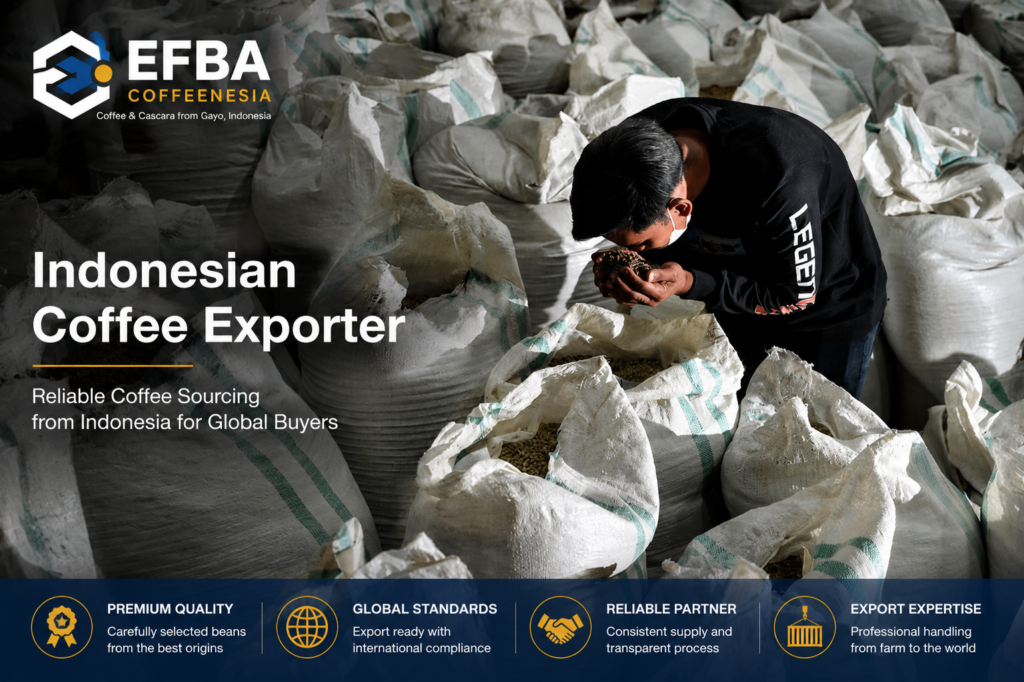
Finding a reliable Indonesian coffee exporter is essential for international buyers seeking quality coffee, consistent supply, and dependable sourcing from Indonesia. As one of the world’s recognized coffee-producing countries, Indonesia offers Arabica and Robusta coffee from diverse origins such as Gayo, Sumatra, Java, Bali, Flores, and Sulawesi.
However, choosing the right coffee export partner requires more than comparing prices. International buyers should evaluate coffee quality, origin, consistency, traceability, processing methods, supply capacity, communication, and export readiness.
A professional Indonesian coffee exporter can help roasters, distributors, wholesalers, importers, and other coffee businesses build a more reliable sourcing process. Therefore, understanding how to evaluate potential suppliers is an important step before placing a commercial order.
Table of Contents
ToggleWhy Source Coffee from Indonesia?
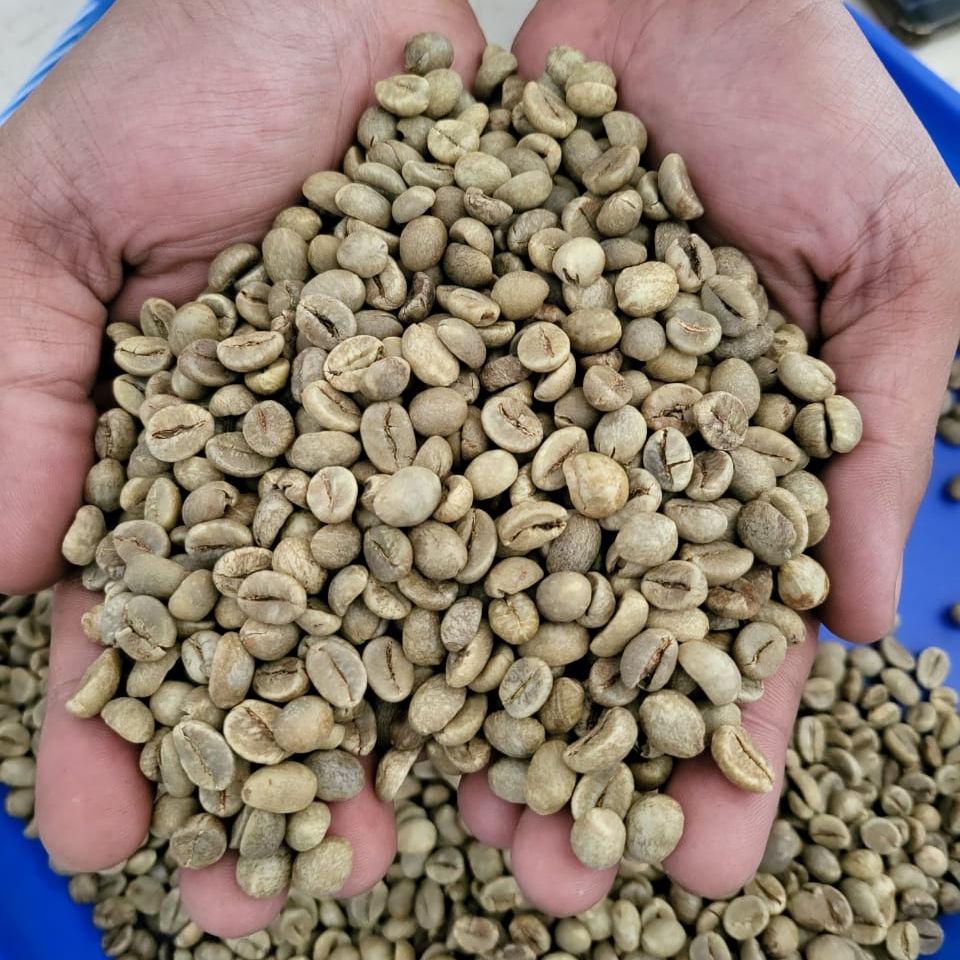
Indonesia has a long history of coffee cultivation and offers a diverse selection of coffees for international markets.
Different growing regions, altitudes, varieties, climate conditions, and processing methods contribute to the diversity of Indonesian coffee.
Buyers can explore coffee from several recognized origins, including:
- Aceh Gayo
- Sumatra
- Java
- Bali
- Flores
- Sulawesi
- Papua
Each origin can offer different characteristics and commercial opportunities.
For example, specialty coffee roasters may prioritize Arabica coffee with distinctive regional characteristics. Meanwhile, larger commercial buyers may require consistent specifications, competitive pricing, and reliable supply volumes.
Therefore, understanding your target market is essential before approaching an Indonesian coffee exporter.
Information about the international coffee industry, production, and global coffee trade can also be found through the International Coffee Organization.
Why Choosing a Reliable Indonesian Coffee Exporter Matters
Coffee sourcing is not simply about finding a supplier with an attractive quotation.
International buyers need a partner capable of providing coffee according to agreed specifications while maintaining reliable communication throughout the sourcing and export process.
Several common challenges may arise when sourcing coffee internationally.
Quality consistency is one of the most important concerns. A sample may perform well during the first evaluation, but buyers also need confidence that future shipments can meet agreed requirements.
Traceability is another consideration, particularly for specialty coffee businesses that communicate origin information to their customers.
In addition, supply capacity matters for businesses that require regular commercial quantities.
Finally, documentation, packaging, logistics coordination, and export readiness can influence whether an international transaction runs efficiently.
For these reasons, choosing the right Indonesian coffee exporter should be viewed as a long-term business decision rather than simply a price comparison.
7 Proven Tips for Choosing an Indonesian Coffee Exporter
The following seven factors can help international buyers evaluate potential coffee sourcing partners in Indonesia.
1. Identify the Coffee Origin You Need
The first step is determining which Indonesian coffee origin matches your target market.
Indonesia has numerous coffee-producing regions, each associated with different growing conditions and coffee characteristics.
For buyers interested in premium Indonesian Arabica, Gayo coffee from Aceh is one important origin to consider.
Other buyers may be interested in coffee from Java, Flores, Bali, Sulawesi, or other producing regions.
Instead of asking an exporter simply for “Indonesian coffee,” provide information about the type of coffee and origin you are interested in.
This allows the supplier to recommend products more efficiently.
2. Define Clear Coffee Specifications
Professional coffee sourcing should begin with clear specifications.
Before requesting a quotation from an Indonesian coffee exporter, prepare a purchasing brief covering the requirements that matter to your business.
Depending on your business model, these may include:
- Arabica or Robusta
- Green coffee beans
- Origin
- Grade
- Processing method
- Moisture requirements
- Defect tolerance
- Screen size
- Cup profile
- Required quantity
- Packaging
- Destination country
For example, a specialty roaster may place greater emphasis on origin, processing method, traceability, and cup profile.
In contrast, a commercial distributor may prioritize consistency, available volume, specifications, and price.
Providing clear requirements makes communication between buyer and exporter significantly more efficient.
3. Evaluate Coffee Quality and Consistency
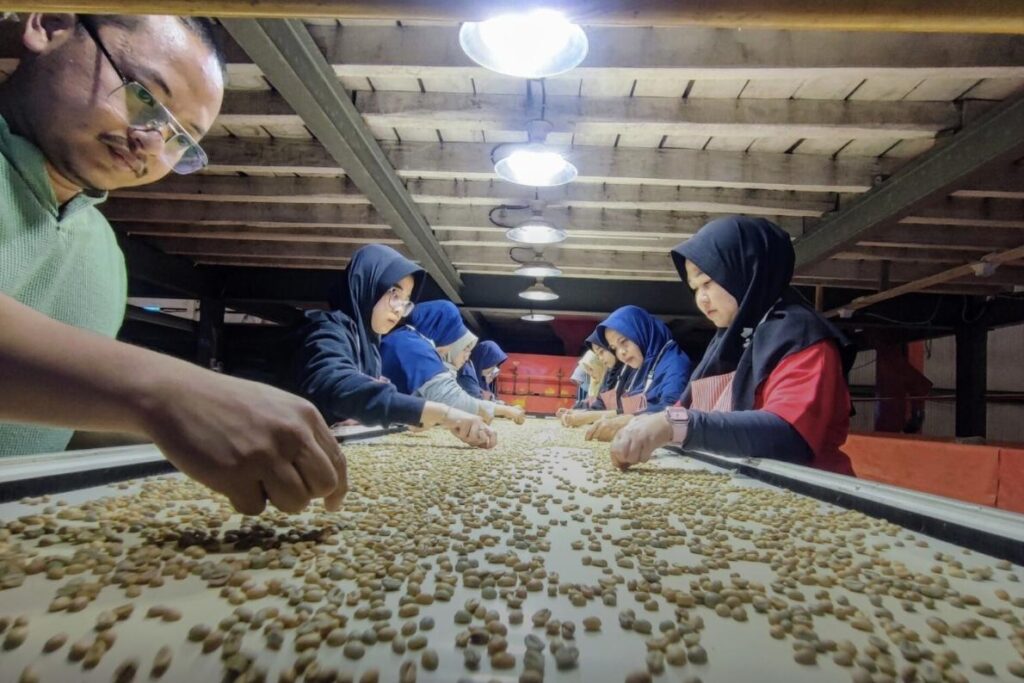
Quality is an essential factor when selecting an Indonesian coffee exporter.
However, buyers should evaluate more than a single sample.
Consistency across commercial shipments is equally important.
Imagine an international roaster developing a product around a particular Indonesian coffee. Customers eventually associate certain characteristics with that product.
If subsequent coffee shipments differ significantly, maintaining a consistent customer experience becomes difficult.
Therefore, buyers should discuss quality parameters and specifications before making larger purchasing commitments.
Where appropriate, requesting samples before a commercial order can also help buyers evaluate whether the coffee meets their expectations.
4. Understand the Coffee Processing Method
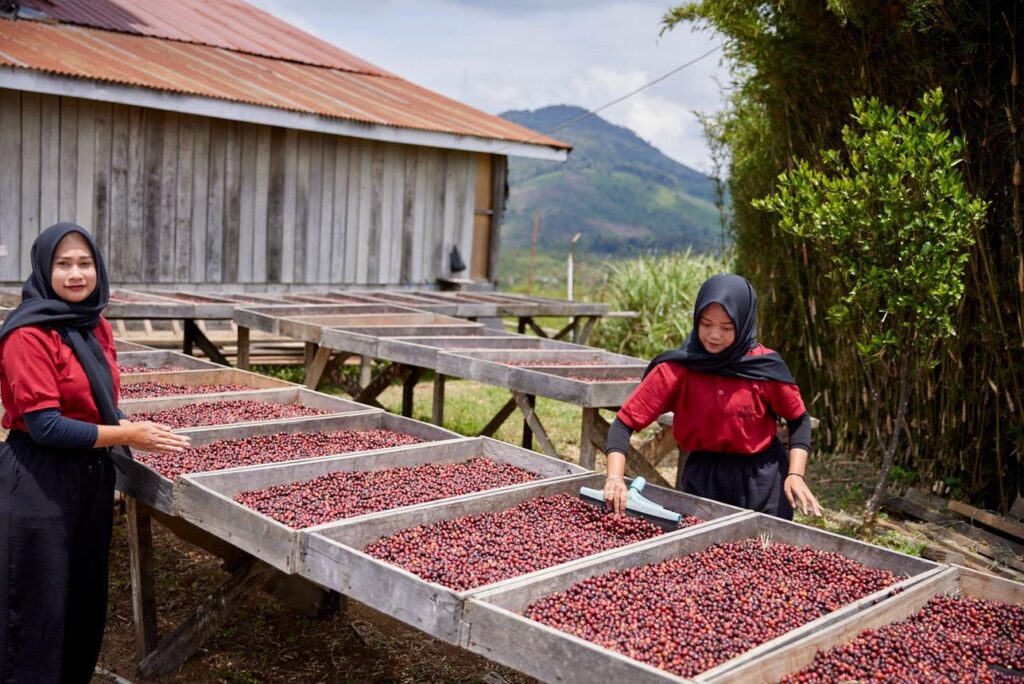
Processing methods can influence the characteristics of coffee.
Depending on origin and producer practices, Indonesian coffees may be available through methods such as:
- Washed
- Natural
- Honey
- Wet-hulled
- Other locally adapted methods
Wet-hulled processing, for example, has historically been associated with coffee production in parts of Indonesia.
Nevertheless, there is no single processing method that suits every buyer.
The appropriate choice depends on the desired coffee characteristics, roasting approach, customer preferences, and market positioning.
Therefore, buyers should include processing requirements when discussing specifications with a coffee exporter.
5. Check Traceability and Sourcing Capabilities
Traceability has become increasingly relevant within international coffee sourcing.
Buyers may want to understand where the coffee comes from and what information is available regarding its origin.
Depending on the coffee and supply chain, relevant information could include:
- Producing region
- Farm or producer group
- Altitude
- Variety
- Processing method
- Harvest information
- Lot specifications
This information can be particularly valuable for specialty coffee brands.
Moreover, an exporter with established sourcing relationships may be better positioned to connect international buyer requirements with available coffee from producing regions.
When evaluating an Indonesian coffee exporter, ask what level of origin and sourcing information can be provided for the coffee being offered.
6. Review Export Readiness and Documentation
Excellent coffee alone does not guarantee a successful international transaction.
Exporting agricultural commodities involves additional operational requirements, including documentation, packaging, logistics coordination, shipment arrangements, and destination requirements.
Consequently, international buyers should discuss these factors before confirming commercial purchases.
Some important questions include:
Where can the coffee be shipped?
What packaging options are available?
What commercial quantities can be supplied?
What documentation is provided?
How will shipment and logistics be coordinated?
Requirements may vary depending on the destination country and transaction.
International buyers researching Indonesian trade regulations and export information can also refer to Indonesia’s Ministry of Trade.
Discussing export requirements early can help prevent misunderstandings later in the purchasing process.
7. Choose a Long-Term Coffee Sourcing Partner
The lowest price does not automatically represent the best sourcing decision.
For businesses purchasing coffee regularly, consistency, communication, transparency, and supply reliability can be more valuable over the long term.
A reliable Indonesian coffee exporter should understand the buyer’s requirements and communicate clearly regarding available coffee, specifications, quantities, and commercial conditions.
Over time, a strong supplier relationship can also improve sourcing efficiency.
The exporter becomes more familiar with the buyer’s requirements, while the buyer develops a better understanding of available Indonesian coffee and seasonal supply conditions.
As a result, future purchasing decisions can become more structured and efficient.
Indonesian Arabica vs Robusta: Which Should You Source?
Indonesia produces both Arabica and Robusta coffee.
Neither option should automatically be considered superior for every business. Instead, buyers should choose based on their intended product, target customers, quality requirements, and commercial positioning.
Indonesian Arabica Coffee
Arabica is commonly associated with specialty and premium coffee markets.
Buyers may look for:
- Distinctive origin characteristics
- Complex flavor profiles
- Specialty applications
- Premium positioning
- Greater traceability
Indonesian Arabica is produced across several regions, including Aceh Gayo, Java, Bali, Flores, and Sulawesi.
The specific characteristics will vary according to origin, variety, growing conditions, processing, harvest, and individual lot.
Indonesian Robusta Coffee
Robusta can be relevant for buyers requiring different flavor characteristics, caffeine levels, pricing structures, or commercial volumes.
Potential applications include:
- Espresso blends
- Commercial coffee products
- Instant coffee
- Food and beverage manufacturing
- High-volume coffee requirements
Therefore, international buyers should communicate their intended application when requesting recommendations from an Indonesian coffee exporter.
Indonesian Coffee Exporter for Green Coffee Beans
Green coffee beans are an important product category for international roasters and coffee businesses.
Purchasing green beans allows roasters to develop roast profiles according to their own market requirements.
However, sourcing green coffee requires careful evaluation.
Buyers should consider origin, grade, processing, moisture, defects, physical condition, cup characteristics, packaging, quantity, and consistency.
Furthermore, requirements can differ significantly between specialty coffee and commercial coffee buyers.
For this reason, providing detailed specifications helps an Indonesian supplier identify coffee that better matches the intended application.
Why Gayo Coffee Attracts International Buyers
Gayo coffee originates from the highlands of Aceh in northern Sumatra and has developed international recognition as an Indonesian Arabica origin.
Its identifiable geographic origin makes Gayo particularly interesting for businesses seeking Indonesian coffee with a strong origin story.
However, buyers should not make purchasing decisions based solely on the Gayo name.
The characteristics and quality of individual coffee lots can vary.
Therefore, professional buyers should still evaluate relevant factors such as processing method, grade, moisture, defects, cup characteristics, harvest, and consistency.
Working with an experienced sourcing partner can make this evaluation process easier.
Example: Sourcing Indonesian Coffee for an International Roaster
Consider a hypothetical specialty roaster planning to add Indonesian Arabica to its product portfolio.
The company wants coffee with a recognizable Indonesian origin for a premium single-origin offering.
Instead of immediately requesting the cheapest available coffee, the buyer creates a sourcing brief:
Product: Green Arabica Coffee
Origin: Indonesia
Preferred Origin: Gayo, Aceh
Market Position: Premium / Specialty
Primary Requirement: Consistent quality and identifiable origin
Initial Purchase Stage: Sample evaluation
Future Requirement: Commercial supply
The Indonesian coffee exporter can use this information to determine which available products are potentially suitable.
After receiving samples, the buyer evaluates the coffee and decides whether it matches the intended product.
Commercial discussions can then proceed to quantity, pricing, packaging, documentation, shipping, and other transaction requirements.
This approach is more efficient because both parties begin with clearly defined expectations.
This example is an illustrative sourcing scenario and does not represent a specific Coffeenesia customer transaction.
What Should You Ask an Indonesian Coffee Exporter?
Before choosing a supplier, international buyers should ask questions that help determine whether the exporter matches their requirements.
Useful questions include:
What Indonesian coffee origins do you currently supply?
Do you offer Arabica, Robusta, or both?
What processing methods are available?
Can you provide product specifications?
Can samples be evaluated before a commercial purchase?
What quantities can you supply?
What packaging options are available?
What export documentation can be provided?
Which destination markets can you serve?
How do you maintain consistency between shipments?
The answers can help buyers compare potential suppliers based on more than price alone.
Why Choose Coffeenesia as Your Indonesian Coffee Sourcing Partner?
International buyers need more than access to coffee. They need a sourcing partner who understands their commercial requirements.
Coffeenesia focuses on connecting Indonesian coffee with international buyers looking for sourcing opportunities from Indonesia.
The sourcing process begins by understanding what the buyer actually needs.
Whether you operate as a roaster, distributor, wholesaler, importer, café business, or other coffee-related company, providing clear specifications allows the sourcing process to become more focused.
Buyers can communicate requirements such as:
- Coffee type
- Preferred origin
- Processing method
- Quality specifications
- Required quantity
- Packaging
- Destination market
From there, suitable sourcing opportunities can be discussed according to available products and commercial requirements.
International buyers can learn more about Indonesian coffee sourcing through Coffeenesia – Coffee and Cascara from Gayo, Indonesia.
FAQ About Indonesian Coffee Exporters
What is an Indonesian coffee exporter?
An Indonesian coffee exporter supplies Indonesian coffee to buyers in international markets. Depending on the company, services may include sourcing, product preparation, quality coordination, packaging, documentation, and export arrangements.
How do I find a reliable Indonesian coffee exporter?
Evaluate the exporter’s coffee origins, product specifications, consistency, communication, sourcing capabilities, traceability, available volume, and export readiness. Buyers should compare overall capability rather than focusing exclusively on price.
What coffee can I source from Indonesia?
Indonesia produces both Arabica and Robusta coffee. Buyers can explore origins such as Aceh Gayo, Sumatra, Java, Bali, Flores, Sulawesi, and Papua, depending on availability and required specifications.
Can I buy green coffee beans from Indonesia?
Yes. Green Indonesian coffee beans are supplied internationally to roasters, importers, distributors, wholesalers, and other commercial coffee businesses.
Should I request coffee samples before ordering?
For quality-sensitive purchases, sample evaluation can help determine whether an offered coffee matches your requirements before proceeding with a larger commercial purchase.
What information should I provide when requesting a quotation?
Provide the coffee type, preferred origin, grade or quality specifications, processing method, required quantity, packaging requirements, destination country, and any additional purchasing requirements.
Is Gayo coffee suitable for international buyers?
Gayo is a recognized Indonesian Arabica origin and may be suitable for buyers seeking premium or specialty coffee. However, buyers should evaluate individual lots based on their actual specifications and quality.
Looking for a Reliable Indonesian Coffee Exporter?
Finding the right Indonesian coffee exporter requires more than comparing prices. Quality, origin, consistency, traceability, supply capacity, communication, and export readiness should all be considered before establishing a sourcing relationship.
By applying these seven sourcing tips, international buyers can make more informed decisions and build stronger relationships with Indonesian coffee suppliers.
Coffeenesia supports international buyers looking for Indonesian coffee sourcing opportunities, including businesses interested in coffee from Gayo and other Indonesian origins.
Whether you are a roaster, importer, distributor, wholesaler, or coffee business, start by telling us what you need.
Contact Coffeenesia to discuss your Indonesian coffee sourcing requirements and discover suitable coffee opportunities from Indonesia.