
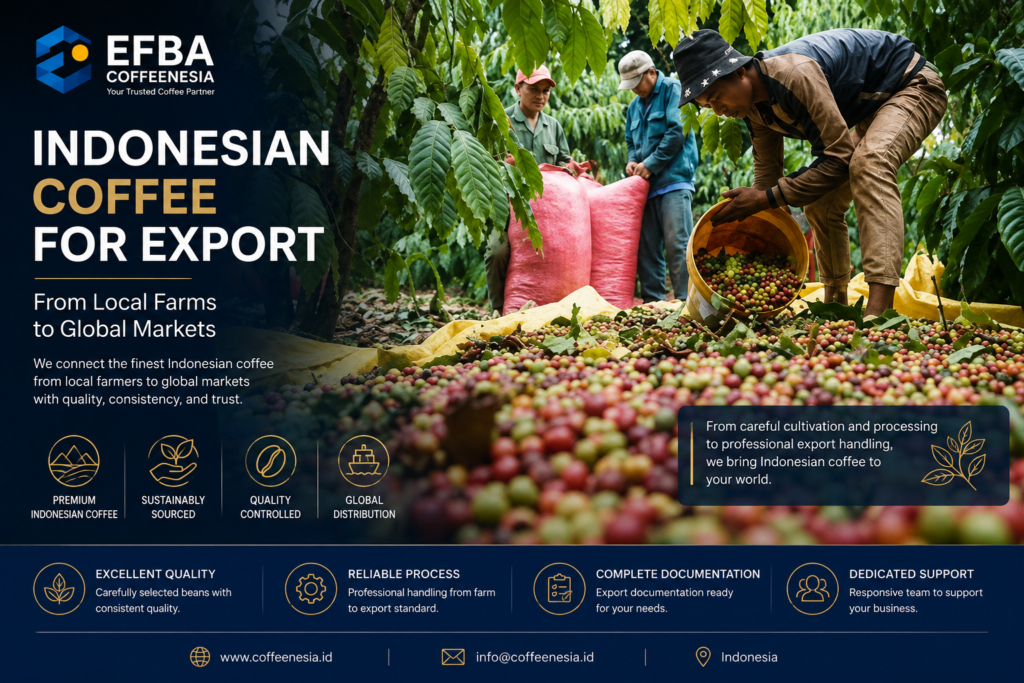
Indonesia is one of the world’s most important coffee-producing countries, with diverse growing regions, processing traditions, and coffee varieties. From Sumatra and Java to Sulawesi and Bali, the country offers a wide range of coffee profiles for international buyers.
For importers, distributors, roasters, cafés, and coffee brands, Indonesian coffee for export offers strong sourcing opportunities. However, successful sourcing depends on more than selecting coffee beans. Buyers also need to consider origin, quality, processing, consistency, packaging, documentation, and logistics.
At Coffeenesia, we connect Indonesian coffee origins with the needs of global coffee businesses. By understanding the journey from local farms to international markets, buyers can make more informed sourcing decisions and build more reliable supply relationships.
Table of Contents
ToggleWhy Indonesian Coffee for Export Attracts Global Buyers
Indonesia’s geography creates ideal conditions for coffee cultivation across many regions. Different elevations, climates, soils, varieties, and processing methods contribute to the diversity of Indonesian coffee.
As a result, Indonesian coffee for export can serve different market segments. Specialty roasters may look for distinctive Arabica lots, while commercial buyers may require consistent Robusta or blends for larger-volume distribution.
In addition, Indonesia produces both Arabica and Robusta coffee. This gives international buyers flexibility when selecting coffee for specialty roasting, espresso blends, retail products, hospitality, or wholesale markets.
The International Coffee Organization tracks global coffee production, exports, imports, and market trends, making it a useful reference for buyers monitoring the international coffee industry. You can review current coffee trade information through the International Coffee Organization.
From Local Coffee Farms to Global Markets
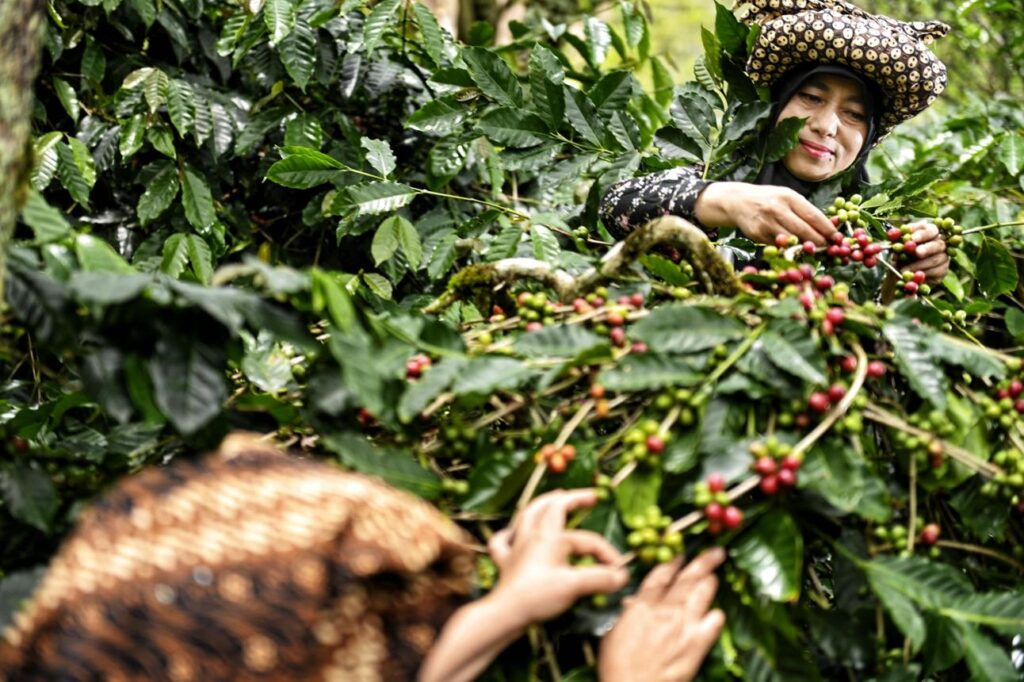
The journey of Indonesian coffee for export begins at the farm level. Farmers cultivate coffee cherries, manage harvesting, and prepare the crop for post-harvest processing.
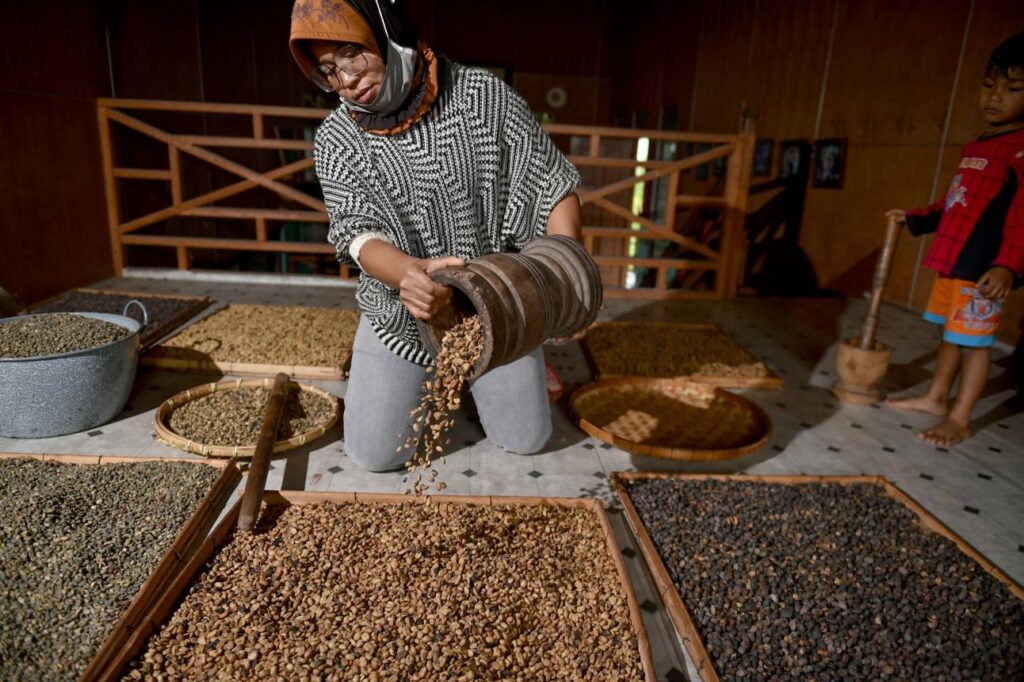
After harvesting, coffee may go through sorting, pulping, fermentation, drying, hulling, and grading. The specific process depends on origin, producer, coffee type, and desired product characteristics.
Next, coffee is prepared for commercial distribution. Depending on the supply chain, it may move through farmers, cooperatives, processors, suppliers, exporters, or trading partners before reaching international buyers.
Therefore, quality control at every stage is important. Poor storage, inconsistent drying, or inadequate sorting can affect the final quality of coffee even when the original crop is strong.
Popular Indonesian Coffee Origins
One of Indonesia’s biggest advantages is the diversity of its coffee origins. Buyers can select different regions depending on flavor preference, product positioning, and market requirements.
Sumatra
Sumatra is one of the best-known coffee-producing regions in Indonesia. Areas such as Aceh Gayo and North Sumatra are especially recognized for Arabica coffee.
Gayo coffee is widely known among buyers seeking Indonesian Arabica. Depending on the farm, processing method, elevation, and roast profile, it can offer different sensory characteristics.
For businesses interested in premium Indonesian Arabica, sourcing from established coffee-growing regions can provide a strong foundation for specialty or retail product development.
Java
Java has played an important role in Indonesia’s coffee history and remains relevant in modern coffee production.
The island produces both Arabica and Robusta coffee. Therefore, Java can support different market segments, ranging from specialty coffee to broader commercial applications.
Sulawesi
Sulawesi is another well-known Indonesian origin, particularly through areas such as Toraja.
Coffee from Sulawesi is often selected by roasters seeking more diversity in their Indonesian portfolio. It can complement coffees from Sumatra or Java and help create a broader origin selection.
Bali and Other Origins
Indonesia’s coffee landscape extends beyond its most famous regions. Bali and several other islands also contribute to the country’s coffee diversity.
For this reason, international buyers can explore multiple origins based on quality requirements, availability, price range, and target customer preferences.
Arabica and Robusta Coffee for Export
When sourcing Indonesian coffee for export, buyers should first determine whether Arabica, Robusta, or both are suitable for their business.
Arabica is often selected by specialty coffee roasters and premium coffee brands. However, quality should still be evaluated based on actual specifications rather than origin name alone.
Robusta serves different commercial applications. It may be used for espresso blends, instant coffee, commercial products, or markets that prefer a stronger cup profile.
Therefore, buyers should evaluate bean type together with processing method, grade, moisture, defects, consistency, and intended use.
Green Coffee Beans vs. Roasted Coffee
Another important decision involves choosing between green coffee and roasted coffee.
Green coffee beans are often suitable for importers and roasters who want greater control over roasting. Buyers can create their own roast profiles and adapt them to local equipment, market preferences, and product positioning.
Roasted coffee, meanwhile, may be more suitable for businesses that need a more finished product. Depending on supplier capabilities, buyers may be able to discuss roast profile, packaging, branding, and order volume.
As a result, the best format depends on the buyer’s business model and operational capabilities.
What Global Buyers Should Check Before Sourcing
Before purchasing Indonesian coffee for export, buyers should evaluate several important factors.
First, confirm the coffee origin and product specifications. This may include bean type, processing method, grade, moisture level, screen size, defects, and crop information.
Next, evaluate available volume and consistency. A good sample is important, but long-term buyers also need confidence that future orders can maintain similar specifications.
In addition, discuss packaging, lead time, documentation, and shipment terms before confirming an order. Clear expectations help reduce misunderstandings and improve supply-chain planning.
Quality and Consistency Matter
Quality consistency is especially important for B2B coffee buyers.
A roaster may need the same type of coffee for repeated production, while a distributor may require stable specifications across multiple shipments. Therefore, suppliers should communicate clearly about seasonal variation, crop availability, and expected quality differences.
Moreover, coffee is an agricultural product. Weather, harvest conditions, processing, and storage can influence quality between batches.
For this reason, buyers should define specifications early and discuss what level of consistency can realistically be maintained.
Packaging and Logistics for Indonesian Coffee for Export
Packaging is an important part of international coffee trade because it protects coffee during storage and transportation.
Green coffee often requires packaging that helps maintain bean quality during shipping. Roasted coffee may require different packaging because freshness, oxygen exposure, and presentation become more important.
Logistics planning should also consider shipment volume, destination country, delivery schedule, and documentation requirements.
Indonesia has specific regulations related to coffee export. Buyers and exporters should always verify the latest requirements through official government sources. Information about coffee export policy and related regulations can be reviewed through the Indonesian Ministry of Trade.
Export Documentation and Compliance
International buyers should pay close attention to documentation.
Depending on the destination market and shipment type, coffee exports may require commercial documents, customs documents, certificates of origin, and other supporting paperwork.
The International Coffee Organization also maintains systems related to coffee trade statistics and certificates of origin. Buyers interested in broader industry data can review information from the International Coffee Organization.
Because export rules can change, both buyers and suppliers should confirm current requirements before shipment.
How to Choose an Indonesian Coffee Supplier
Choosing the right supplier is one of the most important steps in sourcing Indonesian coffee for export.
Start by evaluating whether the supplier can provide clear information about origin, specifications, available volume, quality, processing, packaging, and lead time.
Next, request samples when possible. Samples allow buyers to evaluate coffee quality before moving to larger orders.
Communication is also important. International coffee sourcing may involve product selection, quality confirmation, documentation, shipment preparation, and follow-up. Therefore, responsive communication can significantly improve the purchasing process.
For businesses looking for Indonesian coffee sourcing support, Coffeenesia can serve as a starting point for exploring coffee origins, product options, and business requirements.
Indonesian Coffee for Different Business Needs
Different buyers have different sourcing priorities.
Importers may focus on larger-volume purchases and stable supply. Specialty roasters may prioritize origin, processing method, sensory quality, and traceability.
Cafés may require coffee that fits a specific menu concept, while retail brands may need products that support packaging and branding strategies.
Therefore, buyers should define their business needs before selecting Indonesian coffee for export. This makes product selection more efficient and helps suppliers recommend suitable options.
Building Long-Term Coffee Sourcing Partnerships
Long-term supplier relationships can create advantages for both buyers and sellers.
When buyers communicate expected volume, quality requirements, and future demand, suppliers can plan more effectively. At the same time, suppliers can provide better updates about harvest conditions, availability, and seasonal changes.
Moreover, strong sourcing partnerships can reduce uncertainty and improve consistency over time.
For buyers planning recurring purchases, building a reliable supplier relationship may be more valuable than focusing only on short-term price differences.
Why Indonesian Coffee Remains Important in Global Trade
Indonesia remains an important participant in the global coffee market.
The International Coffee Organization reported continued export activity from Indonesia and other major producing countries in recent coffee years, highlighting the country’s ongoing role in international supply.
This reinforces the commercial relevance of Indonesian coffee for export for buyers seeking diverse origins, Arabica, Robusta, and different supply options.
From Indonesia to the Global Coffee Market
The journey of Indonesian coffee involves farmers, processors, suppliers, exporters, logistics partners, roasters, and buyers.
Each stage contributes to the quality and reliability of the final product. Therefore, successful sourcing depends on understanding more than the origin alone.
Buyers should consider processing, specifications, consistency, packaging, documentation, logistics, and supplier capabilities before placing larger orders.
By taking a structured approach, businesses can source Indonesian coffee for export more confidently and build stronger long-term purchasing relationships.
Source Indonesian Coffee with Coffeenesia
Coffeenesia supports businesses interested in exploring Indonesian coffee for international markets.
Whether you are an importer, distributor, roaster, café operator, hospitality business, or coffee brand, the sourcing process can begin by identifying your required origin, bean type, specifications, volume, and target market.
Through Coffeenesia, buyers can explore Indonesian coffee sourcing opportunities and discuss requirements for products intended for global markets.
If your business is looking for reliable Indonesian coffee for export, start by defining your sourcing specifications and connecting with a partner that understands both local coffee origins and international buyer requirements.
Frequently Asked Questions
What is Indonesian coffee for export?
Indonesian coffee for export refers to coffee produced in Indonesia and supplied to international markets. It may include Arabica, Robusta, green coffee beans, roasted coffee, or other coffee formats depending on supplier capabilities.
Which Indonesian coffee origins are popular internationally?
Popular Indonesian coffee origins include Aceh Gayo, North Sumatra, Java, Sulawesi, Toraja, and Bali. However, actual quality and flavor vary according to farm, processing method, elevation, variety, and harvest.
Can international buyers purchase green coffee beans from Indonesia?
Yes. Green coffee beans are commonly sourced by importers and roasters who want greater control over roasting and product development.
What should buyers check before sourcing Indonesian coffee?
Buyers should evaluate origin, bean type, processing method, specifications, quality consistency, available volume, packaging, documentation, logistics, and supplier communication.
Is Indonesian coffee suitable for specialty coffee businesses?
Yes. Indonesia produces many coffees suitable for specialty markets. However, buyers should evaluate individual lots and specifications rather than relying only on origin reputation.
Can Indonesian coffee be supplied for wholesale or B2B needs?
Yes. Depending on supplier capabilities and availability, Indonesian coffee for export can support wholesale, roasting, distribution, café, hospitality, and retail requirements.