
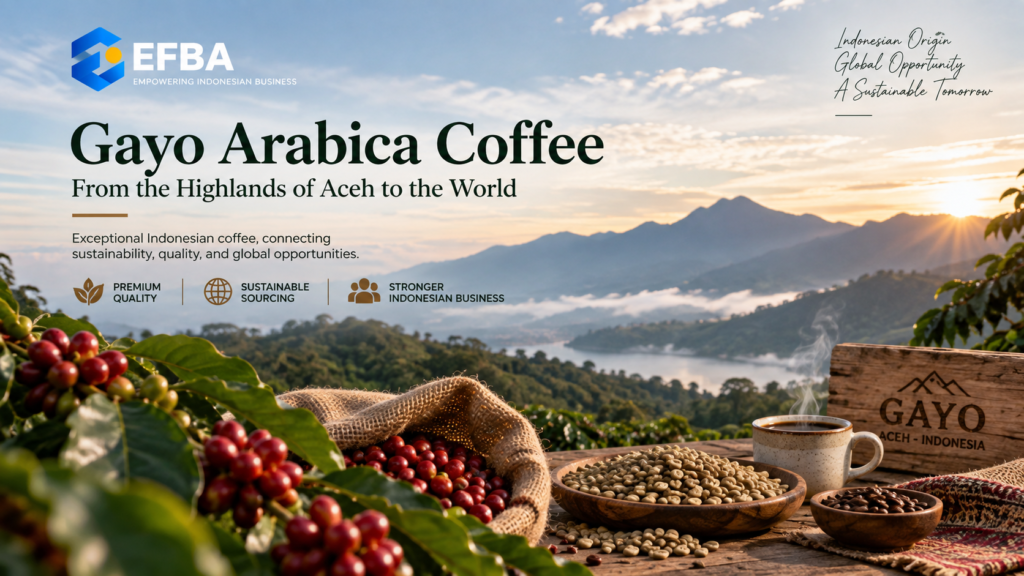
Gayo Arabica coffee is one of Indonesia’s distinctive highland coffees, originating from the Gayo Highlands in Aceh, Sumatra. Its identity is shaped by high-elevation growing conditions, Arabica varieties, farming practices, post-harvest processing, and careful handling before the beans reach roasters, distributors, and international buyers.
For importers, coffee roasters, wholesalers, distributors, cafés, and beverage businesses, understanding Gayo coffee requires more than recognizing its origin. Buyers should also evaluate flavor profile, altitude, processing method, moisture content, physical defects, bean consistency, traceability, and specifications of the actual lot.
This guide explains the origin, flavor profile, processing methods, and quality characteristics of Gayo Arabica coffee, while highlighting important factors professional buyers should consider before sourcing coffee from Indonesia.
What Is Gayo Arabica Coffee?
Gayo Arabica coffee is Arabica coffee associated with the Gayo Highlands of Aceh, Indonesia. The geographical area associated with Kopi Arabika Gayo includes Aceh Tengah, Bener Meriah, and Gayo Lues.
Official geographical-indication documentation describes production at elevations of approximately 900–1,700 meters above sea level. It also identifies Arabica varieties associated with the specification, including Borbor, Timtim, Ateng Jaluk, S795, and P-88.
However, origin alone does not determine the final cup.
Altitude, variety, cherry maturity, growing conditions, post-harvest processing, fermentation, drying, sorting, storage, roasting, and brewing can all influence the characteristics experienced in the cup.
Therefore, professional buyers should evaluate the actual lot rather than assuming that every coffee carrying the Gayo name will have exactly the same sensory profile.
Where Does Gayo Arabica Coffee Come From?
The story of Gayo Arabica coffee begins in the mountainous Gayo Highlands of Aceh, at the northern end of Sumatra, Indonesia.
Aceh Tengah, Bener Meriah, and Gayo Lues are closely associated with Gayo Arabica production. According to geographical-indication documentation, coffee covered by the specification is produced at approximately 900–1,700 meters above sea level.
The highland environment is important because coffee develops through the interaction between genetics, agricultural practices, and growing conditions.
Research published through Indonesia’s agricultural research repository has also examined Gayo Arabica from Aceh Tengah and Bener Meriah at different elevations. The study found differences in physical characteristics and sensory performance between elevation groups.
Why Does Altitude Matter for Gayo Arabica Coffee?
Altitude affects the environment in which coffee cherries develop, including temperature and growing conditions.
However, buyers should avoid treating higher elevation as an automatic guarantee of superior coffee.
Altitude is better evaluated together with specific origin, coffee variety, harvest conditions, cherry maturity, processing method, drying, green bean preparation, physical defects, moisture content, and cupping results.
This approach gives buyers a more complete picture of a coffee lot than altitude alone.
What Does Gayo Arabica Coffee Taste Like?
The flavor profile of Gayo Arabica coffee cannot be reduced to one fixed set of tasting notes.
Different farms, elevations, varieties, processing methods, harvest lots, roast profiles, and brewing methods can produce different sensory expressions.
Geographical-indication documentation describes Kopi Arabika Gayo with characteristics including aromatic intensity, acidity, relatively low bitterness, and substantial body. Descriptions associated with Gayo coffee can also include nutty, caramel, chocolate, fruity, herbal, or spice-related characteristics depending on the specific coffee and preparation.
These descriptions provide useful orientation. However, they should not be treated as a guaranteed tasting profile for every commercial lot.
Aroma
Aroma is one of the characteristics buyers and roasters may evaluate during coffee assessment.
Its expression depends on the green coffee itself and changes further during roasting. Variety, post-harvest processing, storage conditions, roast development, and freshness can all influence aromatic perception.
Acidity
Acidity contributes brightness and structure to a coffee’s sensory profile.
Gayo Arabica is often associated with balanced acidity. However, its intensity and character can vary depending on origin, variety, processing, roasting, and brewing.
Body
Body describes the tactile impression or weight of coffee in the mouth.
A substantial body is commonly associated with many Gayo and Sumatran coffees. Processing and roast development can further influence how this characteristic is perceived.
Sweetness and Flavor Complexity
Sweetness helps create balance between acidity, aroma, body, and other flavor characteristics.
Cherry maturity and post-harvest handling can influence how these characteristics develop. Therefore, professional buyers should evaluate a representative sample rather than relying only on marketing descriptions.
Gayo Arabica Coffee Flavor Profile at a Glance
| Characteristic | What Buyers May Evaluate |
|---|---|
| Aroma | Cleanliness, intensity, complexity, and aromatic character |
| Acidity | Brightness, balance, intensity, and quality |
| Body | Mouthfeel, weight, smoothness, and structure |
| Sweetness | Natural sweetness and balance with acidity |
| Flavor | Dominant and secondary sensory characteristics |
| Aftertaste | Character and persistence after tasting |
| Balance | Interaction between acidity, sweetness, body, and flavor |
| Clean Cup | Absence of distracting or undesirable characteristics |
For B2B sourcing, these attributes should ideally be evaluated using a representative sample of the actual lot being considered.
How Processing Changes Gayo Arabica Coffee
Post-harvest processing is one of the major factors influencing Gayo Arabica coffee.
Indonesia is strongly associated with wet-hulled coffee, commonly known as giling basah. Geographical-indication documentation for Kopi Arabika Gayo also describes processing associated with the wet-hulling tradition.
However, today’s specialty coffee market includes Gayo lots produced through several processing approaches.
Therefore, buyers should always confirm the processing method of the specific lot rather than making assumptions based only on origin.
Wet-Hulled or Semi-Wash Process
Wet hulling is closely associated with Indonesian coffee production.
The method involves removing parchment while the coffee contains more moisture than coffee processed through conventional fully dried parchment systems.
This processing tradition contributes to characteristics commonly associated with many Indonesian coffees.
Full Wash Process
Washed processing removes fruit material and mucilage before coffee completes drying.
Depending on the coffee and execution, this method can produce a different expression of acidity, aroma, body, and clarity compared with wet-hulled coffee.
Natural Process
Natural processing dries coffee while the fruit remains around the seed.
When managed carefully, this method can create stronger fruit-associated characteristics, sweetness, and a different body compared with washed coffee.
Honey Process
Honey processing leaves part of the mucilage around the coffee during drying.
The sensory result depends on the original cherries, fermentation management, drying conditions, and overall process control.
Coffeenesia presents several Gayo coffee processing options within its sourcing portfolio. Buyers interested in comparing processing methods can explore the Coffee from Gayo information available through Coffeenesia.
What Determines Gayo Arabica Coffee Quality?
Quality is not determined by origin alone.
A coffee may come from a recognized region but still vary from another lot because of harvesting, processing, sorting, drying, storage, and handling.
Professional buyers should therefore examine several characteristics before making a sourcing decision.
1. Cherry Maturity
Harvesting mature coffee cherries provides an important starting point for quality development.
Mixing immature, damaged, or overripe cherries may affect consistency and contribute to undesirable characteristics.
For this reason, cherry selection forms an important part of the discussion around coffee quality.
2. Green Bean Moisture
Moisture is an important green coffee specification because it relates to storage condition, physical stability, and roasting behavior.
For commercial sourcing, buyers should request the measured moisture specification of the actual lot rather than assuming one value applies to every Gayo coffee.
The same principle applies when comparing suppliers. A published specification provides useful initial information, but buyers should confirm current specifications for the lot being purchased.
3. Physical Defects
Physical inspection can identify black beans, broken beans, insect damage, foreign material, and other defects according to the grading system being used.
Buyers should therefore ask two questions:
What is the defect value, and which grading method was used to calculate it?
This distinction helps prevent misunderstanding when comparing offers from different suppliers.
4. Bean Size and Uniformity
Bean size does not independently determine cup quality, but consistency can matter during roasting.
Professional roasters may evaluate screen-size distribution alongside moisture, density, defects, process, and sensory characteristics.
5. Cupping Performance
Cupping provides buyers with a structured way to evaluate sensory quality before purchasing larger quantities.
A study published through Indonesia’s agricultural research repository evaluated Gayo Arabica geographical-indication coffee from Aceh Tengah and Bener Meriah. Samples evaluated in the study achieved sensory scores of 82.75–85.25 points.
Importantly, those results refer only to the samples evaluated in that research. They should not be interpreted as a guaranteed cupping score for every Gayo Arabica coffee lot.
This distinction is important for Trust and transparency. A buyer should request information about the actual commercial lot instead of assuming research findings apply universally.
6. Lot Consistency
For importers and roasters, an excellent sample has limited commercial value if the delivered lot does not reasonably represent the agreed specification.
Therefore, buyers should discuss lot separation, sorting, storage, sample approval, packaging, and supply consistency before placing a larger order.
Consistency becomes particularly important for businesses that require repeat purchases.
7. Traceability
Traceability gives buyers greater visibility into where coffee comes from and how it was prepared.
Useful sourcing information may include origin, production area, variety, processing method, harvest information, lot identification, and quality specifications.
The level of traceability can vary between supply chains. Buyers should confirm what information accompanies the actual product offered.
Official Data and Research on Gayo Arabica Coffee
Official and academic references provide useful context for understanding the characteristics of Gayo Arabica coffee.
Geographical-indication documentation for Kopi Arabika Gayo identifies the Gayo Highlands across Aceh Tengah, Bener Meriah, and Gayo Lues as the relevant geographical area and describes production at approximately 900–1,700 meters above sea level.
The documentation also records several Arabica varieties associated with the specification, including Borbor, Timtim, Ateng Jaluk, S795, and P-88.
Research available through Indonesia’s agricultural research repository found differences in physical and sensory characteristics among samples collected at different elevations in Aceh Tengah and Bener Meriah. The samples evaluated achieved sensory scores of 82.75–85.25 points.
More recent academic research has continued examining how variety and post-harvest processing influence Gayo Arabica quality.
Together, these references reinforce an important sourcing principle:
Origin matters, but variety, farming conditions, harvesting, and post-harvest decisions also influence the characteristics of the final coffee.
Why Gayo Arabica Coffee Attracts International Buyers
Gayo Arabica coffee can be relevant to international buyers for several reasons.
First, it offers a clearly identifiable Indonesian origin with a recognized geographical identity.
Second, different processing methods provide roasters with opportunities to explore different sensory expressions.
Third, Gayo Arabica can support different business applications, including single-origin roasting, espresso blends, café programs, wholesale distribution, and Indonesian-origin coffee portfolios.
However, professional buyers should avoid choosing coffee based solely on terms such as “premium,” “specialty,” or “best quality.”
Those descriptions become more useful when supported by measurable information such as origin, moisture, defects, processing method, sample evaluation, lot specification, and traceability.
What Should Buyers Check Before Sourcing Gayo Arabica Coffee?
| Specification | Questions for the Supplier |
|---|---|
| Origin | Where in the Gayo Highlands does the coffee originate? |
| Altitude | What elevation or elevation range applies to the lot? |
| Variety | Which Arabica variety or varieties are represented? |
| Processing | Is it wet-hulled, full wash, natural, honey, or another process? |
| Harvest | What harvest information is available? |
| Moisture | What is the measured moisture specification? |
| Defects | What grading method and defect value apply? |
| Screen Size | What bean-size specification is supplied? |
| Cupping | Is a representative sample or sensory profile available? |
| Traceability | What origin and processing information is provided? |
| Packaging | How will the coffee be protected during storage and shipment? |
| Volume | Can the required commercial quantity be supplied consistently? |
This checklist is particularly useful for importers, distributors, specialty roasters, cafés, and businesses comparing multiple Indonesian coffee suppliers.
Experience and Traceability at Coffeenesia
For Coffeenesia, Gayo coffee is directly connected with its sourcing activities rather than being only a topic of editorial content.
Coffeenesia describes its connection with the Gayo Highlands of Aceh and presents Gayo coffee and cascara as part of its sourcing portfolio. Its published information also discusses origin, processing methods, product specifications, quality control, and B2B supply.
These operational elements are relevant to buyers because they connect the factors discussed throughout this article—origin, processing, quality, and traceability—with practical sourcing considerations.
For professional buyers, this type of information matters because purchasing green coffee requires more than an attractive origin story. Buyers need specifications that can be compared with their roasting, distribution, and commercial requirements.
Coffeenesia also provides information about Gayo coffee processing and sourcing through Coffee from Gayo by Coffeenesia.
Why Documentation Builds Trust in Coffee Sourcing
Trust in B2B coffee sourcing should come from information buyers can evaluate.
Origin information, product specifications, samples, processing documentation, quality inspection, photographs of sourcing activities, and clear communication can provide stronger evidence than unsupported marketing claims.
Transparency also helps buyers understand what they are purchasing and whether a particular lot matches their roasting, distribution, or product-development requirements.
In international trade, this relationship between transparency, quality control, traceability, and trust becomes increasingly important.
Explore More Gayo Coffee Insights from Coffeenesia
Buyers who want to understand Gayo coffee beyond this article can continue exploring Coffeenesia’s related content.
For information about processing options and Gayo products, visit Coffeenesia Coffee from Gayo.
Meanwhile, buyers researching larger-volume supply can continue to Coffeenesia’s information about Gayo coffee wholesale and other Indonesian Arabica sourcing options available on the website.
This internal content structure helps connect informational searches about Gayo Arabica coffee with more commercial questions about specifications, availability, processing, and sourcing.
Gayo Arabica Coffee and the EFBA Business Ecosystem
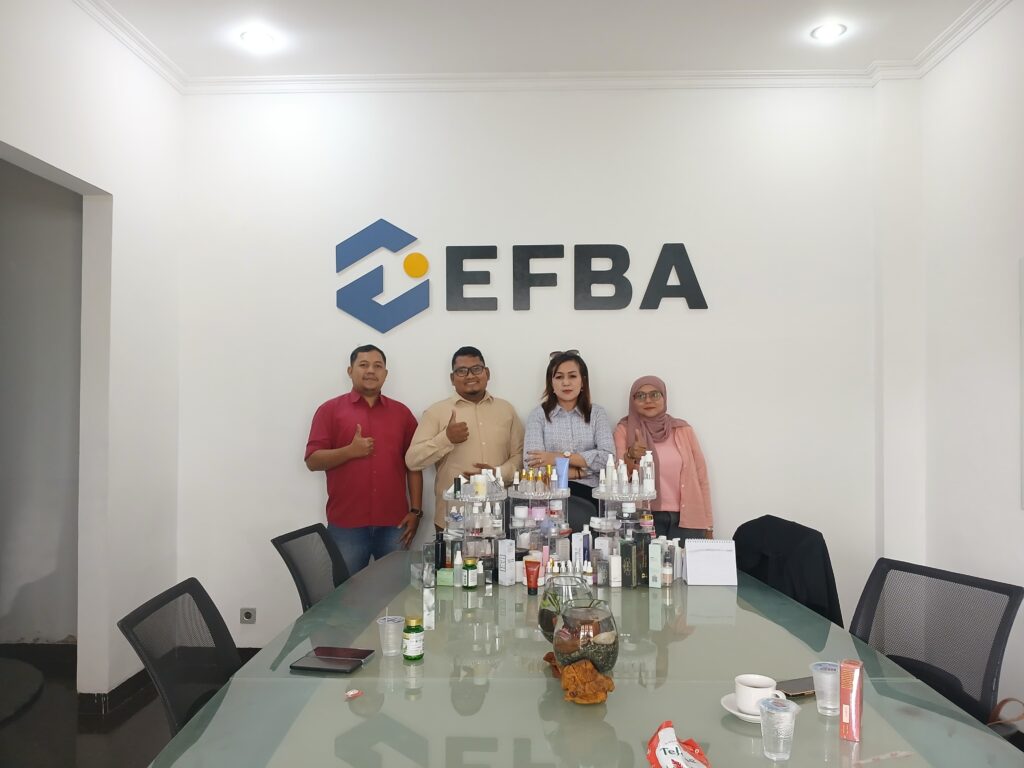
Coffee sourcing is only one part of developing an international commodity or beverage business.
Importers, distributors, entrepreneurs, and companies entering or expanding within Indonesia may also need to consider business strategy, market development, partnerships, commercial planning, and other requirements beyond the physical commodity.
Coffeenesia is connected with the broader EFBA business ecosystem.
For companies that require support beyond coffee sourcing, information regarding business development and related opportunities can be explored through EFBA Digital Mulia.
This creates a natural relationship between Coffeenesia’s specialization in Indonesian coffee and the broader business-development ecosystem.
For buyers, the discussion can therefore move from:
“Where can I source Gayo coffee?”
toward:
“How can Indonesian coffee become part of a sustainable commercial strategy for my business?”
Is Gayo Arabica Coffee Suitable for Roasters and Distributors?
Gayo Arabica coffee can be relevant to specialty roasters, importers, distributors, cafés, and coffee brands seeking an Indonesian-origin Arabica offering.
However, suitability depends on the buyer’s intended application.
A specialty roaster may prioritize sensory profile, processing method, traceability, green bean quality, and sample evaluation.
A distributor may place greater emphasis on volume, packaging, repeat supply, documentation, and logistics.
Meanwhile, a café or private-label coffee brand may consider both coffee quality and how the Gayo origin fits its market positioning.
Therefore, a sourcing decision should match the actual product specifications with commercial requirements.
FAQ About Gayo Arabica Coffee
What is Gayo Arabica coffee?
Gayo Arabica coffee is Arabica coffee associated with the Gayo Highlands of Aceh, Indonesia. The geographical area associated with Kopi Arabika Gayo includes Aceh Tengah, Bener Meriah, and Gayo Lues.
What does Gayo Arabica coffee taste like?
Gayo Arabica can show aromatic complexity, balanced acidity, substantial body, sweetness, and flavor characteristics that may include nutty, caramel, chocolate, fruity, herbal, or spice-related notes. Actual profiles vary according to lot, variety, processing, roasting, and brewing.
At what altitude is Gayo Arabica coffee grown?
Geographical-indication documentation describes Gayo Arabica production at approximately 900–1,700 meters above sea level.
Is all Gayo Arabica coffee specialty coffee?
No. Origin alone does not automatically make every lot specialty grade. Physical quality, defects, processing, sensory performance, and other specifications need to be evaluated for the actual coffee.
How does processing affect Gayo Arabica coffee?
Processing influences fermentation, drying, physical characteristics, and sensory development. Wet-hulled, full wash, natural, honey, and other processing approaches can therefore create different expressions.
What should importers check before buying Gayo coffee?
Buyers should evaluate origin, altitude, variety, processing method, moisture, defects, screen size, harvest information, sensory profile, traceability, packaging, and supply consistency.
Can international buyers source Gayo Arabica coffee from Coffeenesia?
Coffeenesia presents Gayo coffee for B2B sourcing. Buyers should confirm current availability, samples, specifications, pricing, packaging, quantities, and commercial terms directly before placing an order.
Why is traceability important when sourcing Gayo coffee?
Traceability helps buyers understand the coffee’s origin and available production information. It can also support quality evaluation, lot comparison, supplier communication, and greater transparency within the supply chain.
Source Gayo Arabica Coffee from Indonesia
Gayo Arabica coffee represents more than a recognizable Indonesian origin.
Its final characteristics emerge from the interaction between growing environment, variety, cherry maturity, processing, drying, sorting, storage, and quality evaluation.
For international buyers, sourcing decisions should therefore move beyond origin claims.
A practical evaluation can follow this sequence:
Origin → Variety → Processing → Physical Quality → Moisture → Defects → Cupping → Traceability → Lot Consistency → Commercial Requirements
If your business is looking for Gayo Arabica for roasting, wholesale, distribution, café operations, or other B2B applications, explore available products and sourcing information through Coffeenesia and discuss the current lot specifications directly with the team.
For businesses that also require broader support related to strategy, market development, partnerships, or business opportunities in Indonesia, explore the wider ecosystem through EFBA Digital Mulia.
With this approach, buyers can move from simply discovering Gayo Arabica coffee toward evaluating sourcing opportunities based on transparent information, product specifications, quality considerations, and actual business requirements.