
SEO Title:
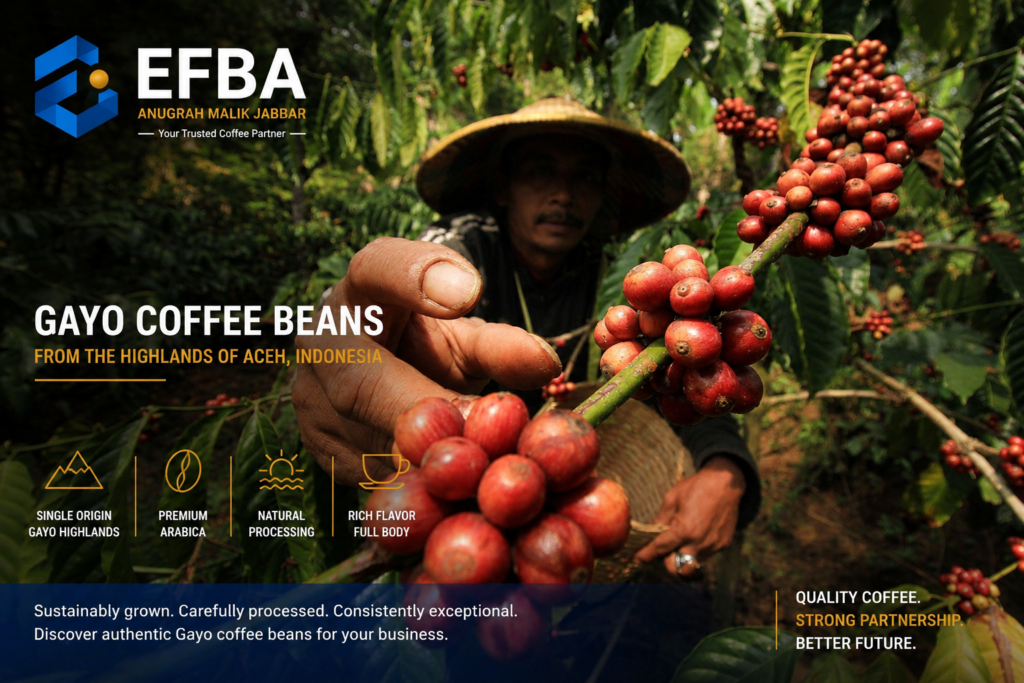
Gayo coffee beans are Indonesian coffee beans originating from the Gayo Highlands of Aceh, Sumatra. Known internationally for their distinctive origin and diverse flavor characteristics, Gayo coffee is available in different processing methods, grades, roast profiles, and supply formats for roasters, distributors, cafés, and other coffee businesses.
However, choosing the right Gayo coffee is not simply about finding beans labeled “Gayo.” Origin, processing method, bean quality, moisture condition, roast level, traceability, and supplier consistency can all influence the final cup and commercial value.
This guide explains the origin, flavor, processing methods, quality factors, and important considerations when sourcing Gayo coffee beans from Indonesia.
Table of Contents
ToggleWhat Are Gayo Coffee Beans?
Gayo coffee beans generally refer to coffee grown in the Gayo Highlands of Aceh, on the northern part of Sumatra, Indonesia. The region has a long association with Arabica coffee production and has developed a strong identity in Indonesia’s specialty coffee sector.
According to Indonesia’s Directorate General of Estate Crops, Kopi Arabika Gayo received Geographical Indication recognition in 2010.
This geographical identity is important for buyers because genuine origin is one of the factors that distinguishes Gayo coffee from generic Indonesian coffee.
For a deeper introduction to the region and its characteristics, read Aceh Gayo Coffee: 7 Amazing Reasons This Indonesian Coffee Is Special.
Where Do Gayo Coffee Beans Come From?
The origin of Gayo coffee beans is closely associated with the highland coffee-growing areas of Aceh.
Government agricultural information identifies Aceh Tengah, Bener Meriah, and Gayo Lues as important areas for Arabica coffee in the Gayo Highlands. The region includes coffee-growing areas above 1,100 meters above sea level.
Altitude is only one part of the story. Growing environment, variety, farm practices, harvest decisions, processing, storage, and roasting can all influence what buyers eventually experience in the cup.
Research published through Indonesia’s Ministry of Agriculture repository examined Gayo Arabica grown at elevations of 1,000–1,500 meters and 1,500–1,750 meters above sea level in Aceh Tengah and Bener Meriah. The study found differences in physical bean characteristics and reported cupping scores ranging from 82.75 to 85.25 in the samples studied.
Therefore, buyers should look beyond the country name “Indonesia” and understand the specific origin and lot characteristics when sourcing coffee.
What Do Gayo Coffee Beans Taste Like?
There is no single flavor description that applies to every bag of Gayo coffee beans.
The final flavor can vary according to several factors:
- growing location;
- altitude;
- coffee variety;
- harvest maturity;
- processing method;
- drying conditions;
- storage;
- roast profile; and
- brewing method.
Depending on the lot and processing method, buyers may encounter profiles ranging from chocolatey, nutty, earthy, spicy, herbal, sweet, or caramel-like characteristics to brighter fruity and more complex notes.
For commercial buyers, this variation can actually be valuable. Different profiles can serve different product strategies.
A coffee roaster may prefer a clean and balanced Gayo Arabica for a single-origin product. Meanwhile, another buyer may look for deeper body and chocolate-forward characteristics for espresso or blending.
Therefore, the most reliable way to understand a particular lot is to evaluate its specifications and sample rather than purchasing based only on a general description of “Gayo flavor.”
Why Does Gayo Coffee Flavor Vary?
The flavor of Gayo coffee beans begins at origin, but it continues to develop through every stage after harvest.
A simple way to understand this is:
Origin → Variety → Harvest → Processing → Drying → Storage → Roasting → Brewing
Changes at any of these stages can affect the final cup.
For example, two coffees grown in the same region may taste different when they use different processing methods. Likewise, the same green coffee can produce noticeably different sensory results under light and dark roast profiles.
This is why professional buyers should evaluate Gayo coffee as a complete product specification rather than relying solely on geographical origin.
Gayo Coffee Processing Methods
Processing is one of the most important factors influencing the character of Gayo coffee beans.
Gayo producers may use several processing approaches depending on the producer, facility, lot, and desired flavor profile.
1. Wet-Hulled Process
Wet-hulled coffee, commonly associated with Sumatra, uses a distinctive post-harvest approach in which parchment is removed while the coffee still contains more moisture than coffee processed through conventional fully washed methods.
This method can contribute to the body and character often associated with Sumatran coffees.
For buyers seeking traditional Indonesian profiles, wet-hulled Gayo coffee can be an important category to evaluate.
2. Washed Process
Washed processing focuses heavily on removing fruit material before the beans complete the drying process.
Depending on the coffee and execution, washed Gayo coffee beans can provide a cleaner profile that allows buyers to evaluate acidity, sweetness, and origin characteristics more clearly.
3. Natural Process
In natural processing, coffee cherries dry with the fruit surrounding the beans.
When carefully controlled, this method can create stronger fruit-forward characteristics and sweetness.
Natural Gayo coffee can therefore appeal to specialty roasters seeking more expressive and unconventional profiles.
4. Honey Process
Honey processing removes the outer skin while retaining varying amounts of mucilage during drying.
The resulting profile depends on processing decisions, drying conditions, and the coffee itself.
For some buyers, honey-processed Gayo offers an interesting balance between sweetness, body, and clarity.
Processing deserves close attention when selecting beans. You can learn more in our dedicated guide, Gayo Coffee Processing: 7 Powerful Ways Processing Shapes Flavor.
How Processing Changes Gayo Coffee Beans
For commercial buyers, processing should not be treated simply as terminology on a product label.
It can influence your product positioning.
| Processing | Potential Profile Direction | Suitable Commercial Use |
|---|---|---|
| Wet-Hulled | Full body, deeper character | Espresso, blends, traditional Sumatra profile |
| Washed | Cleaner, balanced | Single origin, filter, premium retail |
| Natural | Fruity, sweet, expressive | Specialty coffee, filter, limited releases |
| Honey | Sweet, balanced, complex | Specialty retail, filter, signature products |
These descriptions should be considered general tendencies rather than guaranteed tasting notes. Actual characteristics depend on the specific lot.
Green vs Roasted Gayo Coffee Beans
Before contacting a supplier, buyers should determine whether they need green or roasted coffee.
Gayo Green Coffee Beans
Gayo green coffee beans are suitable for roasters and businesses that want greater control over roasting.
Buying green coffee allows the buyer to create a roast profile based on the intended market.
For example, the same origin may be developed differently for:
- light-roast filter coffee;
- medium-roast retail beans;
- espresso;
- café house blends; or
- private-label coffee.
Green coffee buyers should pay particular attention to moisture, defects, screen size where relevant, processing, crop information, storage, and lot consistency.
Roasted Gayo Coffee Beans
Roasted beans are more suitable for buyers who do not have roasting facilities or want a product closer to the final retail stage.
When purchasing roasted coffee, ask about:
- roast level;
- roast date;
- whole bean or ground format;
- packaging;
- flavor profile;
- recommended brewing method; and
- available order quantity.
Choosing between green and roasted Gayo coffee beans therefore depends primarily on your business model.
Arabica Gayo Coffee and Geographical Indication
Origin authenticity is particularly important when sourcing premium coffee.
Indonesia’s Ministry of Agriculture lists Kopi Arabika Gayo among Indonesia’s Geographical Indication agricultural products and records its GI recognition in 2010.
The official Gayo Arabica Coffee specification goes considerably deeper. It includes defined geographical areas, cultivation controls, processing controls, traceability elements, buying and selling of GI coffee, testing, processing methods, lot preparation before export, roasting, and labeling.
Buyers who want to understand these specifications can review the Gayo Arabica Coffee Geographical Indication Specification.
This makes traceability an important question when purchasing Gayo coffee beans, especially for buyers marketing the coffee based on its geographical identity.
How to Evaluate Gayo Coffee Beans Before Buying
Commercial buyers should compare more than price.
Here are seven factors worth checking.
1. Confirm the Origin
Ask where the coffee comes from.
For Gayo coffee, information about the producing region, farm, cooperative, producer group, or collection area can provide valuable context.
The more origin information a supplier can provide, the easier it becomes for a buyer to evaluate traceability.
2. Ask About the Processing Method
Do not assume all Gayo coffee beans are wet-hulled.
Ask whether the lot is:
- wet-hulled;
- washed;
- natural;
- honey; or
- another controlled processing variation.
Processing information is especially important for specialty roasters because it can help predict the direction of the cup profile.
3. Review the Flavor Profile
Ask the supplier for available sensory or cupping information.
However, tasting notes should be treated as guidance rather than an absolute guarantee.
Roast development and brewing conditions can change how a coffee expresses itself.
Whenever possible, evaluate a sample before committing to a larger commercial order.
4. Check Physical Quality
For green coffee, evaluate specifications such as:
- moisture;
- bean size or screen information where applicable;
- defect level;
- appearance;
- processing;
- crop information; and
- consistency.
Physical quality and flavor are both important.
A study available through Indonesia’s Ministry of Agriculture repository specifically evaluated both physical quality and sensory characteristics of Gayo Arabica GI coffee, illustrating why buyers should not evaluate coffee through flavor descriptions alone.
5. Request Samples
Sampling is particularly valuable for B2B coffee purchases.
A sample allows your roasting or quality team to evaluate the coffee before making a larger purchase.
Depending on your operation, you may conduct:
Sample Evaluation → Sample Roast → Cupping → Brewing Test → Commercial Decision
This process can reduce the risk of purchasing coffee that does not fit your target flavor profile.
6. Evaluate Supply Consistency
A great sample is useful, but commercial buyers often need consistency beyond a single shipment.
Ask potential suppliers about:
- available volume;
- harvest availability;
- lot consistency;
- lead time;
- packaging;
- storage;
- repeat orders; and
- shipping or export arrangements.
This is especially important for cafés, distributors, and roasters that plan to sell Gayo coffee continuously.
7. Choose a Supplier That Understands Your Requirements
The right supplier should understand that different buyers have different specifications.
A specialty roaster may prioritize traceability and cupping characteristics.
A distributor may prioritize supply consistency and packaging.
A private-label business may need roasted coffee with specific product requirements.
An international importer may pay particular attention to documentation, volume, logistics, and shipment preparation.
Therefore, communicate your specifications clearly when requesting Gayo coffee beans.
Gayo Coffee Beans for Different Buyers
Gayo coffee can serve several commercial segments.
Coffee Roasters
Roasters can source green beans and develop their own roasting profiles.
This gives them greater control over how origin, processing, sweetness, acidity, body, and aroma are expressed.
Cafés
Cafés may use Gayo coffee for single-origin menus, espresso, manual brewing, or signature blends.
Choosing the appropriate processing and roast profile is important because each brewing application may require different characteristics.
Coffee Distributors
Distributors should consider not only flavor but also repeatability, available volume, packaging, documentation, and supplier reliability.
Private-Label Brands
Businesses developing their own coffee brand can select beans according to desired positioning and target market.
A premium specialty brand, for example, may require a different coffee specification from a mass-market medium-roast product.
Importers and International Buyers
International buyers generally require more detailed information regarding specifications, supply volume, packaging, traceability, and logistics.
Before purchasing, communicate destination, required volume, preferred processing, bean format, and other commercial specifications to the supplier.
What Makes Gayo Coffee Beans Commercially Interesting?
One major advantage is flexibility.
The same origin can support multiple product concepts depending on lot selection, processing, and roasting.
For example:
Gayo Arabica + Washed + Light Roast
→ specialty filter positioning
Gayo Arabica + Natural + Light/Medium Roast
→ fruity specialty positioning
Gayo Arabica + Wet-Hulled + Medium Roast
→ classic Sumatra-style positioning
Gayo Arabica + Medium/Dark Roast
→ espresso or bold retail positioning
These are product-development examples rather than fixed rules.
The best configuration depends on the actual coffee and the market you want to serve.
How to Choose Gayo Coffee Beans for Your Business
Before requesting a quotation, create a simple buying specification.
For example:
| Requirement | Example |
|---|---|
| Product | Gayo Arabica |
| Format | Green Coffee Beans |
| Processing | Washed / Natural / Wet-Hulled |
| Target Profile | Chocolate, sweet, balanced |
| Roast | Not applicable for green beans |
| Volume | Based on buyer requirement |
| Packaging | Request supplier options |
| Destination | Buyer country |
| Sample | Required before bulk purchase |
A clear specification makes communication between buyer and supplier much more efficient.
If you are still exploring available coffee and cascara options, visit the Coffeenesia product section.
Are Gayo Coffee Beans Specialty Coffee?
Some Gayo coffees can qualify as specialty coffee, but the term should not automatically be applied to every coffee simply because it comes from Gayo.
Quality must be evaluated at lot level.
Research involving Arabica Gayo GI coffee from Aceh Tengah and Bener Meriah reported total sensory scores of 82.75–85.25 for the samples studied, which the researchers categorized as specialty coffee.
This provides evidence of the region’s potential for specialty-quality coffee, but buyers should still evaluate each commercial lot individually.
Common Mistakes When Buying Gayo Coffee Beans
One common mistake is buying based solely on the word “Gayo.”
Origin matters, but it does not tell you everything about the coffee.
Another mistake is ignoring processing. Natural and wet-hulled coffees from the same broad origin can produce very different sensory experiences.
Buyers should also avoid choosing solely based on price. A cheaper offer may have different specifications, defects, processing, crop conditions, traceability, or consistency.
Finally, ordering a large volume without sample evaluation can increase purchasing risk.
A better approach is:
Define Requirements → Find Supplier → Review Specifications → Request Sample → Evaluate → Confirm Commercial Terms → Order
Why Source Gayo Coffee from Indonesia?
Direct sourcing from an Indonesian supplier can give buyers closer access to information about origin, processing, available lots, and product specifications.
At Coffeenesia, we focus on coffee and cascara products originating from Gayo, Indonesia. You can learn more about our background and sourcing focus on the Coffeenesia About page.
For buyers, the goal should not simply be to find coffee at the lowest price. The better objective is to identify Gayo coffee beans that fit the intended product, customer, roast strategy, and commercial requirements.
FAQ About Gayo Coffee Beans
Where do Gayo coffee beans come from?
Gayo coffee beans originate from the Gayo Highlands in Aceh, Indonesia. Important Arabica-producing areas in the region include Aceh Tengah, Bener Meriah, and Gayo Lues.
What do Gayo coffee beans taste like?
Flavor varies according to location, variety, processing, roasting, and brewing. Depending on the specific lot, Gayo coffee may show chocolate, nutty, earthy, spicy, herbal, sweet, caramel-like, or fruity characteristics.
Are Gayo coffee beans Arabica?
Gayo is particularly known for Arabica coffee. Kopi Arabika Gayo is also recognized as an Indonesian Geographical Indication product.
What processing methods are available for Gayo coffee?
Processing can include wet-hulled, washed, natural, honey, and other producer-specific methods. Availability depends on the supplier and current lot.
Can I buy Gayo green coffee beans?
Yes. Green coffee is particularly relevant for roasters and importers that want to control the final roast profile. Always confirm current product specifications and availability with the supplier.
Should I request a sample before buying in bulk?
For commercial purchases, sampling is highly recommended. It allows buyers to evaluate physical characteristics, roasting behavior, and cup profile before committing to a larger volume.
How do I choose a Gayo coffee supplier?
Evaluate origin information, processing, quality specifications, samples, available volume, consistency, packaging, communication, and logistics—not price alone.
Buy Gayo Coffee Beans from Coffeenesia
Choosing the right Gayo coffee beans requires more than selecting an origin name. Buyers should consider flavor profile, processing method, physical quality, format, traceability, consistency, and intended use before making a commercial purchase.
Whether you are sourcing green beans for roasting, exploring Gayo coffee for distribution, or developing a coffee product for your market, clear specifications will make the sourcing process more effective.
Explore available options through our Coffee and Cascara Products, or contact Coffeenesia to discuss your required product, processing method, volume, and destination.