
Welcome to the beverage arena of 2026, my friends. We are currently living through a massive boom in the circular economy, driven by climate-conscious consumers demanding genuine zero-waste products. For modern cafe owners, micro-roasters, and beverage directors, this shift isn’t just a corporate social responsibility checkbox—it is a goldmine for menu innovation.
Let’s be completely real about the operational hurdles of this upcycled movement. Far too many beverage brands fall into the trap of buying low-grade, poorly handled, mold-ripe husks from unverified brokers. When you source sub-standard raw materials, you inherit dangerous moisture spikes that quickly develop hidden mold and ruin your flavor consistency.
A bad batch can completely tank your signature beverage profile, leave a dusty aftertaste, and risk serious health compliance issues. Sourcing a clean, highly uniform batch of cascara tea is the ultimate secret tool for your modern F&B program. It allows you to protect your brand reputation while capitalizing on a massive, health-conscious afternoon drink market.
We are navigating a market where strict international sustainability compliance is the new normal. It is time to realize that clean agricultural upcycling represents a massive margin opportunity for your business. Let’s dive deep into the processing physics and numbers that make this ingredient work.
The Chemistry of Clean Husks: Moisture Control and Ochratoxin Prevention
When we step onto the drying patios, we have to treat the fruit skins with the exact same respect as the green beans inside. Creating a stellar botanical harvest requires immaculate timing, high initial cherry Brix levels, and precision dehydration technology. If a producer treats the husk as a discarded byproduct rather than a delicate ingredient, the flavor profile degrades instantly.
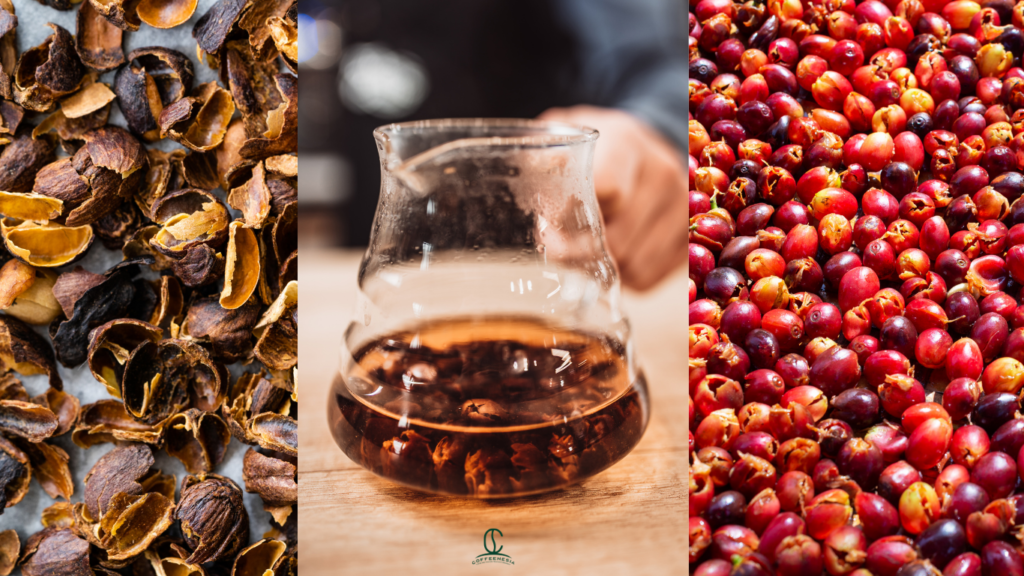
When evaluating any new batch of cascara tea, we have to look past the beautiful color and analyze the underlying data. We strictly monitor water activity and ensure the coffee fruit pulp is dried slowly on raised solar beds. If a supplier fails to stabilize the material during this critical phase, you end up with a volatile batch that tastes like vinegary compost rather than sweet stone fruits.
Keeping your inventory at an exact 10% to 11% moisture level is the only way to prevent dangerous mycotoxins like Ochratoxin A. In 2026, advanced food-safe dehydration tech has completely replaced old, risky open-ground drying habits to ensure total purity. By monitoring these metrics, you can prevent your cascara tea inventory from developing unexpected off-flavors over time.
Let’s look at how proper dehydration design alters your final beverage quality and shelf stability.
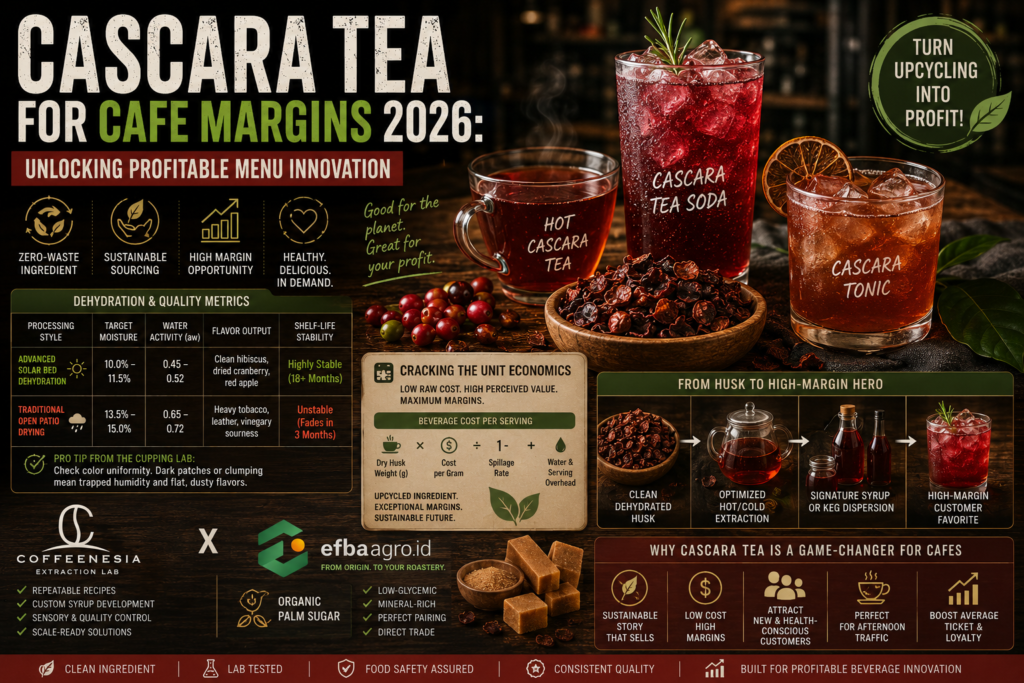
Dehydration & Quality Metrics Table
| Processing Style | Target Moisture | Water Activity (aw) | Flavor Output | Shelf-Life Stability |
| Advanced Solar Bed Dehydration | 10.0% – 11.5% | 0.45 – 0.52 | Clean hibiscus, dried cranberry, red apple | Highly Stable (18+ Months) |
| Traditional Open Patio Drying | 13.5% – 15.0% | 0.65 – 0.72 | Heavy tobacco, leather, vinegary sourness | Unstable (Fades in 3 Months) |
Pro Tip from the Cupping Lab: Always check the color uniformity of your dry husks before processing a large batch. If you see deep black patches or clumping, the lot was exposed to trapped humidity during drying, which kills your shelf life and introduces flat, dusty notes to your guest experience.
Cracking the Unit Economics of a Sustainable Menu Stream
Let’s talk pure financial logic because a sustainable menu item must perform beautifully on your profit and loss statement. The beauty of running a specialized cascara tea program is the incredibly low raw material cost compared to high-end green coffee. Because you are utilizing an upcycled botanical asset, your food cost per cup drops significantly while your perceived customer value remains incredibly high.
By utilizing pristine stock from trusted cascara tea supplier, your yield calculations stay completely rock-solid across high-volume daily service. We use a straightforward, clean formula to help cafes map out their exact beverage cost per serving before adding ice, syrups, or garnies. You can paste this simple calculation directly into your inventory management system:
Beverage Cost per Serving = [ (Dry Husk Weight in Grams × Cost per Gram) ÷ (1 – Spillage Rate) ] + Water & Serving Overhead
This predictability means every single kilo of cascara tea translates straight into high-margin liquid revenue for your operations. You can price your drinks competitively while enjoying gross margins that easily surpass traditional espresso-based milk drinks. It is the ultimate way to boost your bottom line while telling an authentic, zero-waste origin story that customers love.
Beverage Innovation: Crafting Modern Customer Favorites
Modern beverage menus in 2026 are moving way beyond a basic, slow hot infusion. Forward-thinking cafe owners are expanding their afternoon foot traffic by highlighting cascara tea on their seasonal menus. The natural sweetness and complex malic acidity make it a perfect base for signature drinks.
We love seeing baristas build concentrated syrup mixers to formulate refreshing sparkling variants. This approach allows you to craft a signature cascara tea profile that satisfies the non-coffee crowd without slowing down your bar workflow. It keeps your service line incredibly efficient while introducing an entirely new flavor experience to your community.
[Clean Dehydrated Husk] -> [Optimized Hot/Cold Extraction] -> [Signature Syrup or Keg Dispersion] -> [High-Margin Customer Favorite]
Refining the Brew: How Coffeenesia Perfects Your Downstream Execution

Our downstream production and execution lab team at coffeenesia.id handles the execution magic for your brand. We help you design repeatable extraction profiles, establish custom syrup formulations, and dial in the perfect brew parameters so your beverage line remains completely uniform across multiple retail locations. We bridge the gap between raw botanical sourcing and real-world barista execution.
By collaborating with our team, you gain access to dedicated sensory experts who understand how to scale recipes from a single cup to large commercial batches. We provide the technical blueprints necessary to ensure your menu options stay shelf-stable, vibrantly flavorful, and completely optimized for fast-paced commercial service. Let us do the heavy lifting in the lab so you can focus entirely on delivering a stellar hospitality experience to your guests.
Sweetening the Margin: How Efba Agro Supplies the Perfect Palm Sugar Companion

To truly elevate your upcycled beverage menu, you need a sweetener that matches the artisanal, farm-direct story of your ingredients. This is where our dedicated agribusiness and logistics arm at efbaagro.id comes into play. Instead of muddying your clean extraction with heavily processed white refined sugars, you can source premium organic palm sugar directly through their direct-trade agricultural pipeline.
This unrefined, low-glycemic palm sugar is scientifically selected to complement the tart, fruit-forward acidity of your brew without overpowering its subtle stone-fruit notes. Sourcing this sustainable sweetener directly from efbaagro.id allows you to lock in a fully traceable, farm-to-barista supply chain that perfectly supports your new menu line. It gives your cafe a distinct, premium pairing asset that drives up your average ticket margins effortlessly.
Elevating Your Beverage Program
As we push forward into 2026, the most successful F&B businesses are those that successfully turn agricultural upcycling into premium, unforgettable consumer experiences. Refusing to compromise on the quality of their foundational cascara tea stock is the absolute defining factor between a forgettable gimmick and a highly profitable staple. Your community wants an eco-friendly narrative backed by delicious, clean liquid execution.
We are right here with you, ready to help you optimize your menu yields and surprise your guests with amazing flavors. Let’s stop treating these beautiful fruit husks as waste and start building them into our core business strategies. The opportunities for your brand are completely wide open.
Are you ready to transform your afternoon menu traffic and capture incredible beverage margins? Reach out to us today for a casual, no-nonsense Cascara Menu Integration & Sourcing Audit with the team here at Coffeenesia, and let’s craft something legendary together.
FAQ: Practical Questions from the Beverage Floor
What is the exact difference between standard coffee cherry tea and premium estate-sourced lots?
Standard coffee cherry tea is often treated as an unverified byproduct, resulting in uneven drying, high defect counts, and a flavor profile dominated by dusty, wood-like notes. In contrast, premium estate-sourced lots are harvested from high-altitude trees where the cherries are picked at peak sugar content. This meticulous sorting results in a pristine botanical product that delivers exceptionally clean notes of hibiscus, tamarind, and dried plum.
How can we perfectly replicate a high-volume cascara coffee cherry tea batch for multi-outlet consistency?
To ensure your cascara coffee cherry tea batches taste identical across multiple cafe locations, we highly recommend shifting away from individual cup steeping and moving toward a centralized batch-brewing protocol. Utilize a digital refractometer to measure total dissolved solids (TDS) and lock in your extraction metrics using consistent water temperatures of 93°C. Storing the concentrated base in stainless steel kegs pressurized with nitrogen will keep the flavor locked in perfectly for your baristas.
What is the shelf-life stability of a pre-batched cascara cherry tea syrup stored in commercial refrigeration?
A pre-batched cascara cherry tea syrup prepared with a clean 1:1 sugar-to-liquid ratio will maintain absolute peak flavor stability for up to 21 days when kept in a sealed container under standard commercial refrigeration. Because our clean raw materials feature incredibly low initial microbial counts, your syrups won’t experience premature fermentation. Always use clean, sanitized squeeze bottles to prevent outside contamination on a busy espresso bar.