
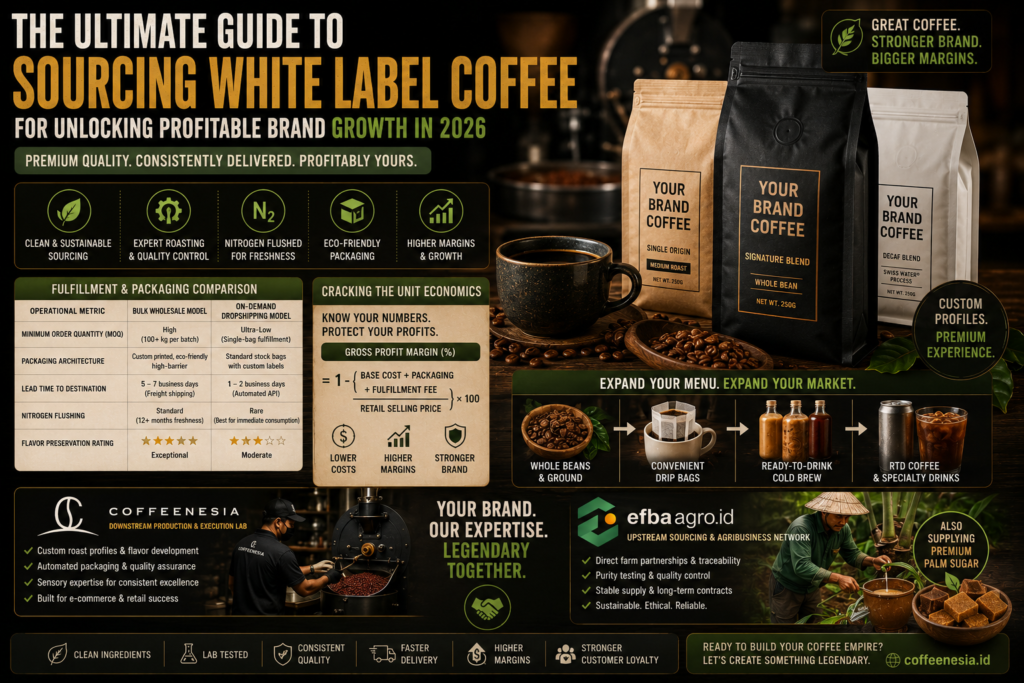
Welcome to the front lines of the 2026 beverage market, my friends. We are looking at a hyper-competitive landscape where omnichannel e-commerce saturation is at an all-time high, and consumers are more demanding than ever. If you want your coffee brand to stand out on a crowded digital shelf or a retail aisle, beautiful packaging simply isn’t enough anymore.
Let’s be completely honest about what happens when you rush into this market unprepared. Far too many enthusiastic founders fall directly into the trap of partnering with low-quality, automated print-on-demand brokers who promise rock-bottom prices. What you actually get are stale, pre-ground commercial beans packaged in cheap bags that leak oxygen at the seams, destroying your product’s flavor profile within days.
A terrible first impression like that completely destroys your customer lifetime value (LTV) right out of the gate. You will quickly find yourself spending more money on refunds, customer service damage control, and overcoming negative reviews than you ever saved on cheap initial production costs. That is exactly why partnering with a dedicated, expert white label coffee partner is the master key to scaling a premium brand while keeping your sanity, your reputation, and your profit margins entirely intact.
Working alongside a professional white label coffee supplier ensures your brand delivers an uncompromised, specialty-grade experience to every single consumer. We are all in this together, and we know that consistent quality is the only way to build a loyal community that clicks “subscribe” month after month. Let’s pull back the curtain on what it actually takes to engineer a world-class brand this year.
Behind the Batch: Custom Profiles, Degassing, and Preservation Tech
When we step out of the office and into the roasting lab, the real chemistry begins. Developing a signature profile requires precise custom profile matching, tracking Agtron color scores, and monitoring development time ratios with pinpoint accuracy. When you evaluate a potential white label coffee solution, you must ask about their tech stack and how they handle thermodynamic consistency across large production volumes.
The magic doesn’t stop once the beans leave the roasting drum; in fact, the post-roast window is where your product’s shelf life is won or lost. Freshly roasted coffee releases a massive volume of carbon dioxide, requiring an expertly managed degassing window before final sealing. If you pack too early without structural protection, your bags will bloat; if you pack too late, your precious volatile aromatics escape into thin air.
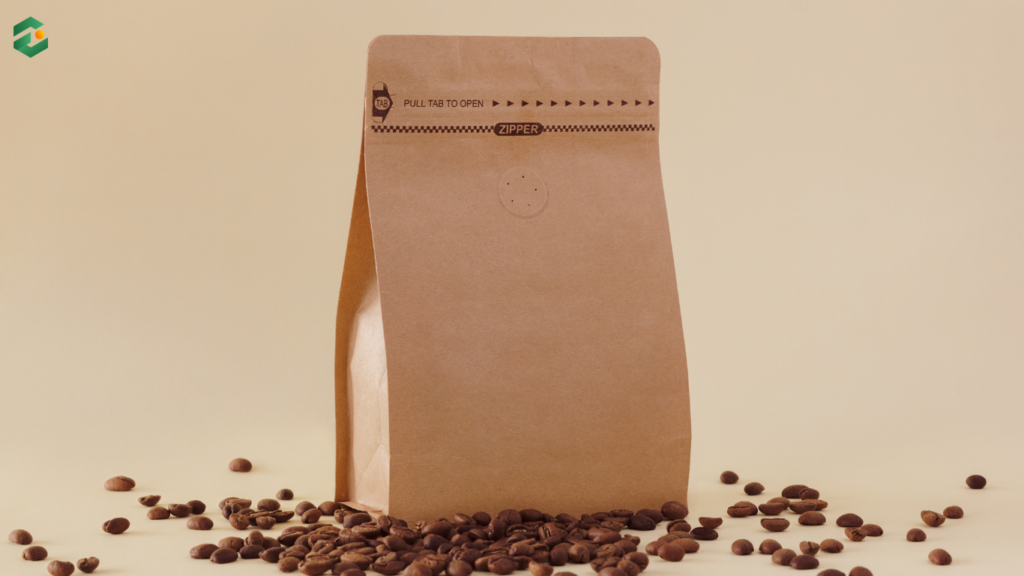
That is why we mandate advanced nitrogen-flushing systems that reduce residual oxygen levels inside the packaging to well below 1%. Sourcing a high-tier white label coffee product gives you access to this level of preservation tech, ensuring your custom origin profiles don’t taste like flat cardboard by the time they reach a consumer’s kitchen. Furthermore, in 2026, your audience expects eco-friendly, compostable high-barrier packaging that protects both the delicate oils and the planet simultaneously.
To help you visualize your operational options, let’s look at a breakdown of how different production and fulfillment pathways operate under our current market conditions.
Fulfillment & Packaging Comparison Table
| Operational Metric | Bulk Wholesale Model | On-Demand Dropshipping Model |
| Minimum Order Quantity (MOQ) | High (Typically 100+ kg per batch) | Ultra-Low (Single-bag fulfillment) |
| Packaging Architecture | Custom printed, eco-friendly high-barrier | Standard stock bags with custom labels |
| Lead Time to Destination | 5 – 7 business days (Freight shipping) | 1 – 2 business days (Automated API) |
| Nitrogen Flushing | Standard (Guarantees 12+ months freshness) | Rare (Best for immediate consumption) |
| Flavor Preservation Rating | Exceptional (Oxygen entirely eliminated) | Moderate (Higher exposure during pack) |
Cracking the Unit Economics of a Sustainable Coffee Brand
Let’s talk numbers because running a beautiful brand requires clear-headed financial discipline, especially with volatile green coffee markets squeezing margins tight this year. You need to know your exact landed cost per unit down to the fraction of a cent before you spend a single dollar on digital marketing. If you don’t map out your unit economics correctly, a sudden spike in shipping rates or packaging costs can instantly wipe out your entire quarterly profit.
We use a straightforward, clean formula to help brand founders evaluate their true profitability across various sales channels. You can paste this simple calculation directly into your financial tracking spreadsheets:
Gross Profit Margin (%) = [ 1 – ( (Base Product Cost + Custom Packaging & Labeling + Fulfillment Fee) ÷ Retail Selling Price ) ] × 100
Navigating your production volumes wisely and utilizing strategic white label coffee options allows you to optimize the base product cost element of this equation. Choosing a reliable production partner can protect your cash flow by offering scalable tier structures that lower your per-unit cost as your monthly volumes grow. This gives you the financial breathing room needed to aggressively fund your customer acquisition channels and dominate your niche.
Menu Expansion: From Whole Beans to Ready-To-Drink Formats
Whole beans and standard grinds are great foundational products, but 2026 consumers are heavily demanding maximum convenience alongside top-tier flavor quality. Forward-thinking brand owners are scaling their reach by expanding their menus into innovative, single-serve formats and liquid solutions. This allows you to capture diverse consumer touchpoints throughout the day, from the morning kitchen routine to afternoon convenience cravings.
Outsourcing production allows you to introduce specialty single-serve drip bags, iced concentrates, and ready-to-drink options without purchasing millions of dollars in canning equipment. Developing a modern, diversified white label coffee menu strategy keeps your brand fresh, relevant, and highly competitive in a fast-moving marketplace. It allows you to expand your foot traffic and online average order value effortlessly.
[Core Roasted Beans] -> [Convenient Drip Bags] -> [Ready-to-Drink Liquid Lines] -> [Maximum Market Share]
Refining the Roast: How Coffeenesia Perfects Your Downstream Execution

Our downstream production and execution lab team at coffeenesia.id handles the execution magic for your brand. We help you design repeatable roast profiles, manage automated packaging lines, and dial in the perfect sensory metrics so your product line remains completely uniform across multiple retail locations. We bridge the gap between raw botanical sourcing and real-world e-commerce execution.
By collaborating with our team, you gain access to dedicated sensory experts who understand how to scale custom recipes from a single sample to large commercial batches. We provide the technical blueprints necessary to ensure your white label coffee options stay shelf-stable, vibrantly flavorful, and completely optimized for fast-paced commercial service. Let us do the heavy lifting in the lab so you can focus entirely on marketing and community building.
Sweetening the Margin: How Efba Agro Secures Your Upstream Supply Chain

On the other side of our ecosystem, our agribusiness masters at efbaagro.id take charge of the complex upstream field network. This team manages the strict quality controls at the farm level, ensures strict regulatory compliance, and directly exports clean, traceable green lots. They handle the agricultural heavy lifting so your brand never faces unexpected quality drops or sudden supply chain shortages when building your white label coffee business.
Plus, because they manage diverse sustainable agricultural pipelines, you can source premium organic palm sugar directly through efbaagro.id as an optional natural companion product. This unrefined sugar is the perfect companion ingredient to offer alongside your coffee lines, giving you a fully traceable, farm-to-shelf product solution. It gives your brand a distinct, premium pairing asset that drives up your average ticket margins and deepens your customer loyalty.
Securing Your Brand’s Future
As we push forward into 2026, the most successful coffee businesses are those that successfully turn reliable sourcing into premium, unforgettable consumer experiences. Relying on unverified, generic print-on-demand setups will only result in flat flavors, volatile shelf lives, and customer disappointment. Your community wants a sustainable narrative backed by delicious, clean liquid execution.
Are you ready to transform your sales channels and capture incredible e-commerce or retail margins? Reach out to us today for a casual, deep-dive White Label Strategy & Flavor Alignment Audit with the team here at Coffeenesia, and let’s craft something legendary together.
FAQ: Practical Questions from Brand Founders
We know that choosing the right production pathway can bring up plenty of technical questions on the warehouse floor. Here are the practical realities of launching your white label coffee program this year:
What criteria should I use to evaluate different white label coffee suppliers in a volatile market?
When evaluating different white label coffee suppliers, look past their basic pricing and analyze their quality control infrastructure. Ensure they utilize climate-controlled green storage, automated sorting equipment, and nitrogen-flushing packaging lines to preserve volatile flavor compounds. A reliable supplier should also offer complete visibility into their green sourcing and provide transparent, data-backed proof of lot consistency.
How do elite white label coffee roasters ensure batch-to-batch consistency over a long contract cycle?
Elite white label coffee roasters achieve absolute consistency by utilizing advanced software profiles like Cropster or Artisan to lock in thermodynamic variables. They track the rate of rise (ROR), air temperature, and first crack duration with extreme precision to duplicate the exact flavor curves across every single batch. This data-driven execution ensures your signature blend tastes identical to your consumers month after month.
Is it more profitable to buy white label coffee beans in bulk or use an on-demand fulfillment model?
Buying white label coffee beans in bulk offers significantly lower per-unit product costs, allowing you to maximize your gross profit margins on high-volume channels. On-demand fulfillment models are excellent for testing the market with low initial capital risk, but the higher per-bag fees will restrict your marketing budget. Transitioning to bulk warehousing once your monthly volumes stabilize is the ultimate way to secure long-term profitability.