

Global coffee buyers increasingly need more than a competitive price. Importers, roasters, distributors, and specialty coffee brands want to understand where coffee comes from, how it was processed, how quality was controlled, and who handled it before export.
This is where coffee supply chain traceability becomes important. A traceable supply chain connects the coffee purchased by a buyer with information about its origin, farmer or cooperative network, processing method, lot, quality specifications, packaging, and shipment.
For international buyers, coffee supply chain traceability provides a clearer connection between the physical coffee and its sourcing information. As a result, buyers can evaluate origin, quality, processing, and shipment details before confirming an order.
Indonesia has a strong position within this global supply chain. USDA currently places Indonesia among the world’s largest coffee producers, with production of approximately 12.37 million 60-kg bags in 2025/26, representing about 6.9% of global production. FAS
For buyers seeking Indonesian coffee, Coffeenesia focuses on premium single-origin Indonesian coffee and cascara sourced from the Gayo Highlands of Aceh. Its published sourcing model emphasizes direct sourcing, quality control, product-origin transparency, processing information, and relationships with local farming communities. https://coffeenesia.id/
The supply chain can be understood simply:
Farm → Harvest → Processing → Lot Identification → Quality Control → Packaging → Export → Global Buyer
What Is Coffee Supply Chain Traceability?
Coffee supply chain traceability is the ability to identify and follow coffee from its production origin through processing, quality control, packaging, logistics, and delivery to the buyer. For a global buyer, traceability answers practical sourcing questions:
Where was the coffee grown? → What coffee is it? → How was it processed? → How was quality checked? → Which lot am I buying? → How will it reach me?
Therefore, coffee supply chain traceability supports purchasing decisions, quality consistency, sourcing transparency, and stronger communication between farmers, suppliers, roasters, and importers. Coffeenesia states that its products provide transparency regarding origin, variety, and processing methods. Its website also describes Gayo coffee as sourced through direct relationships with farming communities in Aceh.https://coffeenesia.id/ For buyers, that creates a clearer connection between origin and finished coffee.
Why Does Coffee Supply Chain Traceability Matter to Global Buyers?
Coffee supply chain traceability becomes especially relevant when buyers need consistent coffee for roasting, wholesale distribution, private label, or specialty programs. Without adequate sourcing information, a buyer may receive coffee with an attractive commercial name but limited information about its actual origin or processing.
A stronger sourcing model follows:
Origin → Specification → Sample → Quality Verification → Purchase → Shipment
This process helps buyers compare lots based on more than price.
For specialty coffee, origin and processing can also influence how buyers position the coffee to customers. A Gayo Arabica from Aceh, for example, carries a different sourcing story and sensory identity from coffee produced in another Indonesian region.
Therefore, coffee supply chain traceability creates value for both procurement and marketing.
1. Traceability Starts at the Coffee Origin
The first question should be simple: Where does this coffee come from?
Indonesia has a geographically diverse coffee industry. USDA data shows Sumatra contributes roughly 70–75% of Indonesia’s green coffee production, while northern Sumatra represents the country’s principal Arabica-producing area. USDA Apps
Coffeenesia focuses strongly on Gayo Arabica from Aceh.
Its published sourcing information connects its coffee with farmers and cooperatives in the Gayo Highlands and describes its coffee as single-origin Indonesian coffee. https://coffeenesia.id/
Therefore, the first layer of coffee supply chain traceability becomes:
Indonesia → Aceh → Gayo Highlands → Farming Community / Cooperative → Coffee Lot
This gives international buyers a clearer origin story than simply purchasing coffee labeled “Indonesian Arabica.”
2. Identify the Coffee Variety and Product Specification
Origin alone is not enough.
Buyers also need to understand what they are purchasing.
A useful sourcing specification may cover information such as:
Origin → Coffee Type → Grade → Processing Method → Moisture → Defects → Cup Profile → Packaging
The exact specification depends on the product and commercial agreement.
Coffeenesia publishes Gayo Arabica offerings for global buyers and provides coffee through multiple processing styles, including Washed, Honey, and Natural. Its website also describes options for green beans, roasted beans, wholesale requirements, and private-label needs. https://coffeenesia.id/
Clear specifications make coffee supply chain traceability commercially useful because buyers can connect origin information with the actual characteristics of the coffee being purchased.
3. Record the Processing Method
Coffee processing has a major influence on the final character of the bean.
Therefore, traceability should continue after harvest.
The chain becomes:
Coffee Cherry → Selection → Processing → Drying → Sorting → Green Bean
For Gayo coffee, Coffeenesia publishes several processing options, including Washed, Honey, and Natural processes. https://coffeenesia.id/
Recording the processing method allows roasters to better understand the coffee before evaluating samples or developing roast profiles.
It also makes it easier to compare one lot with another during repeat purchases. In this context, coffee supply chain traceability gives buyers additional information for evaluating consistency between lots.
4. Separate Coffee into Identifiable Lots
A practical traceability system should avoid treating all coffee from a region as one identical product. Different harvests, farms, cooperatives, processing methods, and batches can produce different characteristics.
Therefore: Origin + Harvest + Process + Lot = Traceable Coffee
Lot identification helps suppliers connect a physical shipment with its sourcing and quality information. For buyers, this becomes especially important when purchasing coffee repeatedly. If a particular lot performs well, the buyer has a clearer reference for future sourcing discussions. That continuity strengthens coffee supply chain traceability across repeat purchases.
5. Verify Quality Before Purchasing
Traceability should support quality control, not replace it. A coffee may have excellent origin information but still need to meet the buyer’s required specifications. That is why professional sourcing should combine:
Traceability + Specification + Quality Control. Coffeenesia states that it oversees coffee and cascara production to support quality and consistency. Its published coffee sourcing information also refers to grading, moisture testing, cupping evaluation, and quality inspection.https://coffeenesia.id/
For global buyers, sample evaluation remains an important step before larger orders. A practical process is: Requirement → Product Matching → Sample → Cupping → Specification Confirmation → Order
This process strengthens coffee supply chain traceability because buyers can connect sourcing information with physical product evaluation before purchasing.
6. Use Samples to Confirm the Coffee
One of the most practical questions from international buyers is:
Can I receive a coffee sample before placing a wholesale order?
Coffeenesia explicitly invites prospective buyers to request samples of its Indonesian specialty coffee and cascara. https://coffeenesia.id/
Sampling connects digital traceability information with physical product evaluation. Therefore, it also forms an important part of coffee supply chain traceability.
The buyer can review:
Aroma → Flavor → Acidity → Body → Aftertaste → Defects → Overall Suitability
The goal is straightforward. The coffee described in the sourcing specification should match the coffee the buyer actually evaluates.
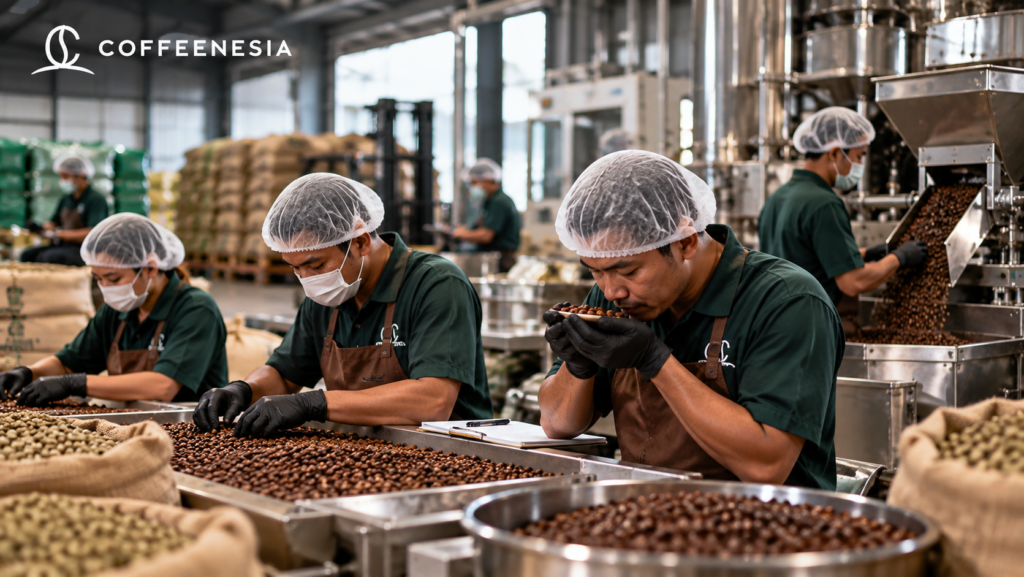
Direct Relationships with Gayo Coffee Communities
Coffee traceability also depends on relationships at origin. In fact, strong relationships can make coffee supply chain traceability more practical because suppliers can connect buyers with clearer sourcing information.
Coffeenesia states that its sourcing model connects its coffee with farming communities and cooperatives in the Gayo Highlands. The company also explains that its purchases support local farmers, encourage innovation among young coffee producers, and contribute to environmental preservation in the Gayo area. https://coffeenesia.id/
As a result, buyers can understand a more meaningful sourcing chain:
Gayo Farmer → Local Coffee Network → Coffeenesia → Global Buyer
For international brands, this origin story can also support product communication. However, coffee supply chain traceability should always rely on specific sourcing information rather than broad marketing claims.
Therefore, buyers should request the origin, lot, processing method, quality specifications, and supporting information for the coffee they intend to purchase. This approach helps buyers evaluate each shipment based on its actual characteristics.
Coffeenesia Coffee Supply for Wholesale Buyers
Coffeenesia’s published partnership model supports different purchasing scales. The company lists a 25 kg Merchant Tier, a 100 kg Wholesale Tier, and a Distributor Tier above 250 kg. https://coffeenesia.id/
This structure allows potential buyers to start with a smaller commercial quantity. Then, buyers can increase their order volume after evaluating the coffee and confirming their sourcing requirements.
For quality evaluation, Coffeenesia also encourages buyers to request samples. https://coffeenesia.id/
Consequently, buyers can follow a practical purchasing flow:
Inquiry → Requirement → Sample → Evaluation → Specification → Quantity → Order → Export
This process also supports coffee supply chain traceability because the buyer can connect the requested specifications with the actual coffee sample before placing a larger order.
For global buyers seeking a long-term supply relationship, this approach provides a more structured starting point than committing to commercial volume without evaluating the coffee first.
Coffeenesia, EFBA Agro, and the Indonesian Supply Ecosystem
Coffeenesia focuses specifically on Indonesian coffee and cascara for international buyers.
Meanwhile, EFBA Agro International provides Indonesian agricultural commodities for wholesale and export markets. Its coffee sourcing content emphasizes consistent specifications, traceability, post-harvest handling, quality control, and export support for international buyers. Efba Agro
In addition, PT EFBA Digital Mulia represents the wider EFBA business ecosystem.
For coffee buyers, each business therefore has a distinct role:
Coffeenesia → Specialized Coffee & Cascara Supply
EFBA Agro → Broader Indonesian Agricultural Commodity Supply
This distinction keeps the sourcing message clear. More importantly, it allows the article to focus on Coffeenesia’s specific role in Indonesian coffee sourcing and coffee supply chain traceability.
FAQ About Coffee Supply Chain Traceability
What is coffee supply chain traceability?
Coffee supply chain traceability is the ability to follow coffee from its production origin through processing, lot identification, quality control, packaging, export, and delivery to the buyer.
As a result, buyers can understand where their coffee comes from and how it moves through the supply chain.
Why is coffee supply chain traceability important for importers?
Coffee supply chain traceability helps importers connect a purchased lot with its origin, processing method, product specification, and quality information.
Furthermore, clear traceability can support repeat purchasing and more transparent communication with roasters, retailers, and consumers.
Can Indonesian coffee be traced to its origin?
Yes, suppliers can maintain origin and lot information to support traceability.
For example, Coffeenesia states that it provides transparency regarding origin, variety, and processing methods for its products. https://coffeenesia.id/
However, buyers should confirm the specific information for each lot before purchasing.
Where does Coffeenesia source its coffee?
Coffeenesia focuses on Indonesian coffee from the Gayo Highlands of Aceh, particularly premium Gayo Arabica sourced through local farming communities and coffee networks. https://coffeenesia.id/
Therefore, origin information forms an important part of the company’s sourcing proposition and coffee supply chain traceability.
What processing methods does Coffeenesia offer?
Coffeenesia publishes Gayo coffee offerings using Washed, Honey, and Natural processing methods.
However, availability can vary by lot. Buyers should therefore confirm the processing method and specification for the particular coffee they intend to purchase. https://coffeenesia.id/
Can global buyers request coffee samples?
Yes. Coffeenesia explicitly invites potential buyers to request samples of its specialty coffee and cascara before continuing with sourcing discussions. https://coffeenesia.id/
Sampling provides another practical checkpoint within coffee supply chain traceability because buyers can compare the physical coffee with the stated origin and product specifications.
What is Coffeenesia’s wholesale MOQ?
Coffeenesia currently publishes three partnership levels: 25 kg Merchant Tier, 100 kg Wholesale Tier, and Distributor Tier above 250 kg for its premium coffee and cascara. https://coffeenesia.id/
Buyers should confirm current availability, pricing, and commercial terms before placing an order.
Does Coffeenesia supply coffee for international buyers?
Yes. Coffeenesia positions its Gayo Arabica and cascara for importers, roasters, cafés, distributors, and other global buyers.
The company also publishes sourcing and export support information across its website.https://coffeenesia.id/
As a result, international buyers can discuss origin, processing, specifications, samples, order quantities, packaging, and export requirements as part of a structured sourcing process.

Source Traceable Indonesian Coffee with Coffeenesia
A reliable coffee supply chain does more than move beans from Indonesia to international markets. It gives buyers clear information about the coffee’s origin, processing method, quality, lot, and shipment.
For international roasters and distributors, coffee supply chain traceability helps connect each stage of sourcing:
Farm → Origin → Processing → Lot → Quality Control → Packaging → Export → Buyer
Coffeenesia connects global buyers with premium Indonesian coffee from the Gayo Highlands. Its sourcing model highlights direct relationships at origin, quality control, origin transparency, multiple processing methods, sample requests, wholesale supply, and export support.https://coffeenesia.id/
Through this approach, buyers can evaluate coffee based on more than price. They can also review its origin, processing characteristics, quality specifications, and available supply before placing a commercial order.
For businesses seeking Indonesian coffee with clearer sourcing information, Coffeenesia provides a structured path from origin selection and sample evaluation to wholesale purchasing and international delivery.