
Finding reliable wholesale coffee beans Indonesia suppliers requires more than comparing prices. Businesses need to evaluate coffee origin, species, processing method, physical specifications, cup profile, consistency, available volume, packaging, documentation, and the supplier’s ability to support ongoing orders.
Indonesia offers coffee from multiple producing regions, with both Arabica and Robusta available for different market requirements. For roasters, importers, distributors, cafés, and coffee brands, this diversity creates opportunities to source coffees for specialty single-origin products, blends, espresso, retail, and other commercial applications.
However, buying wholesale is different from purchasing a few bags of roasted coffee. A successful sourcing relationship requires clear specifications and communication between buyer and supplier.
This guide explains how to evaluate wholesale coffee beans Indonesia, what information to request before ordering, and how businesses can build a more reliable sourcing strategy.
Table of Contents
ToggleWhy Source Wholesale Coffee Beans from Indonesia?
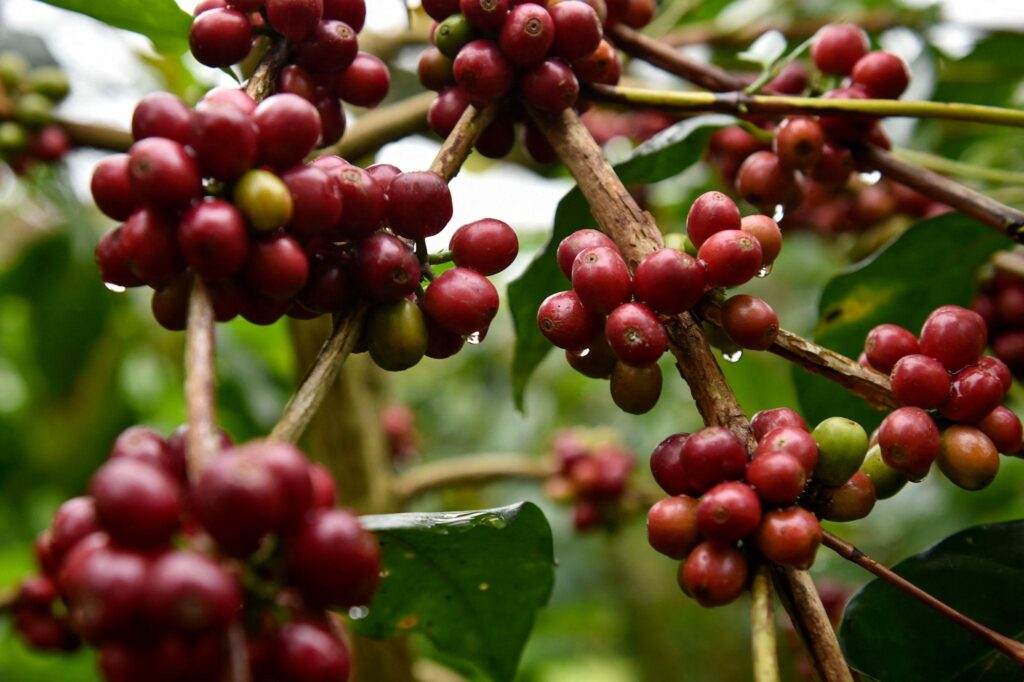
Indonesia has a long-established role in the international coffee trade. Official data from BPS-Statistics Indonesia’s coffee export statistics tracks Indonesian coffee exports to major destination countries through 2025, demonstrating the country’s continuing participation in international coffee markets.
For wholesale buyers, Indonesia is particularly interesting because its coffee-producing regions can provide different characteristics.
Depending on origin, variety, processing, roast requirements, and individual lot, buyers may encounter coffees with sensory characteristics associated with:
- Chocolate
- Cocoa
- Caramel
- Nuts
- Spices
- Herbal notes
- Floral characteristics
- Citrus
- Stone fruit
- Tropical fruit
- Fuller body
- Different levels of acidity and sweetness
However, buyers should avoid assuming that every Indonesian coffee shares the same flavor profile.
The characteristics of a particular coffee depend on the actual lot.
Therefore, professional sourcing should begin with specifications and samples rather than broad assumptions about origin.
Who Buys Wholesale Coffee Beans Indonesia?
The market for wholesale coffee beans Indonesia can include many types of businesses.
Coffee Roasters
Roasters may source green coffee beans and develop roast profiles according to their target customers.
A specialty roaster may prioritize traceability, cup quality, processing, and distinctive sensory characteristics.
Meanwhile, a larger commercial roaster may place greater emphasis on consistency, volume, price stability, and repeat supply.
Coffee Importers
Importers generally need to evaluate more than coffee quality.
They may also need information about packaging, quantities, documentation, shipping arrangements, lead times, and supplier capabilities.
Distributors and Wholesalers
Coffee distributors need products that fit their target markets and commercial requirements.
Depending on their customers, they may seek specialty Arabica, commercial Arabica, Robusta, or specific origins.
Cafés and Coffee Shops
Some cafés purchase directly from roasters, while larger operations may develop their own sourcing or private-label programs.
In these cases, consistency becomes particularly important because customers expect a similar beverage experience from one purchase to the next.
Coffee Brands
Businesses building their own coffee brand may source beans for retail products, e-commerce, hospitality, or private-label distribution.
Therefore, understanding product specifications before placing a wholesale order is essential.
7 Powerful Tips for Sourcing Wholesale Coffee Beans Indonesia
Businesses evaluating Indonesian suppliers should consider several factors before discussing a large purchase.
1. Define the Coffee You Need
Before contacting a supplier, define what you are actually looking for.
Simply asking:
“How much is Indonesian coffee?”
provides too little information for an accurate sourcing discussion.
A better inquiry might specify:
“We are looking for Indonesian Arabica green coffee for specialty roasting, with a particular processing method, target cup profile, quantity, packaging requirement, and destination.”
Your sourcing brief can include:
- Arabica or Robusta
- Green or roasted coffee
- Origin
- Processing method
- Target cup profile
- Quality requirements
- Quantity
- Packaging
- Destination country
- Expected purchasing frequency
A clear brief allows suppliers to determine whether they have an appropriate product.
If you are still comparing suppliers, our Indonesia Coffee Supplier: 7 Proven Ways to Choose the Best Partner explains several factors businesses should consider when selecting a sourcing partner.
2. Understand Indonesian Coffee Origins
Indonesia should not be treated as one homogeneous coffee origin.
Coffee-growing regions can have different environments, varieties, producer practices, processing traditions, and commercial structures.
For example, Gayo coffee from Aceh has become a recognizable Indonesian origin among specialty coffee buyers.
Other Indonesian coffee-producing areas may offer very different profiles and commercial opportunities.
When evaluating wholesale coffee beans Indonesia, ask for specific origin information rather than accepting only the label “Indonesian Coffee.”
Depending on availability, useful information may include:
Country: Indonesia
Region: Aceh / other producing region
Area: More specific producing location
Species: Arabica / Robusta
Variety: Where available
Processing: Wet-hulled / washed / natural / honey / others
Harvest: Where available
Origin information becomes particularly valuable when the coffee will be sold as a traceable or single-origin product.
3. Request Clear Green Coffee Specifications
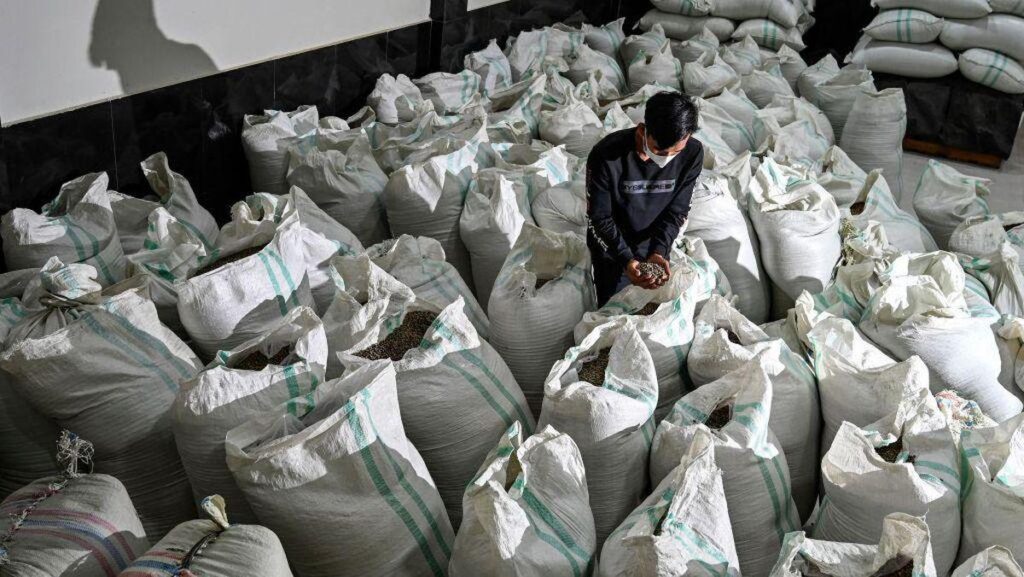
Wholesale buyers should request specifications before committing to larger quantities.
A useful specification sheet may include information such as:
| Specification | Information to Request |
|---|---|
| Species | Arabica or Robusta |
| Origin | Region and producing area |
| Variety | If available |
| Processing | Wet-hulled, washed, natural, honey, etc. |
| Moisture | Supplier specification |
| Screen size | If applicable |
| Defect information | According to agreed standard |
| Crop/harvest | Where available |
| Cup profile | Sensory description |
| Packaging | Bag type and net weight |
| Quantity | Available volume |
Not every coffee needs the same specification structure.
The important point is to establish an agreed standard between buyer and supplier.
Clear specifications make it easier to compare offers and reduce ambiguity during procurement.
4. Evaluate Processing Method and Cup Profile
Processing can influence the characteristics buyers experience in the cup.
Indonesian coffee may be available through different methods, including:
- Wet-hulled
- Fully washed
- Natural
- Honey
- Other controlled or experimental processes
A buyer searching for fuller-bodied coffee with deeper characteristics may have different requirements from a specialty roaster seeking clarity and fruit expression.
Therefore, processing should be evaluated together with cup profile.
A supplier should ideally be able to explain which coffee is suitable for the buyer’s intended application rather than simply presenting every available lot as “premium.”
5. Request Samples Before Larger Orders
Samples are particularly important when sourcing wholesale coffee beans Indonesia for professional use.
A specification sheet can describe a coffee, but a sample allows the buyer to evaluate the actual product.
Depending on your business, sample evaluation may include:
- Visual green bean inspection
- Physical condition
- Sample roasting
- Cupping
- Espresso testing
- Filter brewing
- Blend testing
- Internal quality assessment
For professional roasters, sample roasting and cupping can help determine whether a coffee matches the intended product.
For example, a coffee may be technically good but unsuitable for a particular espresso blend.
Another coffee may have a distinctive sensory profile that works better as a single-origin filter offering.
The correct question is therefore not simply:
“Is this coffee good?”
Instead ask:
“Is this coffee suitable for our intended product and customers?”
6. Evaluate Supply Consistency and Wholesale Capacity
A successful sample does not automatically guarantee a successful wholesale relationship.
Businesses also need to know whether the supplier can support their required quantity.
Ask questions such as:
- How much coffee is currently available?
- Is this a single lot or repeatable supply?
- What is the expected lead time?
- Can similar specifications be supplied in future orders?
- What packaging options are available?
- What happens if the required volume increases?
- How does the supplier manage quality between shipments?
This becomes increasingly important as purchasing volume grows.
A small specialty roaster buying a limited microlot has different supply requirements from an importer ordering commercial quantities.
Therefore, evaluate the supplier’s capabilities according to your own scale.
7. Review Export Readiness and Documentation
International buyers need more than coffee quality.
The supplier must also be able to discuss the commercial and logistical requirements associated with the transaction.
Depending on the transaction, destination, Incoterms, and applicable rules, buyers may need to discuss documentation and shipping requirements before placing an order.
Indonesia’s Ministry of Trade updated the country’s broader export policy framework in 2026 through Permendag No. 5 and No. 6 of 2026, which became effective on April 1, 2026.
Because export rules and destination-country requirements can change, buyers should verify the requirements applicable to the actual shipment rather than relying on an old checklist.
For a broader sourcing perspective, read Indonesian Coffee Exporter: 7 Proven Tips for Successful Coffee Sourcing.
Arabica vs Robusta for Wholesale Buyers
One of the first decisions when purchasing wholesale coffee beans Indonesia is whether your business requires Arabica, Robusta, or both.
Neither option is automatically better for every application.
Indonesian Arabica
Arabica is commonly used for:
- Specialty coffee
- Single-origin products
- Premium retail coffee
- Pour-over programs
- Specialty espresso
- Higher-end café offerings
Sensory characteristics vary significantly according to origin, processing, roast, and individual lot.
Indonesian Robusta
Robusta may be used for:
- Espresso blends
- Commercial coffee products
- Instant coffee applications
- Products requiring stronger body or intensity
- Certain food and beverage applications
Again, quality varies.
Buyers should evaluate the actual product specification instead of assuming that species alone determines quality.
Can Businesses Buy Both?
Yes.
A business may purchase Arabica for one product line and Robusta for another.
Roasters may also use both species within a blend according to their intended flavor, body, price point, and target consumer.
The correct sourcing strategy depends on your product portfolio.
Green Coffee Beans vs Roasted Coffee for Wholesale
Another important distinction is whether the business requires green or roasted coffee.
Wholesale Green Coffee Beans
Green coffee is generally more relevant for roasters and importers that want control over roast development.
Advantages can include:
- Greater control over roast profile
- Ability to develop custom blends
- Flexibility for different brewing applications
- Greater involvement in quality evaluation
However, buyers need roasting equipment and appropriate expertise.
Wholesale Roasted Coffee Beans
Roasted coffee may be more practical for:
- Cafés without roasting facilities
- Hotels
- Restaurants
- Offices
- Retail businesses
- Private-label businesses
The purchasing criteria are different because roast level, roast consistency, freshness, packaging, and shelf-life considerations become more important.
Therefore, specify whether you need green coffee beans or roasted coffee beans when contacting a supplier.
How to Evaluate Coffee Quality Before Buying Wholesale
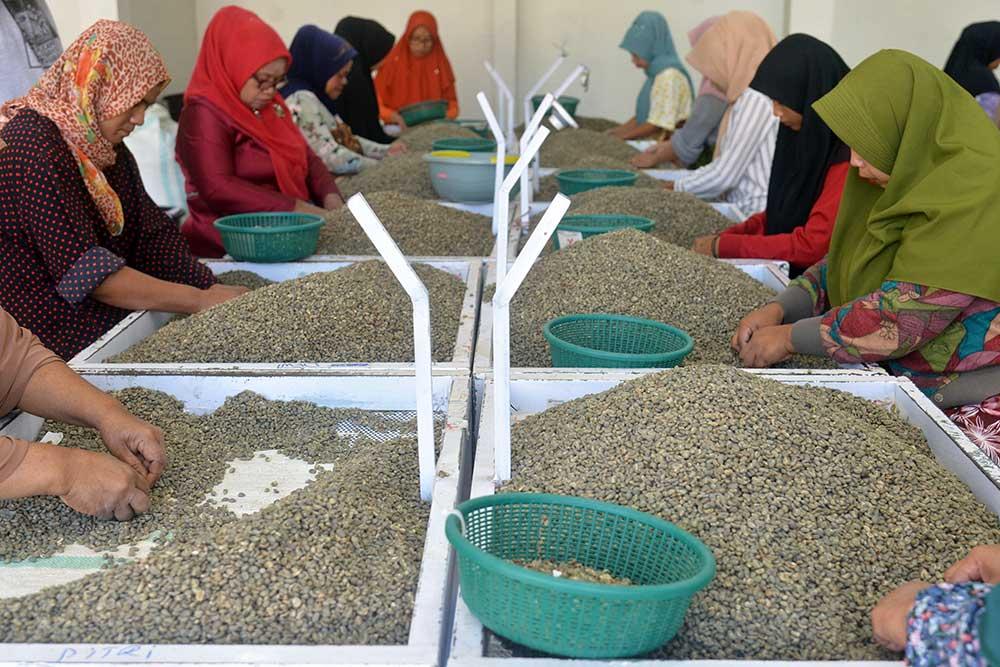
Professional procurement should combine physical evaluation with sensory assessment.
Physical Evaluation
For green coffee, buyers may inspect characteristics such as:
- Bean appearance
- Uniformity
- Moisture
- Defects
- Screen size where relevant
- Odor
- Packaging condition
The exact parameters should correspond to the agreed specification.
Sensory Evaluation
Cupping or brewing helps buyers evaluate:
- Aroma
- Flavor
- Acidity
- Sweetness
- Body
- Aftertaste
- Balance
- Defects or undesirable characteristics
The objective is not merely to find the coffee with the most tasting notes.
The coffee needs to match its intended application.
Commercial Evaluation
Finally, buyers should assess:
- Price
- Available quantity
- Consistency
- Packaging
- Lead time
- Communication
- Documentation
- Payment terms
- Logistics
A coffee that performs exceptionally in cupping may still be unsuitable if the supplier cannot support the required commercial volume.
Wholesale Coffee Beans Indonesia for Specialty Roasters
Specialty roasters often have more detailed sourcing requirements.
They may want information about:
- Specific origin
- Producer or farmer group
- Variety
- Elevation
- Processing
- Harvest
- Lot separation
- Cup profile
- Physical quality
- Traceability
For these buyers, Indonesian origins such as Gayo can provide opportunities to build distinctive single-origin products.
However, roasters should sample each lot independently.
Even coffees from the same region can taste different due to changes in variety, processing, harvest conditions, storage, and other variables.
For more educational content about Indonesian coffee origins, processing, and products, explore Gayo Coffee & Cascara: 7 Amazing Insights You Should Know.
Wholesale Coffee Beans Indonesia for Importers and Distributors
Importers and distributors often require a broader evaluation framework.
In addition to coffee quality, they need to consider whether the supplier can support repeatable commercial transactions.
A practical procurement checklist may include:
Product
- Species
- Origin
- Processing
- Specifications
- Cup profile
- Available grade
Supply
- Available volume
- MOQ
- Lead time
- Repeatability
- Seasonal availability
Commercial
- Price basis
- Payment terms
- Incoterms
- Contract terms
Logistics
- Packaging
- Port
- Shipment size
- Shipping arrangement
- Required documentation
Quality
- Samples
- Pre-shipment evaluation
- Agreed specifications
- Handling of discrepancies
This framework helps buyers compare suppliers on more than price.
How Much Do Wholesale Coffee Beans Indonesia Cost?
There is no single wholesale price for Indonesian coffee.
Prices can vary according to:
- Arabica vs Robusta
- Origin
- Grade
- Processing
- Lot quality
- Cup profile
- Harvest
- Available quantity
- Packaging
- Order volume
- Logistics
- International coffee market conditions
- Contract terms
The International Coffee Organization’s public market information provides reference information such as its Composite Indicator Price and other coffee-market data. The ICO notes that its I-CIP is used across the coffee sector as a reference for assessing costs and planning budgets.
However, an international indicator price should not be interpreted as a quotation for a specific Indonesian lot.
Actual wholesale quotations depend on the product and transaction.
For this reason, buyers should request a quotation based on a defined specification and quantity.
What Information Should You Send to an Indonesian Coffee Supplier?
A clear inquiry can dramatically improve the sourcing process.
Instead of writing:
“Hi, coffee price?”
provide information such as:
Product: Green Arabica coffee beans
Origin preference: Indonesia / Gayo, Aceh
Processing: Natural / washed / wet-hulled
Target profile: Chocolate, caramel, fruity, etc.
Quantity: Trial quantity and expected recurring volume
Packaging: Required bag size/type
Destination: Country and port
Application: Specialty roasting / espresso / retail / distribution
Additional requirements: Certifications or documentation, if required
This allows suppliers to respond with more relevant information.
Questions to Ask Before Choosing a Wholesale Coffee Supplier
Before committing to a supplier, ask:
- Where does the coffee come from?
- Is it Arabica or Robusta?
- What processing method is used?
- What specifications are available?
- Can you provide samples?
- What quantities are currently available?
- What is the MOQ?
- What packaging options are available?
- What is the estimated lead time?
- Can you support repeat orders?
- What export documentation can be provided?
- What shipping terms are available?
- How is quality controlled between lots?
A reliable supplier should be willing to discuss the information relevant to the transaction.
Our Indonesia Coffee Supplier Guide provides additional considerations for businesses comparing potential partners.
Why Traceability Matters in Wholesale Coffee Sourcing
Traceability can help businesses understand where their coffee originates and how it moves through the supply chain.
The level of traceability can vary.
Depending on the product and supply structure, information may include:
Country → Region → Producer Group → Farm → Lot
For specialty coffee brands, detailed traceability can also support product storytelling and communication with customers.
However, buyers should distinguish between verified information and marketing language.
Ask suppliers what information is actually available for the specific lot being offered.
Packaging for Wholesale Coffee Beans Indonesia
Packaging should protect coffee during storage and transportation.
For green coffee, packaging arrangements can vary according to product, supplier, buyer requirements, and shipment conditions.
Buyers should discuss:
- Net weight per bag
- Outer bag material
- Inner liner where applicable
- Lot identification
- Product information
- Palletization where required
- Container loading arrangement
For roasted coffee, packaging requirements differ because protection from oxygen, moisture, and environmental exposure becomes particularly important.
The correct packaging strategy depends on whether the coffee is green, roasted, shipped domestically, or exported internationally.
How to Build a Long-Term Coffee Sourcing Relationship
Successful wholesale sourcing should not be viewed as a one-time transaction.
Long-term relationships can improve communication and make it easier for buyers and suppliers to understand each other’s requirements.
Buyers can support this process by providing clear feedback after receiving samples or shipments.
Instead of saying:
“We don’t like this lot.”
provide more actionable feedback:
“The body works for our espresso program, but we need greater sweetness and less herbal character for the next lot.”
Specific feedback helps suppliers understand the target profile.
Likewise, suppliers should communicate clearly when harvest conditions, availability, processing, or specifications change.
A strong sourcing relationship depends on transparency from both sides.
Indonesia’s Role in the International Coffee Market
Indonesia remains an established coffee-exporting country with shipments reaching multiple international markets.
BPS maintains an official dataset specifically covering coffee exports by major destination country through 2025, providing buyers and researchers with a useful reference for Indonesia’s international coffee trade.
The International Coffee Organization’s trade statistics also tracks coffee production, exports, imports, and re-exports across the global coffee market.
For buyers, however, national export statistics should be used as market context rather than a substitute for supplier due diligence.
The actual sourcing decision still needs to be based on the coffee, supplier, specifications, and transaction.
Common Mistakes When Buying Wholesale Coffee Beans Indonesia
Businesses can reduce sourcing risks by avoiding several common mistakes.
Choosing Only by Price
The cheapest offer may not provide the best value if quality, consistency, specifications, or supply reliability do not meet requirements.
Buying Without Sampling
A product description cannot replace sensory evaluation.
Request samples when appropriate before making a significant commitment.
Using Vague Specifications
Terms such as “premium,” “best,” and “high quality” are subjective.
Define measurable or observable requirements wherever possible.
Ignoring Processing
Processing can significantly influence sensory characteristics.
Ask how the coffee was processed.
Ignoring Supply Capacity
A good sample has limited commercial value if the required quantity cannot be supplied.
Ignoring Logistics
Product price is only one component of the total landed cost.
Assuming Every Indonesian Coffee Tastes the Same
Indonesia contains multiple coffee origins, processing approaches, varieties, and quality levels.
Evaluate each lot according to its own characteristics.
About Coffeenesia
Coffeenesia connects businesses with coffee and cascara products from Gayo, Aceh, Indonesia.
For businesses evaluating wholesale coffee beans Indonesia, understanding the origin, processing method, specifications, quality requirements, and intended application is an important first step before discussing an order.
Explore Coffeenesia: 7 Premium Gayo Coffee & Cascara Products to learn more about Coffeenesia and its Gayo coffee and cascara products.
You can also visit our Gayo Coffee & Cascara Insights to learn more about coffee origin, processing, flavor, sourcing, and other topics relevant to buyers.
FAQ About Wholesale Coffee Beans Indonesia
Where can businesses source wholesale coffee beans Indonesia?
Businesses can source wholesale coffee beans Indonesia through coffee suppliers, exporters, producers, cooperatives, and other supply-chain partners. Buyers should evaluate origin, specifications, samples, capacity, documentation, and logistics before ordering.
Can I buy Indonesian coffee beans in bulk?
Yes. Indonesian coffee is available for wholesale and bulk sourcing. Available quantities, MOQ, packaging, and specifications depend on the supplier and coffee lot.
Can international buyers source Indonesian green coffee beans?
Yes, subject to the applicable commercial, customs, export, import, and destination-country requirements. Buyers should verify current requirements for their particular shipment.
Is Indonesian coffee available as Arabica and Robusta?
Yes. Indonesia produces both Arabica and Robusta coffee. The right option depends on the buyer’s product, quality requirements, flavor target, and commercial application.
What Indonesian coffee is suitable for specialty roasters?
This depends on the roaster’s target profile. Specialty buyers should evaluate individual lots based on origin, processing, physical quality, cup profile, traceability, and sample performance.
Should I request samples before a wholesale order?
For professional sourcing, requesting samples is highly recommended where practical. Samples allow buyers to inspect, roast, cup, and test coffee before committing to larger volumes.
What should I ask a wholesale coffee supplier?
Ask about origin, species, variety where available, processing, specifications, cup profile, harvest, quantity, MOQ, packaging, lead time, documentation, and shipping options.
What affects wholesale Indonesian coffee prices?
Species, origin, processing, grade, cup quality, volume, harvest, packaging, logistics, market conditions, and contract terms can all influence pricing.
How can I find a reliable Indonesian coffee exporter?
Evaluate the supplier’s coffee specifications, samples, communication, quality consistency, supply capacity, documentation, and export readiness. You can also read Indonesian Coffee Exporter: 7 Proven Tips for Successful Coffee Sourcing for a more detailed sourcing checklist.
How do I contact Coffeenesia about wholesale coffee?
Businesses interested in Gayo coffee can visit Coffeenesia to explore products and contact the team about product specifications, samples, quantities, packaging, and sourcing requirements.
Source Wholesale Coffee Beans Indonesia with Coffeenesia
Choosing the right wholesale coffee beans Indonesia supply requires more than finding the lowest price.
Professional buyers should evaluate:
Origin → Species → Processing → Specifications → Samples → Cup Quality → Volume → Packaging → Documentation → Logistics → Supplier Reliability
This approach helps roasters, importers, distributors, cafés, and coffee brands make sourcing decisions based on both coffee quality and commercial requirements.
Before selecting a partner, read our Indonesia Coffee Supplier: 7 Proven Ways to Choose the Best Partner and Indonesian Coffee Exporter: 7 Proven Tips for Successful Coffee Sourcing for additional guidance.
You can also explore Gayo Coffee & Cascara: 7 Amazing Insights You Should Know to understand more about Gayo coffee, processing, flavor, and sourcing.
If your business is currently looking for wholesale coffee beans Indonesia, visit Coffeenesia to learn about Gayo coffee products and discuss your sourcing requirements.