
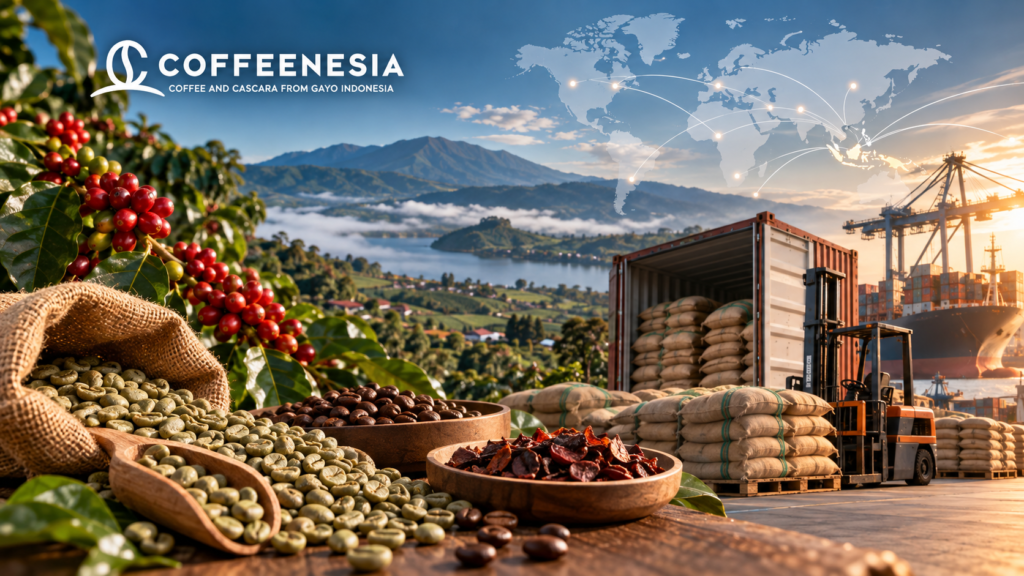
Indonesian Coffee Market 2026: Supply, Prices & Global Buyer Opportunities
The Indonesian coffee market 2026 offers sourcing opportunities for international roasters, coffee importers, distributors, and specialty beverage brands. Indonesia remains an important coffee-producing country, supplying commercial Robusta and distinctive Arabica origins such as Gayo, Sumatra, Java, Sulawesi, and Flores. However, changing harvest conditions, international price fluctuations, and quality requirements make supplier evaluation increasingly important.
The Indonesian coffee market 2026 remains attractive for global buyers, although production is expected to decline during the 2026/27 coffee year. The USDA forecasts approximately 11.38 million 60-kg bags of Indonesian green coffee production, representing an anticipated 8% decline. Meanwhile, projected green coffee exports reach 7 million bags, while BPS reports approximately US$1.008 billion in coffee exports during January–July 2026.
For international buyers, these figures highlight Indonesia’s established coffee export market and the importance of careful procurement planning. Coffee prices vary according to origin, grade, processing method, available supply, and commercial terms. Consequently, importers should evaluate representative samples, confirm current quotations, and establish realistic purchasing schedules with qualified suppliers.
Indonesian Coffee Market 2026: What Is the Current Outlook?
Indonesia supplies coffee to international markets through a diverse agricultural production network. Robusta accounts for a substantial share of national production, particularly in southern Sumatra, while Arabica comes from several highland regions recognized for distinctive coffee characteristics. Different growing conditions and processing methods create sourcing opportunities for both commercial and specialty buyers.
However, the Indonesian coffee market 2026 also faces production uncertainty. The USDA’s May 2026 Coffee Annual report forecasts lower green coffee output for 2026/27 because excessive rainfall affected flowering and fruit development in parts of Sumatra and Java. The report also identifies flood-related challenges affecting Arabica-producing areas of Aceh and North Sumatra.
Therefore, international importers should consider both sourcing opportunities and regional supply conditions. Buyers should confirm product availability by coffee origin, grade, and harvest period rather than relying exclusively on national production forecasts. This approach helps procurement teams make better-informed purchasing decisions.
Indonesian Coffee Production and Supply in 2026
Understanding the difference between national production and commercially available coffee is essential for international sourcing. National forecasts estimate agricultural output, while actual export availability depends on harvesting, processing, storage, grading, domestic demand, and existing commercial commitments. These factors influence procurement planning throughout the Indonesian coffee market 2026.
1. Indonesia’s Coffee Production Forecast
According to USDA Indonesia’s Coffee Annual published on May 15, 2026, Indonesian green coffee production is projected at 11.38 million 60-kg bags for the 2026/27 coffee year. This represents an anticipated decline of approximately 8% compared with the previous period. The forecast reflects weather-related production challenges rather than confirmed final harvest results.
Meanwhile, USDA projects green coffee exports of approximately 7 million 60-kg bags during 2026/27. This indicates continued export activity despite expected production pressure. However, international buyers should monitor subsequent forecast revisions because actual production and export volumes may change.
2. Robusta Coffee Supply
Indonesian Robusta serves commercial coffee blending, espresso applications, and selected industrial coffee products. Southern Sumatra remains a significant producing region, with output influenced by growing conditions and local processing capacity. For bulk buyers, available quantities, consistent grading, and reliable delivery schedules are essential purchasing considerations.
In the Indonesian coffee market 2026, Robusta procurement requires attention to moisture content, physical defects, bean preparation, and quality consistency. Buyers should request written specifications and confirm available inventory before comparing supplier quotations. Additionally, delivery schedules should reflect realistic harvesting and processing lead times.
3. Arabica Coffee Supply
Indonesian Arabica offers opportunities for specialty roasters, single-origin coffee brands, and premium café businesses. Important origins include Gayo in Aceh, North Sumatra, Java, Sulawesi, and Flores. Each region may produce different characteristics depending on altitude, variety, processing methods, and seasonal conditions.
For specialty buyers, origin reputation alone does not establish coffee quality. Roasters should evaluate actual cup profiles, moisture content, physical defects, and processing information before confirming orders. Furthermore, origin documentation and representative samples support more consistent purchasing decisions.
Indonesian Coffee Market 2026: Prices and Global Market Trends
Coffee prices fluctuate according to international supply and demand, futures markets, currencies, regional availability, and product-specific differentials. Therefore, Indonesia does not have one universal export price that applies to every Arabica or Robusta lot. A quotation for specialty Gayo Arabica can differ significantly from commercial Robusta because of quality, origin, and purchasing requirements.
The International Coffee Organization reported a global Composite Indicator Price averaging 262.18 US cents per pound in September 2026, approximately 8.7% below August. Its monthly indicators also showed different prices across major coffee categories. These values represent international market benchmarks rather than actual quotations from Indonesian suppliers.
Global Coffee Price Reference: September 2026
| ICO Price Indicator | Average (US cents/lb) | Approx. USD/kg |
|---|---|---|
| Composite Indicator | 262.18 | 5.78 |
| Colombian Milds | 356.15 | 7.85 |
| Other Milds | 329.44 | 7.26 |
| Brazilian Naturals | 290.19 | 6.40 |
| Robustas | 167.49 | 3.69 |
USD/kg figures are approximate conversions of the published indicator averages. They exclude supplier differentials, transportation, insurance, handling, and other transaction costs.
These benchmarks provide useful context for companies monitoring the Indonesian coffee market 2026. However, international prices should not be interpreted as fixed selling prices for Gayo Arabica, Indonesian Robusta, or any specific coffee shipment. Buyers should request current quotations that reflect actual specifications, quantities, and delivery terms.
How to Compare Indonesian Coffee Supplier Prices
International buyers should compare quotations using equivalent product specifications and commercial conditions. For example, comparing an FOB quotation with a CIF quotation without accounting for freight and insurance may produce misleading results. Similarly, offers with different grades or processing methods should not be treated as directly comparable.
A complete comparison should include coffee origin, grade, moisture, defects, processing method, packaging, order volume, Incoterm, and delivery destination. Buyers should also clarify sampling, inspection, and payment arrangements before confirming contracts. These practices help companies manage purchasing costs during periods of market volatility.
Indonesian Coffee Market 2026: Export Performance and Trade Data
Indonesia’s coffee exports demonstrate continued participation in international agricultural markets. According to BPS-Statistics Indonesia, reported coffee exports during January–July 2026 reached approximately US$1,007.6 million. July contributed approximately US$221.4 million, representing the highest monthly value within that seven-month reporting period.
These figures provide an important reference for the Indonesian coffee market 2026, particularly for importers evaluating trade activity and sourcing opportunities. However, export value does not directly represent physical shipment volume or available inventory from individual suppliers. Changes in global prices and exported quantities can both influence total export revenue.
BPS Coffee Export Values: January–July 2026
| Month | Export Value (US$ million) |
|---|---|
| January | 120.0 |
| February | 109.6 |
| March | 72.9 |
| April | 125.5 |
| May | 180.9 |
| June | 177.3 |
| July | 221.4 |
| Total | 1,007.6 |
These national figures provide trade context rather than guarantees of supplier availability. Procurement teams should continue qualifying individual exporters based on available lots, product specifications, quality consistency, and shipment capabilities.
Source: BPS — Monthly Export Value of Agricultural Products.
Coffee Quality in the Indonesian Coffee Market 2026
Coffee quality depends on cultivation, harvesting, processing, sorting, storage, and shipment preparation. As a result, beans from the same producing region may vary between suppliers and harvest lots. International buyers should establish measurable requirements before purchasing commercial quantities.
Quality verification is especially important when evaluating the Indonesian coffee market 2026 because weather conditions and processing differences can affect available lots. Buyers should assess physical and sensory characteristics rather than relying only on origin descriptions.
1. Moisture Content and Storage
Green coffee moisture content influences storage stability and quality management. Excessive moisture can create storage problems, while overly dry coffee may affect certain product characteristics. Buyers should therefore establish appropriate moisture limits and confirm the testing methods used for each lot.
2. Physical Grading and Defects
Coffee grading helps buyers evaluate physical consistency and identify undesirable material. Important factors include defect count, foreign matter, bean size, and appearance. However, different grading systems and customer requirements may produce different assessments of the same coffee.
3. Processing Methods and Cup Quality
Washed, semi-washed, natural, and honey processing methods can influence coffee’s sensory characteristics. Nevertheless, a processing description alone does not guarantee a specific cup score or flavor profile. Professional roasters should conduct sample roasting and cupping before approving commercial quantities.
4. Origin and Traceability
Origin information supports coffee identification and product differentiation, particularly for single-origin offerings. Buyers may request details about the producing region, cooperative, processor, and lot identification. Where destination-market regulations require additional sourcing documentation, importers should verify whether the available information meets those obligations.
5 Global Buyer Opportunities in the Indonesian Coffee Market 2026
Indonesia offers sourcing opportunities across specialty coffee, commercial green beans, roasted coffee, and related beverage ingredients. However, buyers should match each opportunity with their target market, quality expectations, and operational requirements. The following opportunities are particularly relevant to Coffeenesia’s published products and sourcing services.
1. Premium Gayo Arabica for Specialty Roasters
Gayo Arabica from the highlands of Aceh offers a distinctive origin story for specialty coffee businesses. Depending on the lot and processing method, buyers may encounter chocolate, spice, herbal, earthy, or other sensory characteristics. However, these characteristics require confirmation through representative sample evaluation.
Within the Indonesian coffee market 2026, Gayo Arabica remains relevant to businesses seeking differentiated single-origin coffee. Coffeenesia focuses on Gayo Arabica and publishes sourcing options for international buyers. Explore its Gayo Coffee Export offering for additional information.
2. Wholesale Green Coffee for Roasters and Distributors
Green coffee allows professional roasters to control roast development and create products for their target customers. However, wholesale purchasing requires consistent grade, representative sampling, and clear delivery schedules. Buyers should therefore evaluate each coffee lot before committing to larger or recurring orders.
Coffeenesia publishes wholesale Indonesian coffee bean offerings, including bulk purchasing formats. Its Indonesian Coffee Beans for Bulk Buyers article provides further information about Gayo Arabica sourcing and wholesale purchasing.
3. Roasted Coffee and Custom Blends
Roasted coffee can appeal to cafés, hospitality businesses, and distributors requiring ready-to-use products. Meanwhile, custom blends may help beverage businesses develop flavor profiles aligned with customer preferences. However, roast profiles, packaging requirements, shelf life, and minimum purchasing quantities require confirmation.
Coffeenesia’s published Gayo coffee export offering includes green beans, roasted beans, and selected custom blends. Buyers should request current product details and confirm available formats before preparing commercial orders.
4. Coffee Cascara for Beverage Development
Cascara, produced from dried coffee cherry husks, offers opportunities for selected beverage applications. Its characteristics differ from conventional coffee beans, making it relevant to businesses exploring alternative coffee-related ingredients. However, processing hygiene, moisture control, labeling, and destination-market regulations require careful evaluation.
In addition to conventional coffee sourcing, the Indonesian coffee market 2026 presents opportunities for businesses interested in products derived from coffee processing. Coffeenesia includes Gayo cascara within its published portfolio, subject to product availability and purchasing requirements.
5. Private-Label and Flexible Packaging Opportunities
Some distributors and retail coffee businesses require packaging that matches their target market rather than conventional wholesale bags. Coffeenesia publishes options involving pouches, airtight packaging, and larger bulk formats. These options can support discussions with businesses interested in launching coffee products under their own branding.
However, private-label arrangements require clear agreements concerning labeling, minimum orders, product specifications, and branding responsibilities. Buyers should confirm available packaging and customization options before finalizing product plans.
Coffeenesia Expertise in Indonesian Coffee Sourcing
Coffeenesia focuses on Indonesian single-origin coffee and coffee cascara, particularly products sourced from the Gayo Highlands of Aceh. Its official website describes relationships with local farmers and producers, product selection, quality evaluation, wholesale purchasing, and packaging options. These activities are relevant to roasters, importers, café operators, and beverage distributors exploring Indonesian coffee.
For international buyers evaluating the Indonesian coffee market 2026, Coffeenesia provides a contact point for discussing Gayo Arabica coffee, available product formats, purchasing quantities, and sourcing requirements. However, buyers should confirm actual coffee lot availability, quality specifications, current prices, and delivery arrangements for each transaction.
Coffeenesia’s focus on Indonesian coffee origins can support sourcing discussions with businesses seeking specialty coffee or wholesale purchasing opportunities. Nevertheless, procurement decisions should remain based on representative samples, documented requirements, and agreed commercial terms.
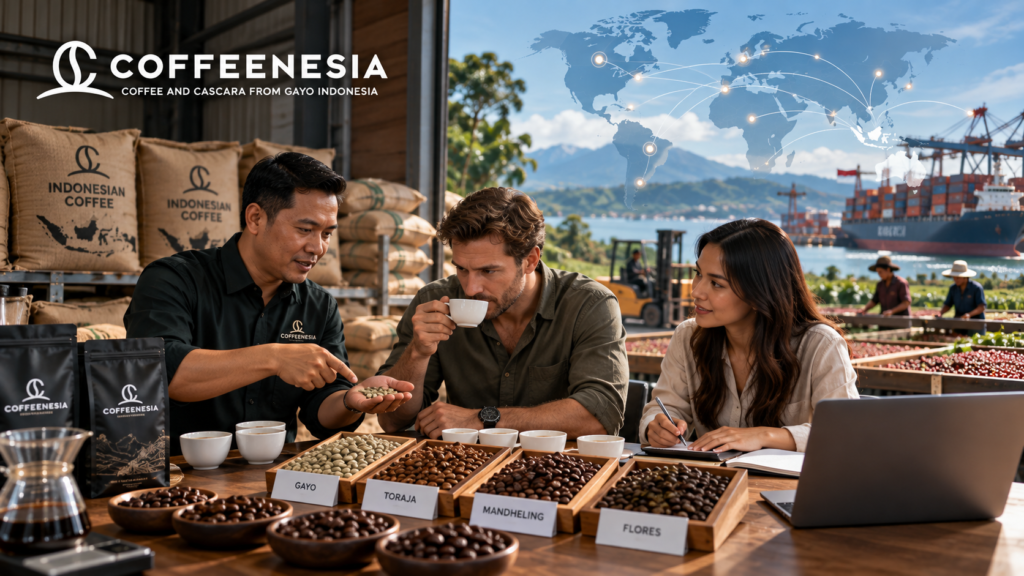
Direct Sourcing and Farmer Relationships
Coffeenesia states that its sourcing model involves coffee-growing communities in the Gayo Highlands of Aceh. This approach provides a basis for discussing coffee origin, local production practices, and available product formats. In the Indonesian coffee market 2026, relationships with producing communities remain relevant for buyers seeking origin information and consistent sourcing communication.
The company also describes its commitment to supporting coffee-producing communities. However, these commitments reflect Coffeenesia’s publicly stated business approach rather than independently measured outcomes for every purchase. Therefore, buyers with formal sustainability, traceability, or responsible sourcing requirements should request supporting documentation for their intended coffee lots.
Quality Evaluation and Coffee Selection
Coffeenesia’s Gayo coffee export content describes moisture analysis, density evaluation, and cupping as part of its quality approach. These activities help international buyers assess whether the available coffee matches their roasting requirements, quality expectations, and commercial applications. Nevertheless, every transaction should establish written specifications and measurable acceptance criteria.
Quality verification is particularly important when sourcing from the Indonesian coffee market 2026 because coffee characteristics and availability can vary by harvest and production origin. Buyers may request representative samples before ordering larger volumes. After evaluating the samples, both parties should confirm product specifications, pricing, delivery schedules, and commercial conditions.
Wholesale Purchasing and Packaging
Coffeenesia publishes three general wholesale partnership tiers that provide purchasing references for coffee businesses with different volume requirements. These options may interest specialty roasters, wholesale distributors, and companies evaluating Indonesian coffee sourcing opportunities.
| Partnership Tier | Published Quantity |
|---|---|
| Merchant | 25 kg |
| Wholesale | 100 kg |
| Distributor | Above 250 kg |
These tiers provide an initial purchasing reference rather than guaranteed availability for every coffee type, harvest lot, or packaging option. Buyers should confirm minimum order quantities, current inventory, product prices, and shipping arrangements directly with Coffeenesia.
For businesses exploring wholesale opportunities in the Indonesian coffee market 2026, these tiers provide a starting point for discussing purchasing requirements. Learn more through Arabica Coffee Beans and the Coffeenesia official website.
EFBA Agro International: Supporting Indonesian Coffee Export Sourcing
EFBA Agro International publishes sourcing and export services covering selected Indonesian agricultural commodities, including Gayo Arabica coffee. Its coffee-related materials describe product specifications, sample evaluation, procurement coordination, packaging, and export preparation. These activities provide an additional sourcing reference for international buyers evaluating bulk purchasing opportunities.
In the Indonesian coffee market 2026, EFBA Agro’s published export offering is relevant to importers, distributors, and industrial buyers looking for larger purchasing volumes. Its Gayo Arabica reference specifications include Grade 1 coffee, semi-washed processing, 12.0–12.5% moisture, screen 16+, and packaging options in 25 kg or 50 kg bags. The company also publishes a minimum order quantity of 5 metric tons, subject to confirmation for the actual transaction.
The main distinction between Coffeenesia and EFBA Agro is their published purchasing scope. Coffeenesia presents smaller wholesale partnership tiers for coffee and cascara, while EFBA Agro describes a larger bulk Gayo Arabica export offering. However, buyers should not assume that both companies share identical inventory, prices, or contractual arrangements.
Explore Indonesian Coffee Exporter — EFBA Agro for additional procurement considerations. For broader business development information, visit PT EFBA Digital Mulia.
How to Source Coffee in the Indonesian Coffee Market 2026
International coffee procurement should begin with a clear Request for Quotation (RFQ) rather than a general inquiry about the lowest price. Buyers who provide detailed purchasing requirements allow suppliers to evaluate whether available coffee meets their intended use. Furthermore, clear RFQs help importers compare offers using consistent quality and commercial criteria.
1. Specify Your Required Coffee
Identify whether you need Arabica or Robusta, green or roasted coffee, and the preferred origin. Provide the processing method, target grade, moisture limits, sensory expectations, and packaging requirements. If the coffee supports an established brand, explain which quality characteristics must remain consistent between orders.
2. Confirm Available Quantity and Harvest Lot
State the expected order volume, purchasing frequency, and intended delivery date. Then ask the supplier to confirm current availability instead of assuming national production forecasts represent actual inventory. For recurring purchases, discuss seasonal constraints and expected availability of future harvest lots.
3. Request Representative Samples
Sampling allows buyers to evaluate physical and sensory quality before approving commercial quantities. Agree on testing procedures, evaluation criteria, and sample costs where applicable. Furthermore, clarify how the delivered coffee will be compared with the approved sample and written specifications.
4. Compare Prices and Commercial Terms
Request quotations with clearly stated currency, order volume, packaging, Incoterms, and destination. Consider freight, insurance, import costs, and handling expenses when comparing offers. A lower product price does not necessarily provide the lowest total landed cost.
5. Verify Documentation and Delivery Requirements
Confirm commercial invoices, packing lists, transport documents, origin records, and any destination-specific certifications or testing requirements. Clarify the responsibilities of the exporter, importer, freight provider, and other parties. Finalize delivery schedules only after the relevant commercial and operational details have been agreed upon.
For companies purchasing within the Indonesian coffee market 2026, these steps help establish clear sourcing expectations and reduce avoidable procurement uncertainty. However, buyers should continue verifying lot-specific quality, availability, and commercial arrangements throughout the purchasing process.
FAQ: Indonesian Coffee Market 2026
1. What is the outlook for the Indonesian coffee market in 2026?
The Indonesian coffee market 2026 continues to offer opportunities for international roasters, importers, and wholesale distributors. However, USDA forecasts an 8% decline in green coffee production to approximately 11.38 million 60-kg bags for the 2026/27 coffee year, with exports projected at 7 million bags. Therefore, buyers should monitor regional supply conditions, verify coffee quality, and confirm actual availability with suppliers.
2. How much coffee does Indonesia produce in 2026?
USDA Indonesia forecasts approximately 11.38 million 60-kg bags of green coffee production during the 2026/27 coffee year. This figure represents a production forecast rather than confirmed final output. Actual harvest results may change because of weather conditions and subsequent forecast revisions.
For international procurement, national production figures provide market context but do not establish inventory availability for individual suppliers. Buyers should confirm the quantity available for their required origin, grade, and shipment period.
3. What are Indonesian coffee prices in 2026?
Coffee prices in the Indonesian coffee market 2026 vary according to coffee species, origin, grade, processing method, quality, purchasing volume, and commercial terms. The ICO global composite indicator averaged 262.18 US cents per pound in September 2026, but this international benchmark does not represent a fixed price for Indonesian supplier quotations.
Buyers should request current quotations for specific coffee lots and compare offers using equivalent quality requirements and delivery conditions. These steps help businesses distinguish general market price movements from actual purchasing costs.
4. Is Indonesian coffee suitable for international specialty roasters?
Yes. Indonesia offers Arabica origins with characteristics suited to specialty coffee applications, including Gayo, North Sumatra, Java, Sulawesi, and Flores. However, specialty suitability depends on actual lot quality, physical defects, processing, and sensory evaluation rather than geographic origin alone.
International roasters should request representative samples and conduct cupping before confirming commercial quantities. Additionally, written specifications can help maintain more consistent purchasing standards.
5. Does Coffeenesia supply Gayo Arabica coffee?
Yes. Coffeenesia publishes Gayo Arabica among its main products and describes sourcing options for green beans, roasted beans, and selected custom blends. The company also publishes wholesale partnership tiers for businesses with different purchasing requirements.
For buyers exploring the Indonesian coffee market 2026, Coffeenesia provides a contact point to discuss Gayo Arabica specifications, available products, packaging, and commercial arrangements. However, buyers should confirm current inventory and prices before ordering.
6. Can global buyers purchase Indonesian coffee in bulk?
Yes. Coffeenesia publishes general wholesale partnership tiers beginning at 25 kg, while EFBA Agro lists a 5-metric-ton MOQ for its published Gayo Arabica export offering. These quantities provide useful initial references for buyers evaluating different purchasing volumes.
However, actual order quantities depend on the product, available inventory, packaging, and commercial arrangements. Therefore, buyers should confirm applicable minimum orders and delivery conditions directly with each supplier.
7. Why do Indonesian coffee prices fluctuate?
Indonesian coffee prices can change because of global supply and demand, weather conditions, harvest availability, currency movements, product quality, and logistics costs. Arabica and Robusta also follow different international price benchmarks. Consequently, buyers should avoid assuming that one market indicator represents every Indonesian coffee product.
Monitoring international coffee prices can help procurement teams understand broader market conditions. Nevertheless, purchasing decisions should use current supplier quotations that match the required specifications and shipment terms.
8. How can I find a reliable Indonesian coffee supplier?
Begin by evaluating the supplier’s available products, origin information, grade specifications, samples, packaging options, documentation, and delivery arrangements. Next, confirm current inventory and establish quality acceptance criteria in writing. Reliable sourcing requires clear communication and transaction-specific verification.
When selecting suppliers in the Indonesian coffee market 2026, buyers should also consider seasonal availability, purchasing volumes, and the supplier’s ability to communicate realistic lead times. These factors support more informed procurement decisions.
9. What opportunities does Indonesian coffee offer global buyers?
The Indonesian coffee market 2026 offers opportunities involving Gayo single-origin Arabica, wholesale green coffee, roasted coffee, customized blends, private-label products, and coffee cascara for permitted beverage applications. These categories may appeal to specialty roasters, distributors, café businesses, and beverage manufacturers.
However, each opportunity requires evaluation of product quality, commercial viability, available quantities, and destination-market requirements. Buyers should select coffee products that match their actual business needs rather than relying exclusively on market trends.
Source Indonesian Coffee with Coffeenesia and EFBA Agro
The Indonesian coffee market 2026 continues to offer sourcing opportunities for international importers, specialty roasters, and wholesale distributors. However, production forecasts, global price volatility, and regional weather conditions highlight the importance of informed purchasing decisions. Buyers should prioritize verified product quality, realistic sourcing plans, and clear supplier communication.
Looking for Gayo Arabica coffee, green beans, roasted coffee, or coffee cascara from Indonesia? Coffeenesia provides a contact point for discussing Indonesian single-origin coffee, wholesale quantities, samples, packaging, and sourcing requirements. Meanwhile, EFBA Agro International publishes additional sourcing and export information for selected agricultural commodities, including Gayo Arabica.
For businesses evaluating opportunities in the Indonesian coffee market 2026, both companies provide published information that can support initial supplier inquiries. However, current product availability, quality specifications, prices, and shipment arrangements must be confirmed directly for each proposed transaction.
Visit Coffeenesia to discuss coffee specifications and request information about available lots. For larger bulk inquiries, explore EFBA Agro International and communicate your purchasing requirements.
Successful Indonesian coffee sourcing starts with verified quality, transparent commercial terms, and reliable communication between buyers and suppliers.

Explore the opportunities in the Indonesian coffee market 2026 with Coffeenesia. Contact our team to request information about available Gayo Arabica coffee lots, product specifications, representative samples, current prices, and commercial quotations. For larger bulk sourcing requirements, visit EFBA Agro International to discuss purchasing volumes, quality standards, and export arrangements.
Successful sourcing in the Indonesian coffee market 2026 requires verified product quality, competitive and realistic pricing, transparent supplier communication, and reliable procurement planning. By working with suitable Indonesian coffee suppliers, global buyers can make more informed purchasing decisions and develop stronger long-term sourcing relationships.