
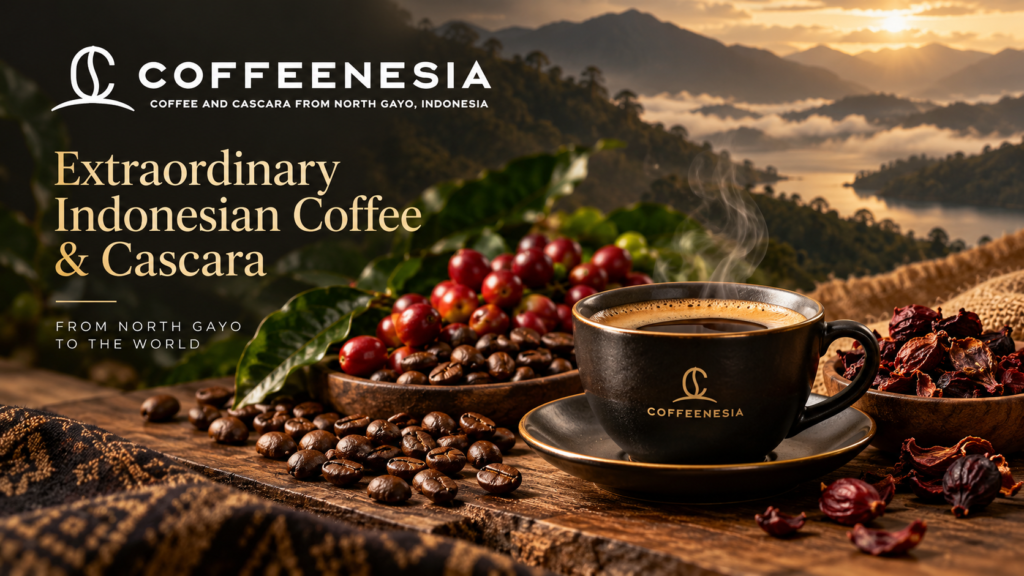
Finding a reliable traceable coffee supplier means more than purchasing beans with an Indonesian origin label. Buyers need clear information about where the coffee comes from, its variety, post-harvest processing, quality specifications, and the parties involved in sourcing. Transparent information helps roasters, importers, distributors, and café businesses make informed purchasing decisions while evaluating product quality and supply-chain reliability.
Coffeenesia sources single-origin specialty coffee and cascara from the Gayo Highlands of Aceh, Indonesia. Its website highlights direct sourcing, quality control, and transparency regarding product origin, variety, and processing methods. For businesses evaluating Coffeenesia as a traceable coffee supplier in Indonesia, these details provide a starting point for discussing product specifications, sample availability, packaging, and wholesale requirements.
What Is a Traceable Coffee Supplier?
A traceable coffee supplier provides verifiable information that allows buyers to follow coffee products through relevant stages of their supply chain. Depending on the supplier’s records and traceability system, this information may include the production region, farm or cooperative, coffee variety, harvest period, processing method, quality checks, and shipment documentation.
Unlike suppliers that provide only general product descriptions, a traceable coffee supplier should explain which origin and sourcing details can be supported by records. Traceability is not simply a marketing claim because buyers need documentation that relates to the specific coffee lot offered. However, the level of traceability may differ between farm-level, cooperative-level, and exporter-level sourcing.
For wholesale and export purchases, buyers should request the following information:
- Origin: The producing region and, where available, the farm or cooperative associated with the coffee lot.
- Variety and processing: The coffee variety and whether producers used natural, washed, semi-washed, honey, or another processing method.
- Quality specifications: Relevant information about moisture content, screen size, defects, and cup profile.
- Lot identification: A reference connecting approved samples, specifications, and shipment documentation.
- Commercial documentation: Applicable invoices, packing details, and origin or export documents according to the transaction and destination market.
These details help buyers assess product identity, quality expectations, and sourcing reliability before confirming wholesale purchases. Therefore, choosing a traceable coffee supplier requires reviewing the available records rather than relying only on origin claims or product descriptions.
Why Coffee Supply-Chain Transparency Matters
Coffee supply-chain transparency helps roasters, importers, and distributors understand product origin, processing methods, and quality expectations. Working with a traceable coffee supplier can also support purchasing decisions by connecting product information with available sourcing and shipment records.
However, transparent information alone does not guarantee product quality or compliance with sustainability standards. Buyers should independently evaluate the documentation relevant to their purchasing requirements.
1. Verify Coffee Origin
Origin information helps buyers understand where coffee comes from and whether the product matches their purchasing requirements. For example, Gayo Arabica from Aceh has its own regional identity, but the origin name alone does not establish the farm, cooperative, harvest, or processing history of every lot.
When evaluating a traceable coffee supplier, ask for the relevant production region and available origin documentation. Buyers should also clarify whether the supplier can provide farm-level, cooperative-level, or regional traceability. This distinction helps businesses understand the level of sourcing transparency available for each coffee lot.
2. Evaluate Quality Before Ordering
Coffee quality depends on variety, growing conditions, harvest maturity, post-harvest handling, storage, and processing. Therefore, a traceable coffee supplier should communicate available product specifications and explain how it evaluates coffee quality before shipment. These details allow buyers to assess whether the offered coffee matches their roasting or distribution requirements.
Request a representative sample, review the technical information, and conduct cupping or trial roasting where appropriate. Compare the results with agreed specifications rather than relying on broad terms such as premium or specialty. In addition, confirm whether the sample represents the actual commercial lot offered.
3. Improve Purchasing Decisions
Clear product specifications help procurement teams compare different sourcing options consistently. Buyers can evaluate coffee profiles, grades, packaging, minimum order quantities, lead times, and delivery terms before selecting a supplier. This approach helps businesses avoid purchasing decisions based solely on price.
Working with a traceable coffee supplier can also simplify quality-related follow-up when supporting records are available. If a shipment differs from the approved sample, lot references and documented specifications can help both parties investigate the discrepancy. However, buyers should confirm the supplier’s recordkeeping and quality-acceptance procedures before finalizing a purchase.
4. Support More Responsible Sourcing
Supply-chain transparency helps businesses ask relevant questions about producer relationships, sourcing practices, and coffee handling throughout the supply chain. A traceable coffee supplier may provide information that supports these discussions, depending on the records available for each lot.
However, traceability does not automatically prove that coffee meets environmental, labor, or sustainability standards. Buyers should verify ethical-sourcing and sustainability claims separately using appropriate supporting evidence. Responsible procurement requires careful evaluation of both product information and the claims associated with it.
What Official Sources Say About Coffee Traceability
The International Coffee Organization (ICO) identifies market transparency as an important part of a more efficient and equitable coffee sector. Its work on data transparency emphasizes reliable information, common data standards, and stronger capacity to collect and use data at origin. These principles help explain why accurate sourcing records matter in international coffee trade.
For Indonesian coffee, buyers can also consult publicly available supply-chain datasets. Trase’s Indonesia coffee supply-chain dataset includes information such as production country, export port, and exporter for the available dataset year. The dataset covers 2020 and was last updated on December 15, 2023, so buyers should treat it as historical supply-chain information rather than a live record of current shipments.
These sources provide useful market context for businesses searching for a traceable coffee supplier in Indonesia. However, national datasets and industry publications do not verify an individual supplier or coffee lot. Buyers still need lot-specific documentation and direct confirmation from their sourcing partner.
Official references:
- International Coffee Organization — Market Transparency
- Trase — Indonesia Coffee Supply-Chain Data
- Directorate General of Taxes — Coffee Export Provisions
For export transactions, documentation requirements depend on the applicable Indonesian regulations, coffee products, and destination markets. Buyers should confirm current requirements with the relevant authorities or a qualified export professional before shipping. A traceable coffee supplier should clearly explain which commercial and origin documents it can provide for the proposed transaction.
How to Evaluate a Traceable Coffee Supplier in Indonesia
Choosing a traceable coffee supplier requires more than comparing wholesale prices. Buyers should examine origin transparency, quality specifications, sample availability, commercial terms, and sourcing documentation. A structured evaluation process helps importers, roasters, and distributors identify suppliers that match their business requirements.
1. Define Your Product Requirements
Start by identifying the coffee type, intended use, quantity, preferred origin, processing method, and target cup profile. A specialty roaster may prioritize lot characteristics and detailed specifications, while a distributor may focus on repeat availability, packaging, and purchasing volume.
Before contacting a traceable coffee supplier, prepare a clear list of technical and commercial requirements. This information helps the supplier understand the intended application and determine which available products may suit the buyer’s needs.
2. Request Traceability Information
Ask where the coffee was grown, who handled the lot, which processing method producers used, and what records are available. If the supplier sources through a cooperative or intermediary, clarify which stages of the supply chain it can document and which information it cannot independently verify.
A reliable traceable coffee supplier should distinguish verified origin information from general sourcing descriptions. Buyers should also confirm whether the supporting records apply to the specific lot offered for purchase.
3. Review Quality Specifications
Request available product specifications, including moisture content, screen size, defect information, and cup profile where applicable. These parameters help buyers evaluate whether the offered coffee meets their roasting, distribution, or processing requirements.
In addition, check that the specifications correspond to the actual coffee lot. Clarify the sampling procedures, quality-acceptance criteria, and process for resolving differences between approved samples and delivered products.
4. Request and Evaluate Samples
Coffee samples allow buyers to evaluate product characteristics before committing to wholesale quantities. Use consistent cupping or roasting methods, document the results, and compare samples with the agreed purchasing requirements.
When working with a traceable coffee supplier, request confirmation that the sample represents the proposed commercial lot. This step helps buyers connect sensory evaluation with available origin information and product specifications.
5. Confirm MOQ, Packaging, and Lead Time
Discuss the minimum order quantity (MOQ), packaging format, product availability, preparation time, and shipping arrangements. These details help procurement teams plan purchases according to operational requirements and expected demand.
Before placing an order with a traceable coffee supplier, confirm the final commercial terms in writing. Include agreed specifications, quantities, packaging, delivery schedules, and procedures for addressing quality discrepancies.
6. Verify Documentation for Export
For international purchases, establish which commercial and origin documents the specific shipment requires. Depending on the transaction, buyers may need invoices, packing lists, certificates of origin, or other applicable export and import documentation.
A traceable coffee supplier for international buyers should communicate which documents are available and clarify any limitations before completing an export arrangement. Nevertheless, buyers should not assume every supplier offers every document or that a general origin statement replaces the requirements of a destination market.
Coffeenesia: A Direct Source for Gayo Coffee and Cascara
Coffeenesia presents its products as single-origin specialty coffee and cascara sourced from the Gayo Highlands of Aceh, Indonesia. Its website highlights direct sourcing, quality control, and product transparency covering origin, variety, and processing methods. These characteristics are relevant for international buyers evaluating Indonesian specialty coffee sourcing opportunities.
For businesses searching for a traceable coffee supplier from Indonesia, Coffeenesia provides published information about its Gayo coffee origins and processing options. This information offers a starting point for discussing wholesale requirements, product characteristics, and available sourcing records. However, buyers should request confirmation of the traceability details and documentation available for their specific coffee lot.
Coffeenesia’s focus on Gayo coffee and cascara can support discussions with specialty roasters, distributors, cafés, and other wholesale buyers seeking Indonesian-origin products. Before establishing a purchasing relationship, buyers should confirm current availability, technical specifications, sampling arrangements, and commercial terms directly with the company.
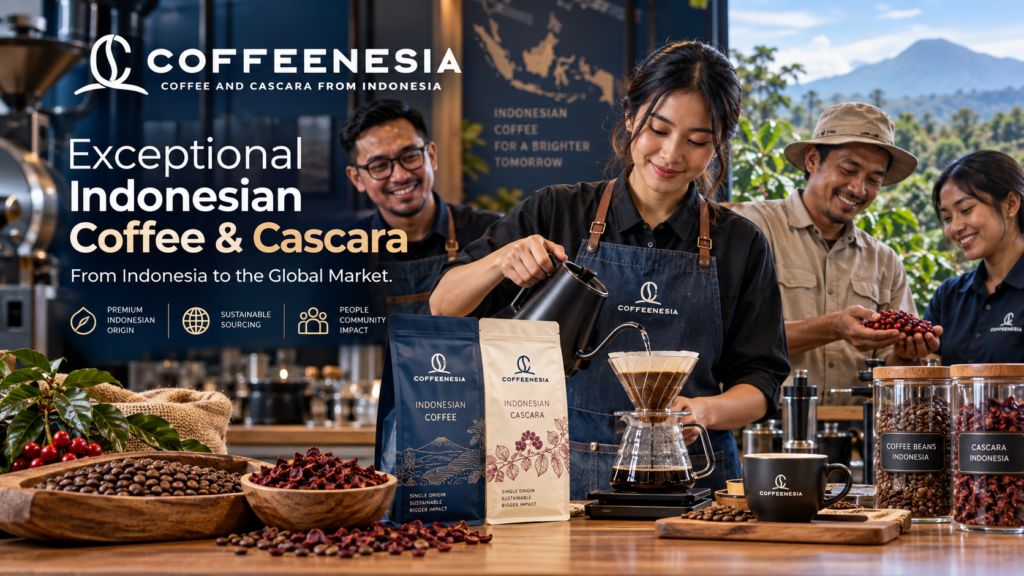
This focus gives wholesale buyers a clear starting point for discussing coffee requirements and evaluating whether the available product matches their business needs.
Coffee Origin and Processing Options
Coffeenesia’s published coffee information describes several Gayo coffee processing methods, including natural, full-wash, semi-wash, honey, and experimental fermentation processes. Each method can produce different sensory characteristics, so buyers should select a lot based on the intended roast profile and end use.
For example, the published product descriptions associate natural processing with fruit-forward sweetness, full-wash coffee with a cleaner and brighter profile, and semi-wash coffee with a heavier body and earthy character. These are indicative descriptions, not guarantees that every lot will taste identical.
Explore the Coffeenesia Gayo coffee product page to review the published processing options and product specifications.
Quality Control and Lot Evaluation
Coffeenesia states that it oversees coffee and cascara production and emphasizes quality control throughout its process. Buyers should use the available product information as the starting point for a more specific discussion about the lot they intend to purchase.
Before confirming an order, ask for the current specifications, sample availability, and confirmation that the sample represents the proposed commercial lot. This helps align expectations before the coffee enters the buyer’s roasting or distribution process.
Wholesale Quantities and Packaging
Coffeenesia publishes partnership tiers for specialty coffee and cascara: Merchant Tier at 25 kg, Wholesale Tier at 100 kg, and Distributor Tier above 250 kg. These are the quantities currently presented on its website and should be reconfirmed for the selected product, packaging, and order.
The website also describes packaging options such as small pouches, airtight wraps, and larger bags. Confirm which options apply to your coffee product and whether the packaging can meet your storage, transport, labeling, and destination-market requirements.
To explore the company’s approach and sourcing background, visit Coffeenesia or read Gayo Coffee Export Direct from Indonesia.
How EFBA Agro Supports Indonesian Coffee Sourcing
EFBA Agro publishes information about Indonesian agricultural commodities and Gayo Arabica coffee for wholesale and export markets. Its sourcing guidance highlights origin transparency, product specifications, samples, quality control, minimum order quantities, packaging, and export documentation as important considerations for international buyers.
For a business evaluating a potential coffee supply relationship, these topics help structure the initial discussion and clarify which information must be verified before ordering.
Visit EFBA Agro to learn more about its published commodity and sourcing information. For broader information about the EFBA business ecosystem, visit EFBA.
Availability, product specifications, sourcing arrangements, and export support should be confirmed directly with the relevant team for each order.
Frequently Asked Questions About Traceable Coffee Suppliers
What is a traceable coffee supplier?
A traceable coffee supplier provides information and supporting records that help buyers identify a coffee’s origin and follow relevant stages of its supply chain. Depending on the available records, this may include production area, variety, processing method, lot details, quality specifications, and shipment documentation.
How can I verify the origin of Indonesian coffee?
Ask for the production region, available farm or cooperative details, lot identification, processing information, and supporting records. For export purchases, review the relevant origin and shipment documentation. Verify that the records relate to the specific coffee lot being offered.
Why is traceability important when buying wholesale coffee?
Traceability helps buyers assess product identity, compare suppliers, and connect approved samples with commercial lots. It also provides a clearer basis for investigating quality differences and reviewing sourcing claims.
Does traceability guarantee sustainable or ethical coffee?
No. Traceability helps identify where a product comes from and what is known about its supply chain, but it does not automatically prove compliance with environmental, labor, or sustainability standards. Buyers should request evidence that directly supports each claim.
What information should I request from a coffee supplier?
Start with origin, variety, processing method, harvest or lot details where available, moisture content, screen size, defect specifications, cup profile, sample availability, MOQ, packaging, lead time, and applicable export documents. Ask the supplier to distinguish verified information from estimates or general product descriptions.
Can I buy traceable Gayo coffee in wholesale quantities?
Coffeenesia publishes Merchant, Wholesale, and Distributor partnership tiers for specialty coffee and cascara. The listed quantities are 25 kg, 100 kg, and above 250 kg, respectively. Confirm the applicable MOQ, available coffee lot, packaging, and commercial terms before ordering.
How do I start sourcing coffee from Coffeenesia?
Begin by sharing your intended use, preferred coffee profile, estimated order volume, packaging needs, and destination market. Contact Coffeenesia to discuss the available product, request relevant specifications, and determine the next steps for sample evaluation and a wholesale quotation.
Source Indonesian Coffee with Greater Transparency
A dependable coffee supply relationship starts with clear requirements, verifiable origin information, relevant quality specifications, and realistic commercial terms. By evaluating these elements before ordering, buyers can make more informed decisions and establish a clearer basis for repeat purchases.

Coffeenesia offers single-origin specialty coffee and cascara from Gayo, Aceh, with published information about sourcing, processing, and product options. If you are looking for an Indonesian coffee supplier for roasting, distribution, or wholesale procurement, contact the team to discuss your requirements and available products.
Start your sourcing conversation with Coffeenesia and request information for your next coffee order.