
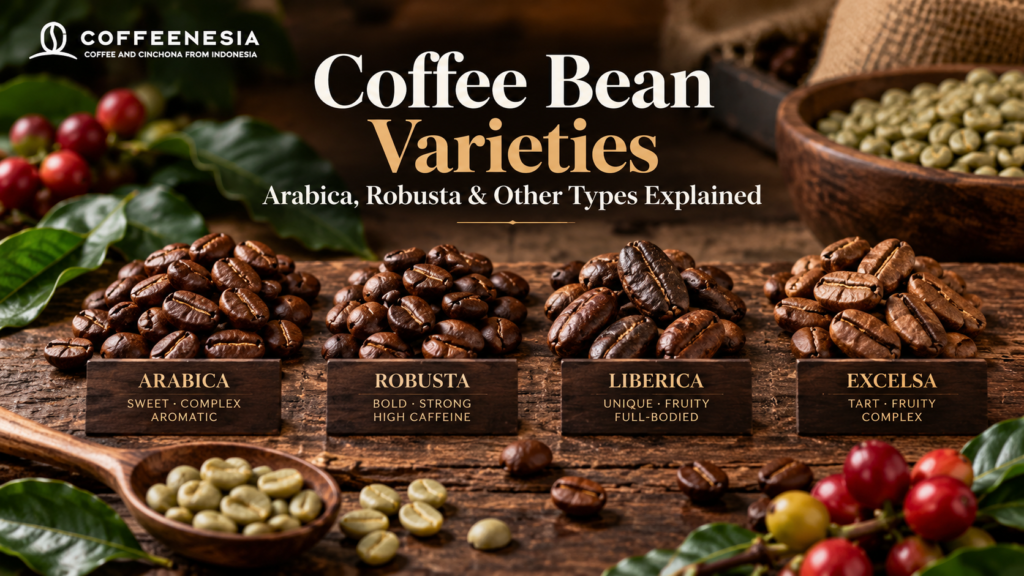
Understanding coffee bean varieties helps coffee enthusiasts, specialty roasters, and wholesale buyers select beans based on flavor, caffeine content, growing conditions, and intended use. Arabica, Robusta, Liberica, and Excelsa represent four commonly discussed coffee types, each offering different sensory characteristics and commercial applications. However, origin, processing methods, roasting, and brewing techniques also influence the final cup.
The four main coffee types commonly discussed are Arabica, Robusta, Liberica, and Excelsa. Arabica typically offers complex aromas, sweetness, and noticeable acidity, while Robusta often delivers a fuller body, stronger bitterness, and higher caffeine content. Meanwhile, Liberica and Excelsa serve smaller specialty markets with distinctive characteristics. Understanding these coffee bean varieties and types helps buyers compare quality, flavor potential, and sourcing requirements.
For international buyers exploring Indonesian Arabica, Coffeenesia focuses on sourcing coffee from the Gayo Highlands of Aceh, Indonesia. The company offers Gayo Arabica with different processing options for specialty roasters, importers, cafés, and wholesale distributors. Therefore, buyers can evaluate coffee based on its origin, processing characteristics, and intended market rather than relying solely on general descriptions of coffee types.
What Are Coffee Bean Varieties?
Coffee bean varieties are genetically distinct plant varieties within a particular coffee species. In everyday coffee discussions, people often use the term to describe Arabica, Robusta, Liberica, and Excelsa. However, these names generally refer to coffee species or commercial coffee types rather than botanical varieties at the same classification level.
For example, Arabica refers to the species Coffea arabica, while Bourbon, Typica, and Gesha represent varieties or cultivated types within that species. Similarly, Robusta refers commercially to Coffea canephora, which includes considerable genetic diversity and different cultivated selections. These distinctions help explain why coffee from the same species can produce different agricultural characteristics and sensory results.
Additionally, coffee professionals should distinguish coffee bean varieties from geographic origins and processing methods. Gayo refers to a coffee-producing region in Aceh, Indonesia, while washed, natural, and honey describe post-harvest processing techniques. Consequently, buyers should consider species, variety, origin, and processing as separate factors when evaluating coffee quality.
Understanding these differences allows specialty roasters and wholesale buyers to interpret product specifications accurately, compare sourcing options, and avoid treating every commercial coffee name as a separate botanical variety.
4 Main Coffee Bean Varieties and Types Explained
The four commonly discussed coffee types offer different growing characteristics, sensory possibilities, and commercial applications. However, genetics alone cannot determine coffee quality because cultivation practices, processing, storage, roasting, and brewing also influence the final product.
Below is a practical comparison of the main coffee bean varieties and types that buyers commonly encounter in the international coffee market.
1. Arabica Coffee – Complex Flavor and Specialty Potential
Arabica (Coffea arabica) is one of the most widely cultivated coffee species for specialty and commercial production. It is particularly well known for its aromatic complexity, balanced sweetness, and acidity that can range from delicate to pronounced. Nevertheless, its actual flavor depends on growing conditions, processing methods, and the quality of each harvest.
Among commonly discussed coffee bean varieties and types, Arabica is especially relevant to specialty roasters seeking differentiated single-origin products. Varieties within Arabica, such as Typica, Bourbon, and Gesha, have different genetic and agricultural characteristics. However, careful cultivation, processing, and grading remain essential because the Arabica name alone does not guarantee premium quality.
Common Arabica characteristics include:
- Flavor: Floral, fruity, citrus, chocolate, caramel, or nutty notes, depending on the lot.
- Body: Light to full, influenced by origin and processing.
- Acidity: Often more noticeable than typical commercial Robusta.
- Caffeine: Generally lower than Robusta.
- Applications: Specialty roasting, filter coffee, espresso, and single-origin offerings.
Indonesia produces notable Arabica coffees across several regions, including Gayo, North Sumatra, Java, Sulawesi, and Flores. Each origin offers different environmental conditions and processing traditions that influence flavor development. Among these regions, Gayo Arabica is an established option for international buyers seeking Indonesian single-origin coffee.
For additional sourcing information, explore Gayo Coffee Arabica Beans Wholesale from Indonesia, which provides further insight into Coffeenesia’s primary coffee origin.
2. Robusta Coffee – Strong Body and Higher Caffeine
Robusta refers commercially to coffee from the species Coffea canephora. It is the second major commercially cultivated coffee species and plays an important role in espresso blends, instant coffee, and other beverage applications. Its genetic diversity also creates opportunities for producers to develop differentiated quality profiles.
Compared with Arabica, Robusta generally delivers a fuller body, stronger bitterness, and lower perceived acidity. However, well-produced Fine Robusta can demonstrate distinctive sensory quality through careful harvesting, processing, and grading. Therefore, buyers should not automatically consider Robusta inferior to Arabica.
Common Robusta characteristics include:
- Flavor: Cocoa, roasted nuts, earthy, woody, or other notes depending on the lot.
- Body: Commonly medium to full.
- Acidity: Often less pronounced than Arabica.
- Caffeine: Generally higher than Arabica.
- Applications: Espresso blends, instant coffee, and selected specialty products.
When comparing coffee bean varieties for commercial applications, Robusta may offer useful characteristics for buyers seeking a strong beverage profile, body, or particular blending properties. Nevertheless, importers and manufacturers should evaluate defect levels, sensory quality, processing, and supply consistency before approving a commercial purchase.
3. Liberica Coffee – Distinctive Aroma and Niche Markets
Liberica (Coffea liberica) represents a smaller segment of international coffee trade compared with Arabica and Robusta. This coffee species is associated with relatively large trees, distinctive fruit and bean characteristics, and sensory profiles that may differ from conventional commercial coffee offerings.
Depending on the origin and processing method, Liberica can develop woody, fruity, floral, or unusual aromatic notes. However, these flavor descriptions are not universal quality standards because individual lots may produce different results. For this reason, buyers should request representative samples before purchasing commercial quantities.
Common Liberica characteristics include:
- Flavor: Potentially woody, fruity, floral, or complex.
- Body: Variable, often substantial.
- Commercial positioning: Niche and origin-specific markets.
- Applications: Specialty offerings, experimental blends, and differentiated coffee portfolios.
Among less common coffee bean varieties and types, Liberica may interest specialty roasters seeking new sensory experiences and distinctive product positioning. However, its relatively limited market presence can affect supplier availability, pricing, and consistency. Consequently, buyers should confirm origin, quality specifications, and supply arrangements before committing to recurring orders.
4. Excelsa Coffee – An Alternative Coffee Profile
Excelsa is a commercially recognized coffee type that frequently appears alongside Liberica in discussions about coffee bean varieties. Historically, certain botanical classifications included Excelsa within the Liberica group. However, Royal Botanic Gardens, Kew currently accepts Coffea dewevrei as a distinct species and treats Coffea excelsa as a synonym.
In specialty coffee discussions, Excelsa is often associated with unusual fruit-like, tart, and layered sensory characteristics. Nevertheless, the specific flavor profile depends on the coffee lot, growing conditions, and processing method. Buyers should therefore rely on representative samples and cupping results instead of assuming that every Excelsa coffee delivers identical characteristics.
Common Excelsa characteristics include:
- Flavor: Potentially fruity, tart, or distinctive.
- Body: Varies according to origin and processing.
- Commercial positioning: Niche and experimental coffee markets.
- Applications: Distinctive single-origin offerings and selected blends.
For wholesale procurement, buyers should verify the botanical identity, geographic origin, processing method, and product specifications of Excelsa coffee. These details are important because commercial naming practices may not always reflect current botanical classifications. A clear technical specification helps buyers evaluate the product more accurately before purchasing.
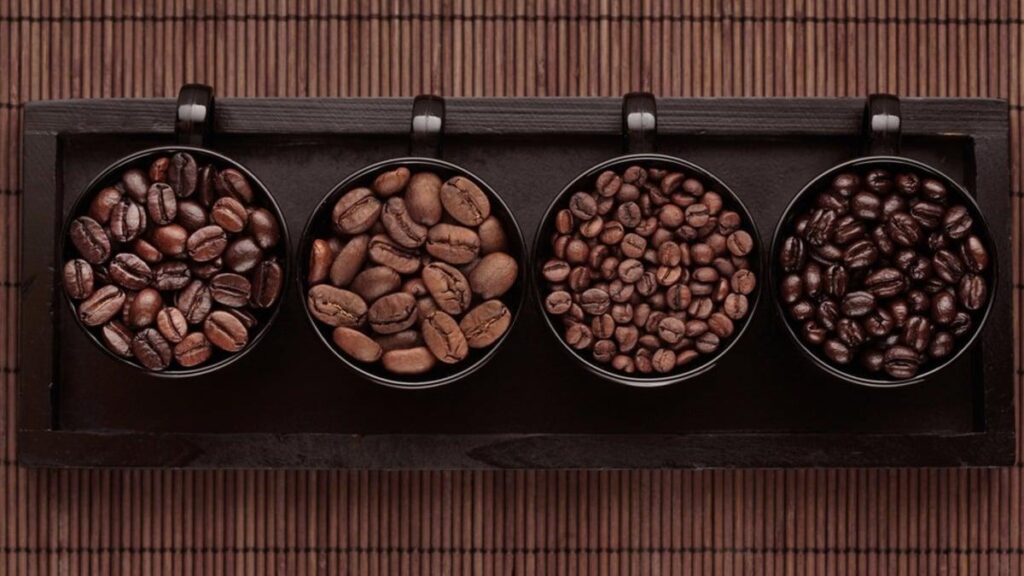
Arabica vs. Robusta vs. Liberica vs. Excelsa: Coffee Bean Varieties Comparison
Understanding the differences between coffee bean varieties and species helps buyers select beans based on flavor, caffeine content, processing requirements, and commercial applications. Arabica, Robusta, Liberica, and Excelsa offer distinct characteristics, although actual quality depends on growing conditions, post-harvest processing, and roasting.
The following comparison highlights their general sensory characteristics and market applications. These descriptions represent typical tendencies rather than guaranteed specifications for every harvest.
| Coffee Type | Common Sensory Characteristics | Caffeine Tendency | Main Market |
|---|---|---|---|
| Arabica | Diverse sweetness, acidity, and complex aromatics | Generally lower than Robusta | Specialty and commercial coffee |
| Robusta | Full body, stronger bitterness, cocoa or nutty notes | Generally higher than Arabica | Espresso, instant coffee, and specialty |
| Liberica | Distinctive woody, fruity, or floral characteristics | Varies by variety and lot | Niche specialty markets |
| Excelsa | Potentially fruity, tart, or layered characteristics | Varies by variety and lot | Niche and experimental markets |
When comparing coffee bean varieties and types, international buyers should evaluate more than sensory descriptions. Origin verification, moisture content, defect grading, processing method, representative samples, and contractual specifications help determine whether a particular lot meets purchasing requirements. Consequently, the most suitable coffee depends on quality consistency and the intended commercial application.
Common Arabica Coffee Bean Varieties: Typica, Bourbon, Gesha, Catimor, and S795
Arabica includes numerous cultivated varieties with different genetic backgrounds, agricultural characteristics, disease resistance, and cup-quality potential. Understanding these Arabica coffee bean varieties helps specialty roasters, importers, and coffee producers evaluate differences beyond geographic origin.
World Coffee Research maintains a dedicated catalog that identifies important coffee varieties and their agricultural characteristics. However, buyers should remember that variety names alone cannot guarantee sensory quality because farming practices, processing, and storage also influence the final product.
1. Typica – A Traditional Arabica Variety
Typica is one of the historically important Arabica lineages and contributed to the development of many cultivated coffee populations worldwide. It is known for its potential to produce high-quality coffee under suitable growing conditions, although traditional Typica plants can be susceptible to important diseases, including coffee leaf rust.
Among traditional coffee bean varieties, Typica remains relevant to specialty producers interested in established Arabica genetics. Nevertheless, buyers should verify its origin, agricultural practices, processing method, and lot quality before making sourcing decisions. A Typica label provides botanical information but does not automatically guarantee an exceptional cup profile.
2. Bourbon – Sweetness and Specialty Coffee Potential
Bourbon is another historically influential Arabica lineage that contributed to the development of numerous cultivated coffee varieties. It has strong recognition in specialty coffee markets because certain Bourbon lots can offer appealing sweetness, balanced acidity, and desirable sensory complexity.
However, Bourbon does not produce an identical flavor profile in every growing region. Environmental conditions, harvest management, processing techniques, and roasting significantly influence its characteristics. Therefore, specialty buyers should evaluate Bourbon through representative samples rather than relying exclusively on the variety name.
3. Gesha or Geisha – Floral and Aromatic Complexity
Gesha, also commonly called Geisha in commercial coffee markets, is associated with high-quality specialty coffee and distinctive aromatic potential. Carefully cultivated and processed Gesha lots may exhibit floral characteristics, delicate acidity, and complex sensory profiles that attract specialty roasters.
Among premium Arabica coffee bean varieties, Gesha receives considerable attention in specialty coffee competitions and high-value markets. However, not every Gesha lot achieves exceptional quality, and planting material with similar commercial names may have different genetic backgrounds. Buyers should confirm variety identification, provenance, and cupping results before purchasing.
4. Catimor – Disease Resistance and Agricultural Adaptability
Catimor refers to a group of Arabica selections developed through breeding involving Caturra and Timor Hybrid ancestry. Breeding programs introduced these selections partly to improve resistance to coffee leaf rust while maintaining commercially useful agricultural characteristics.
Unlike some traditional coffee bean varieties, Catimor represents a broader group rather than one uniform selection with a single flavor profile. Specific Catimor lines can differ in productivity, disease resistance, and sensory potential. As a result, buyers should consider the actual selection, origin, cultivation, and processing conditions when evaluating coffee quality.
5. S795 – An Arabica Selection Cultivated in Asia
S795 is an Arabica selection with historical importance in Asian coffee cultivation, particularly in Indonesia and India. It illustrates how producers use selected planting material to address regional agricultural conditions while pursuing commercially acceptable yields and quality.
For international buyers comparing coffee bean varieties, S795 provides an example of a variety associated with regional coffee production rather than a universally fixed sensory profile. Its characteristics depend on cultivation, environmental conditions, harvesting, and post-harvest handling. Buyers should therefore review representative samples and measurable quality specifications before purchasing.
Do Coffee Bean Varieties Determine Flavor?
Coffee bean varieties influence flavor potential, but they do not independently determine how coffee tastes. Genetics affect plant characteristics and potential sensory development, while growing environment, altitude, soil conditions, harvesting, processing, roasting, and brewing contribute to the final cup.
For example, the same Arabica variety can produce different sensory results when grown in separate regions or processed using different methods. Washed processing may emphasize clarity and certain origin characteristics, whereas natural processing can produce more pronounced fruit-associated notes. Honey processing may create another balance of sweetness, body, and acidity depending on drying and fermentation management.
Therefore, specialty roasters should evaluate coffee bean varieties together with their origin and processing information rather than assuming that one variety always delivers a specific flavor. This approach helps importers identify coffees that match their desired roasting style, target consumers, and product positioning.
A practical coffee quality framework is:
Coffee Species → Variety → Growing Environment → Harvest → Processing → Green Bean Quality → Roasting → Brewing
This framework also explains why general statements such as “all Arabica tastes fruity” or “all Robusta tastes bitter” can mislead buyers. Actual coffee quality requires lot-specific evaluation and consistent sensory testing.
How Does Processing Affect Different Coffee Bean Varieties?
Post-harvest processing plays an important role in the sensory characteristics of coffee bean varieties, particularly within specialty Arabica production. Although genetics influence potential flavor, processing determines how producers handle coffee cherries and develop green beans before roasting.
Coffeenesia publishes several Gayo Arabica processing options, helping international buyers compare coffees from the same Indonesian producing region. However, buyers should evaluate each processing method through representative samples because sensory results can vary between farms, harvests, and processing facilities.
| Processing Method | General Approach | Potential Cup Characteristics |
|---|---|---|
| Washed | Removes fruit components before controlled drying | Clarity, defined acidity, and cleaner sensory characteristics |
| Natural | Dries coffee cherries with the fruit intact | Fruit-associated sweetness and potentially fuller body |
| Honey | Retains varying amounts of mucilage during drying | Sweetness, balanced acidity, and varied body |
These characteristics represent general tendencies rather than guaranteed tasting notes. Buyers should use a consistent cupping protocol, evaluate available lot information, and approve representative samples before placing wholesale orders.
For Indonesian specialty coffee sourcing, explore Coffeenesia Coffee from Gayo. The page explains Gayo coffee processing methods and published sensory characteristics, helping buyers understand how post-harvest decisions influence the final product.
Which Coffee Bean Variety Is Best for Different Buyers?
Choosing among coffee bean varieties depends on the buyer’s target customers, preferred flavor characteristics, brewing applications, and commercial requirements. A specialty café may prioritize aromatic complexity and traceability, while a large-scale beverage manufacturer may focus on consistency, production costs, and repeatable performance.
Instead of assuming one coffee species is universally superior, buyers should compare available options against their intended use. The following table provides a practical starting point for coffee procurement.
| Buyer Requirement | Coffee to Evaluate |
|---|---|
| Specialty single-origin filter coffee | Quality-approved Arabica lots |
| Balanced espresso blend | Arabica, Robusta, or suitable blends |
| Higher-caffeine coffee products | Robusta-based options |
| Distinctive experimental offerings | Liberica or Excelsa, subject to availability |
| Indonesian single-origin coffee | Gayo Arabica |
| Large-scale commercial blends | Consistent Arabica or Robusta lots |
For specialty roasters, the best coffee bean varieties are those that consistently deliver the desired cup profile and meet technical quality requirements. Meanwhile, wholesale distributors should also consider supply availability, pricing, packaging, and shipment arrangements before approving a supplier.
International buyers seeking Indonesian single-origin Arabica can explore Coffeenesia’s Gayo Coffee Beans. Coffeenesia focuses on Gayo Arabica sourcing, allowing buyers to discuss processing methods, quality requirements, and wholesale purchasing arrangements.
Ultimately, selecting coffee requires a balance between variety, origin, processing, quality consistency, and commercial suitability. Evaluating these factors together supports better purchasing decisions than ranking coffee solely by species or market popularity.
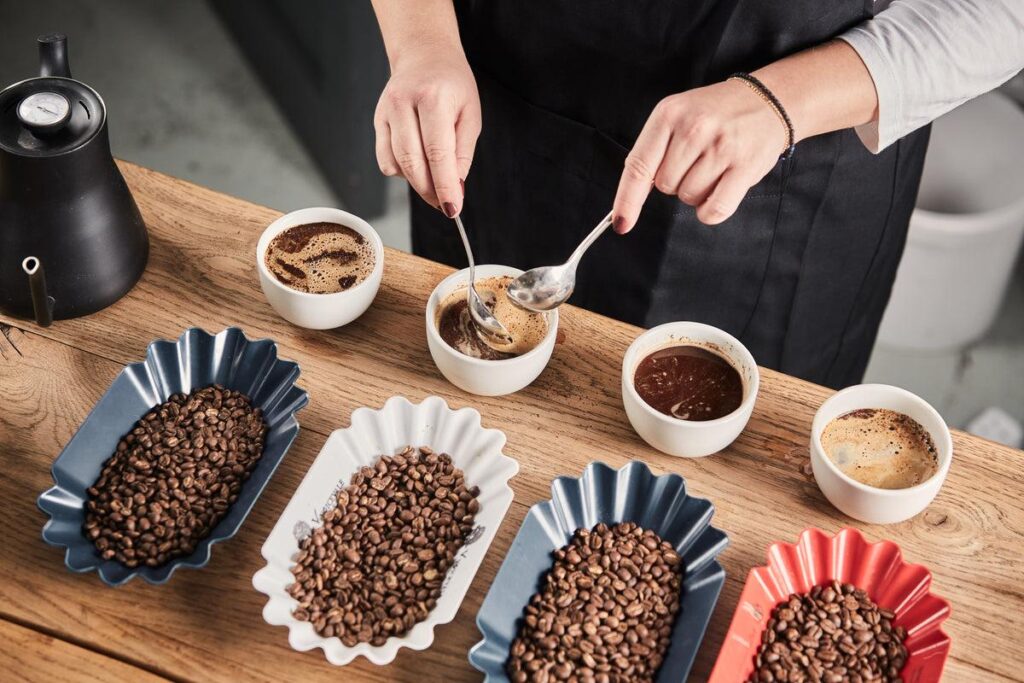
Official Research: Arabica and Robusta Dominate Commercial Coffee Production
According to World Coffee Research, Arabica and Robusta are the two most widely cultivated coffee species in global commercial production. Robusta accounts for approximately 40% of worldwide coffee production, although its market share changes between harvest years. These findings explain why both species remain important when comparing coffee bean varieties for international trade.
World Coffee Research also maintains catalogs covering genetic diversity, disease resistance, productivity, and cup-quality potential. These resources help producers understand agricultural characteristics while allowing buyers to distinguish coffee species, cultivated varieties, and geographic origins. However, botanical information alone cannot determine the quality of a specific commercial lot.
Meanwhile, Royal Botanic Gardens, Kew provides authoritative botanical references for species such as Coffea liberica and Coffea dewevrei. Its classification helps clarify differences between commonly used coffee names and scientifically recognized species. Therefore, wholesale buyers should combine botanical knowledge with product specifications, representative samples, and quality inspections before making purchasing decisions.
Coffeenesia Expertise in Indonesian Arabica Coffee Sourcing
Coffeenesia focuses on Indonesian coffee and cascara sourcing from the Gayo Highlands of Aceh. Its published sourcing approach includes relationships with coffee producers, selective harvesting, post-harvest processing, quality evaluation, and traceability. These activities support international roasters, importers, and distributors seeking Indonesian single-origin coffee.
Although the global market offers numerous coffee bean varieties, Coffeenesia primarily emphasizes Gayo Arabica in its published product portfolio. This specialization allows buyers to explore coffee from a defined producing region while comparing available processing options and relevant quality characteristics.
Gayo Arabica for Specialty Roasters and Importers
Gayo Arabica originates from the highlands of Aceh, Indonesia, and represents a geographic coffee origin rather than a separate botanical species. Its sensory characteristics depend on cultivated varieties, growing conditions, post-harvest processing, and the quality of individual lots. Consequently, buyers should evaluate Gayo coffee through technical specifications and representative samples instead of relying exclusively on regional reputation.
Coffeenesia publishes Gayo Arabica offerings with washed, natural, and honey processing options. These methods can produce different sensory characteristics, allowing specialty roasters to select coffee according to their intended roast profiles, target customers, and product positioning.
For additional information, explore Indonesian Coffee Beans for Wholesale Buyers. This resource provides further context for businesses evaluating Indonesian Arabica for commercial sourcing.
Coffee Processing and Quality Evaluation
Coffee quality depends on more than botanical identity or geographic origin. Harvest management, post-harvest handling, drying, storage, and grading all influence the condition of green coffee beans before roasting. Therefore, international buyers should evaluate the complete production and handling process when selecting a supplier.
Coffeenesia describes selective cherry harvesting, processing, and quality control as part of its sourcing approach. For wholesale purchases, buyers should request relevant lot information, including processing method, moisture content, defect grading, packaging, and shipment arrangements. These specifications help determine whether the coffee meets the requirements of specialty roasting or commercial distribution.
Additionally, buyers should verify certifications, cup scores, supply volumes, and current availability through documentation relevant to each transaction. Clear specifications and sample approval help establish realistic expectations for recurring purchases.
Gayo Coffee and Cascara Product Opportunities
Beyond green and roasted coffee beans, Coffeenesia also presents cascara within its coffee-related product portfolio. Cascara consists of processed and dried coffee cherry material and offers opportunities for businesses exploring alternative coffee-fruit applications. However, its characteristics, preparation, and commercial requirements differ from conventional coffee beans.
Unlike Arabica or Robusta, cascara is not a botanical variety or coffee species. It is a separate ingredient derived from the coffee fruit and requires appropriate quality evaluation, food-safety assessment, and destination-market compliance. Buyers should therefore assess cascara independently from their conventional coffee procurement requirements.
For international businesses seeking additional Indonesian agricultural commodities, EFBA Agro International publishes related wholesale sourcing and export services, including Gayo Arabica coffee. This provides another reference for buyers exploring Indonesian agricultural supply opportunities.
How to Choose Coffee Bean Varieties for Wholesale Purchasing
Selecting suitable coffee bean varieties for wholesale purchasing requires a clear understanding of the intended product, quality expectations, and commercial requirements. Specialty roasters may prioritize sensory complexity and traceability, while distributors or beverage manufacturers may focus on supply consistency, pricing, and repeatable performance.
Instead of choosing coffee solely by species or popularity, buyers should evaluate origin, processing, technical specifications, and representative samples. The following five steps provide a practical framework for making informed procurement decisions.
1. Define Your Coffee Application
Start by identifying your target customers, preferred roast style, brewing method, and desired flavor profile. These requirements help determine whether specialty Arabica, commercial Robusta, or a particular blend may suit your business.
For example, a single-origin filter coffee program may prioritize distinctive sensory characteristics, while an espresso blend may require consistent body and flavor balance. Defining the application early helps buyers communicate clearly with suppliers.
2. Confirm Origin and Product Identity
Verify the coffee species, available variety information, geographic origin, and processing method before evaluating a commercial offer. Although origin names can provide useful information about production regions, they do not automatically identify specific plant varieties or guarantee particular sensory characteristics.
Buyers comparing coffee bean varieties should also request available traceability information and clarify how the supplier identifies each lot. This helps reduce confusion between botanical identity, geographic origin, and commercial product descriptions.
3. Evaluate Technical Quality
Request product specifications covering moisture content, defect grading, bean size, processing method, and available quality documentation. These parameters help buyers determine whether a proposed coffee lot meets their internal procurement standards.
However, written specifications should not replace physical and sensory evaluation. Buyers should consider the intended roasting application and verify that the available measurements follow appropriate testing methods.
4. Request Representative Samples
Before confirming a wholesale purchase, evaluate representative samples through suitable roasting and cupping procedures. Sample testing helps identify the coffee’s actual flavor characteristics, physical condition, and suitability for the intended product.
When approving a sample, buyers should also agree on how the commercial shipment will be compared with the accepted reference. This creates clearer expectations and supports consistent quality evaluation for repeat orders.
5. Agree on Commercial and Export Terms
After confirming product quality, discuss order quantity, minimum purchasing requirements, packaging, delivery schedule, applicable Incoterms, and documentation. The agreement should clearly describe product specifications, responsibilities, payment arrangements, and procedures for managing quality deviations.
For international buyers, transparent commercial terms are as important as selecting the right coffee. Strong communication and documented requirements help reduce procurement uncertainty and support long-term supplier relationships.
The recommended purchasing framework is:
Coffee Application → Species and Origin → Processing Method → Quality Specification → Sample Approval → Commercial Agreement → Shipment
FAQ About Coffee Bean Varieties
What are the four main types of coffee beans?
The four commonly discussed coffee types are Arabica, Robusta, Liberica, and Excelsa. Arabica and Robusta dominate commercial cultivation, while Liberica and Excelsa serve smaller specialty markets. Botanically, these names refer to species or commercial coffee types rather than varieties at the same taxonomic level.
What is the difference between Arabica and Robusta?
Arabica generally offers greater aromatic diversity, sweetness, and noticeable acidity, while Robusta often produces fuller body, stronger bitterness, and higher caffeine content. However, growing conditions, processing, roasting, and individual lot quality influence the final sensory characteristics.
Which coffee bean variety tastes the best?
No single coffee variety produces the best flavor for every consumer. Taste depends on genetics, origin, processing, roast development, and brewing preferences. Specialty buyers should evaluate representative samples and select coffee according to their intended application.
Is Gayo coffee Arabica or Robusta?
Gayo refers to a coffee-producing region in Aceh, Indonesia, rather than a botanical species. Coffeenesia primarily publishes Gayo Arabica offerings, although buyers should confirm the specific variety, processing method, and quality specifications for each available lot.
Are Bourbon and Typica different coffee species?
No. Bourbon and Typica are historically important varieties or lineages within Coffea arabica. They belong to the same species but have different genetic and agricultural characteristics that may influence cultivation and cup-quality potential.
Is Liberica the same as Excelsa?
Not exactly. Historical classifications sometimes grouped Excelsa with Liberica, but Royal Botanic Gardens, Kew currently recognizes Coffea dewevrei, associated with Excelsa, separately from Coffea liberica. Buyers should verify botanical identity when purchasing these less common coffee types.
Which coffee beans contain more caffeine?
Robusta generally contains more caffeine than Arabica. However, the caffeine content of a prepared beverage also depends on the amount of coffee used, extraction method, serving size, and brewing conditions.
Does Coffeenesia supply Arabica coffee beans?
Yes. Coffeenesia publishes Gayo Arabica coffee offerings from Aceh, Indonesia, including different processing options for specialty roasters, importers, and wholesale buyers. Product specifications and availability should be confirmed before ordering.
Can international buyers request Gayo coffee in bulk?
Coffeenesia publishes wholesale sourcing information for international coffee buyers. Importers and distributors should contact the company to confirm current lot availability, minimum order quantities, representative samples, packaging, and export arrangements.
How do coffee bean varieties affect roasting?
Different coffee bean varieties can have different physical characteristics and sensory potential, which may influence roasting decisions. However, roasters must also consider bean density, moisture, processing method, and desired flavor development. Evaluating each lot individually helps achieve more consistent roasting results.
Explore Indonesian Arabica Coffee with Coffeenesia
Understanding coffee bean varieties helps specialty roasters, importers, and distributors make informed decisions about flavor, quality, and product positioning. Arabica, Robusta, Liberica, and Excelsa offer different characteristics, but species alone cannot determine the quality or suitability of a particular coffee.
For global buyers interested in Indonesian coffee, origin verification, processing information, defect grading, and representative sample evaluation remain essential. Gayo Arabica offers an established sourcing option with different sensory possibilities depending on the individual lot and post-harvest method.
Through Coffeenesia, international buyers can explore Gayo Arabica coffee sourcing and discuss product specifications, processing options, wholesale quantities, and commercial purchasing requirements. For additional Indonesian agricultural commodity sourcing, visit EFBA Agro International.
Coffee Species → Variety → Origin → Processing → Quality Evaluation → Sample Approval → Wholesale Supply

Looking for Indonesian Arabica coffee beans for wholesale sourcing? Explore Coffeenesia’s Gayo Coffee and Indonesian Coffee Beans offerings to discuss origin, processing, sample requirements, bulk availability, and purchasing arrangements.
You can also visit EFBA Agro International for broader Indonesian commodity sourcing information.
Coffee Species → Variety → Origin → Processing → Quality Evaluation → Sample Approval → Wholesale Supply