
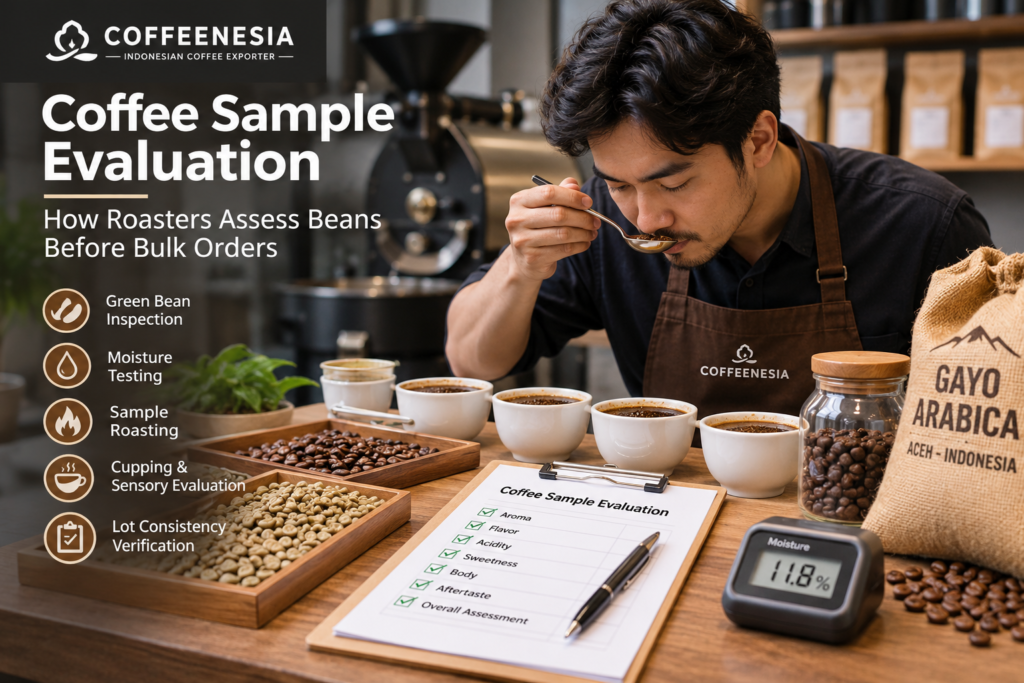
Coffee sample evaluation is the process of examining green coffee beans, roasting representative samples, and assessing their sensory characteristics before committing to a bulk purchase. Professional roasters evaluate physical defects, moisture content, bean uniformity, aroma, flavor, acidity, sweetness, body, and consistency. They also verify whether the sample represents the commercial lot that the supplier intends to deliver.
For importers and coffee roasters, sample testing helps reduce the risk of purchasing beans that do not match their intended roast profile, product specifications, or customer preferences. A coffee may produce an attractive cup during initial tasting but still present problems with moisture, physical quality, storage, or lot consistency. Therefore, buyers should combine sensory evaluation with technical specifications and commercial verification.
Coffeenesia supplies Indonesian coffee from the Gayo Highlands of Aceh and publishes information about origin, post-harvest processing, quality control, and sourcing. This guide explains how roasters can assess coffee samples, compare results, and establish clear acceptance criteria before purchasing wholesale coffee beans.
What Is Coffee Sample Evaluation?
Coffee sample evaluation is a structured quality assessment that helps buyers determine whether a coffee meets their physical, sensory, and commercial requirements. The process usually starts with a representative green coffee sample and continues through physical inspection, sample roasting, cupping, and verification of the proposed supply lot.
For example, a specialty roaster considering Gayo Arabica may request green beans from a supplier and evaluate their moisture, visible defects, and bean uniformity. The roaster then prepares a controlled sample roast and conducts a sensory assessment to determine whether the coffee fits the intended product range.
This process allows buyers to compare coffees using consistent methods rather than relying only on origin reputation, product photographs, or tasting descriptions. However, a favorable sample result does not guarantee that the bulk shipment will have identical characteristics unless the supplier maintains appropriate lot identification and quality controls.
Why Is Coffee Sample Evaluation Important Before Bulk Orders?
Bulk green coffee purchases involve financial commitments, storage requirements, roasting schedules, and future sales expectations. An unsuitable shipment can affect production efficiency, finished coffee consistency, and customer satisfaction.
Therefore, sample evaluation helps businesses identify potential quality issues before accepting a larger commercial quantity. It also provides a documented reference for communicating specifications and resolving differences with suppliers.
1. Verify Green Bean Quality Before Purchasing
Visual inspection and physical measurements help buyers understand the condition of the raw material. Bean defects, unusual odors, moisture irregularities, and foreign materials may indicate potential processing or storage problems.
A roaster should compare these findings with the agreed specification rather than assuming that coffee from a recognized origin always meets the same quality standard.
2. Determine Sensory Suitability for the Target Market
Different customer segments require different flavor characteristics. A roaster developing a bright single-origin filter coffee may prefer a different cup profile from a business purchasing coffee for a traditional espresso blend.
Controlled cupping helps buyers describe the coffee’s sensory characteristics and evaluate whether those characteristics match their intended application.
3. Reduce Quality Disputes in Wholesale Transactions
Samples can provide a reference point for commercial quality agreements. Buyers and suppliers can document the sample identity, inspection results, and acceptance criteria before confirming a purchase.
However, both parties should distinguish between a pre-shipment sample and the actual commercial lot. A sample should represent the agreed inventory, and the transaction should include appropriate procedures for checking the delivered goods.
7 Steps for Coffee Sample Evaluation Before Bulk Orders
Professional coffee evaluation requires consistent procedures so that differences between samples reflect coffee characteristics rather than uncontrolled testing conditions.
The following seven steps provide a practical assessment framework for roasters, importers, and wholesale coffee buyers.
1. Request a Representative Green Coffee Sample
Start by requesting a sample that corresponds to an identifiable coffee lot. Ask the supplier to provide the origin, variety, processing method, crop or harvest information, lot reference, and available technical specifications.
Buyers should also clarify whether the sample represents existing inventory, a pre-shipment lot, or an indicative product that may differ from future availability. This distinction matters because agricultural products can vary between harvests and processing batches.
Where appropriate, request enough material for physical inspection, repeat sample roasting, and multiple tasting sessions. Buyers should agree on the sampling procedure and reference lot before evaluation begins.
2. Inspect Green Bean Appearance and Physical Defects
Spread the beans on a clean inspection surface and evaluate their color, size distribution, visible damage, and foreign materials. Identify defects according to the applicable grading system, such as black beans, sour beans, broken beans, insect damage, or unwanted materials.
Defect classification should follow a clearly identified method because different grading systems may use different sample weights and defect calculations. The buyer should not treat every defect percentage or defect count as directly interchangeable.
ISO 4149:2025 provides methods for visual and olfactory examination and determining defects and foreign matter in green coffee. These methods support commercial quality inspection and provide a technical basis for assessing the raw material.
3. Measure Moisture and Review Storage Condition
Moisture content helps buyers assess the physical condition and storage suitability of green coffee. Excessively high or unusually low moisture can raise concerns about handling, stability, and roasting behavior.
Use an appropriate calibrated instrument or recognized reference method, and record the measurements with the sample identification. Water activity can provide additional information about storage risk, although it measures a different property from moisture content.
Coffeenesia publishes moisture specifications of 11%–12.5% for several Gayo coffee processing options on its official product page. Buyers should treat these values as published product specifications and request confirmation of actual measurements for the commercial lot.
Review Coffeenesia’s Gayo Coffee Products and Processing Methods for additional product information.
4. Perform a Controlled Sample Roast
Sample roasting helps expose the coffee’s sensory characteristics under repeatable conditions. Roasters should use a documented sample-roasting procedure and control variables such as batch size, roast development, equipment, and resting conditions.
The goal is not necessarily to create the final commercial roast profile. Instead, the buyer needs a consistent preparation method that allows a fair comparison between candidate coffees.
A poorly controlled roast may create scorching, uneven development, or other roast-related flavors that obscure the characteristics of the green coffee. Therefore, keep records of the roasting conditions and repeat the test if preparation errors occur.
5. Conduct Coffee Cupping and Sensory Assessment
After sample roasting, prepare the coffee for cupping using a consistent method. Evaluate fragrance, aroma, flavor, acidity, sweetness, mouthfeel, aftertaste, and any undesirable sensory characteristics.
The Specialty Coffee Association’s Coffee Value Assessment (CVA) separates descriptive sensory attributes from affective quality judgments. This distinction helps roasters describe what a coffee tastes like without confusing those observations with whether the evaluator personally prefers it.
For example, a sample may display prominent fruity acidity and a light body. Those characteristics can be attractive for one product concept but less suitable for a buyer seeking a full-bodied espresso base.
Therefore, a good evaluation should record both the sensory description and the coffee’s suitability for the intended market.
6. Compare Results with the Target Roast Profile
After cupping, assess whether the coffee can support the intended product range. Consider flavor expectations, roasting behavior, cost, blend requirements, and the consistency required by the business.
A sample selected for a premium single-origin product may need a distinctive sensory profile. Meanwhile, coffee intended for a commercial blend may require a balanced character that remains consistent alongside other ingredients.
Buyers can conduct additional roast trials when necessary. However, they should document the reasons for accepting or rejecting each sample instead of making purchasing decisions based only on a single tasting impression.
7. Verify Lot Consistency and Approve the Bulk Purchase
Before confirming a larger order, compare the accepted sample with the supplier’s proposed commercial lot. Request confirmation of available quantity, lot identification, packaging, quality specifications, and relevant supporting documents.
For higher-value purchases, buyers may consider pre-shipment sampling or independent inspection according to the commercial agreement. Such procedures help establish whether the beans prepared for shipment correspond to the accepted quality reference.
The buyer should then document the agreed specifications, inspection methods, acceptance criteria, and procedures for addressing nonconforming goods.
The complete evaluation workflow is:
Representative Sample → Physical Inspection → Moisture Testing → Sample Roasting → Cupping → Product Suitability → Lot Verification → Bulk Order Approval
What Should Roasters Check During Coffee Cupping?
Coffee cupping helps roasters describe a coffee’s sensory characteristics under controlled preparation conditions. However, a useful assessment must be repeatable and relevant to the intended commercial application.
The Specialty Coffee Association Coffee Value Assessment provides a multidimensional approach that considers physical characteristics, descriptive sensory properties, affective impressions, and extrinsic information.
| Evaluation Area | What Roasters Assess |
| Fragrance and aroma | Dry-ground fragrance and brewed coffee aroma |
| Flavor | Dominant sensory characteristics and overall flavor profile |
| Acidity | Perceived acidity character and intensity |
| Sweetness | Perceived sweetness and balance |
| Mouthfeel | Body, texture, and tactile characteristics |
| Aftertaste | Sensations remaining after tasting |
| Uniformity | Consistency between prepared cups |
| Defects | Unwanted sensory characteristics |
| Affective impression | Suitability and preference for the target market |
Roasters should separate descriptive observations from personal preference wherever possible. This approach makes evaluation notes more useful when communicating with suppliers or comparing coffees for different markets.
How Do Roasters Evaluate Green Coffee Quality?
Sensory cupping is important, but it does not replace physical testing. Green coffee quality involves several characteristics that can influence storage, roasting, and commercial acceptance.
| Parameter | Evaluation Purpose |
| Bean color | Identify unusual appearance or possible deterioration |
| Defect count | Evaluate physical quality according to a defined grading method |
| Moisture content | Assess moisture condition and specification compliance |
| Water activity | Provide additional information about storage stability |
| Screen size | Describe bean size distribution |
| Bean uniformity | Evaluate consistency within the sample |
| Odor | Detect unusual or potentially undesirable aromas |
| Lot identification | Connect the sample with the commercial inventory |
| Packaging | Assess handling and storage suitability |
No single parameter establishes the complete quality of a coffee. Buyers should evaluate the combined physical, sensory, and commercial evidence before approving a shipment.
Sample Roasting vs. Production Roasting: What Is the Difference?
Sample roasting focuses on evaluation and comparison, while production roasting develops the flavor profile intended for the finished product. Both activities matter, but they serve different purposes in the purchasing process.
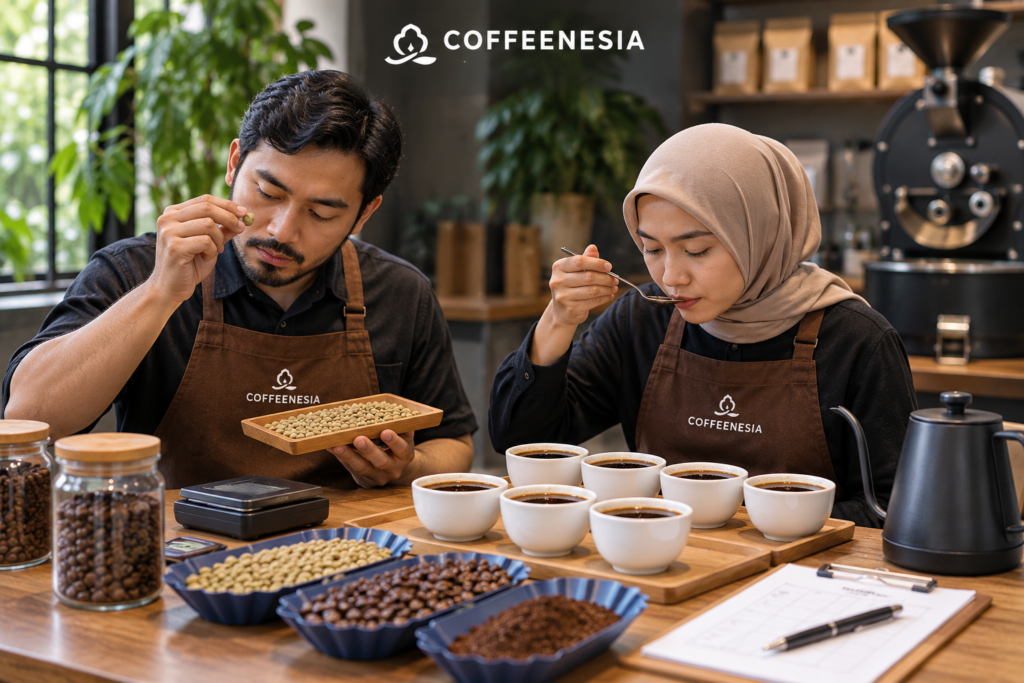
During sample roasting, the roaster prioritizes consistency across tested coffees to ensure that each sample receives a comparable assessment. In production roasting, the roaster may adjust development time, batch size, temperature, and roast profile to achieve specific customer preferences. Both processes play an important role in coffee sample evaluation, particularly when assessing whether selected green coffee beans can meet commercial roasting requirements.
A promising cupping result represents an important first step rather than proof that a coffee will automatically perform well under every commercial roasting condition. A comprehensive coffee sample evaluation should consider sensory quality, roasting consistency, physical bean characteristics, and suitability for the intended product. Buyers should also verify whether the tested sample accurately represents the commercial lot offered by the supplier.
Before committing to a large purchase, buyers may conduct pilot production trials when the intended application, roasting equipment, or order volume makes additional verification worthwhile. Integrating these trials into the coffee sample evaluation process helps roasters identify potential differences between sample roasting and full-scale production, reducing the risk of unexpected quality variations after bulk procurement.
Example of Coffee Sample Evaluation for Gayo Arabica
A practical coffee sample evaluation can help specialty roasters compare different Indonesian coffee processing methods before selecting beans for their product range. Consider an illustrative specialty roaster evaluating two Gayo Arabica samples for a new single-origin coffee product. Both samples undergo comparable inspection, sample roasting, and cupping procedures to support an objective purchasing decision.
Sample A comes from a full-wash process and shows a bright, clean sensory profile. Sample B comes from a semi-wash process and presents a heavier body with a different flavor character. These characteristics are illustrative examples rather than verified sensory results for specific Coffeenesia lots.
During the coffee sample evaluation, the buyer examines both coffees under consistent testing conditions and records differences in aroma, flavor, acidity, sweetness, body, aftertaste, and overall suitability. The roaster can then compare the findings against the intended roast profile, customer preferences, and commercial requirements before selecting a sample for further verification.
| Evaluation | Sample A — Full Wash | Sample B — Semi Wash |
| Physical appearance | Uniform green beans | Uniform green beans |
| Moisture | Within agreed specification | Within agreed specification |
| Sensory character | Bright, clean, and citrus-like | Rich, earthy, and chocolate-like |
| Body | Light to medium | Medium to heavy |
| Intended application | Single-origin filter coffee | Espresso blend |
| Decision | Suitable for filter program | Suitable for blend trials |
This table presents an illustrative coffee sample evaluation, not actual Coffeenesia laboratory or cupping results. It demonstrates how different coffee processing methods can influence purchasing decisions, even when samples meet the buyer’s physical quality requirements. Roasters should evaluate sensory characteristics, consistency, and commercial suitability before selecting beans for bulk orders.
Coffeenesia’s official Gayo Coffee Product Page describes natural, full-wash, semi-wash, and other processing methods alongside their indicative flavor characteristics. Buyers can use this information as an initial reference during coffee sample evaluation. However, they should confirm the sensory profile, physical specifications, and availability of each commercial lot rather than assuming every harvest produces identical results.
Official Coffee Sample Evaluation Standards: SCA and ISO
Professional coffee sample evaluation relies on consistent methods and recognized technical references. These standards help coffee roasters, importers, exporters, laboratories, and procurement teams assess quality using clearer procedures. They also support communication about sample characteristics, testing conditions, and product acceptance criteria before purchasing larger quantities.
The Specialty Coffee Association (SCA) and International Organization for Standardization (ISO) provide relevant frameworks for sensory assessment, physical inspection, and green coffee specifications. Buyers should select applicable methods based on their product requirements and commercial agreements.
Specialty Coffee Association Coffee Value Assessment
The Specialty Coffee Association introduced the Coffee Value Assessment (CVA) framework to describe coffee through physical, descriptive, affective, and extrinsic evaluations. This approach supports a more comprehensive understanding of coffee characteristics beyond a single numerical quality score.
Within the coffee sample evaluation process, roasters can use the CVA framework to assess sensory attributes while considering additional information relevant to purchasing decisions. Different buyers may prioritize flavor characteristics, origin traceability, processing methods, or suitability for a particular roasting application.
For example, a specialty roaster developing a single-origin product may prioritize distinctive sensory characteristics, while another buyer may require consistent flavor performance across commercial blends. The evaluation framework helps both buyers document their requirements and compare candidate coffees using appropriate criteria.
Official reference: SCA Coffee Value Assessment.
ISO 9116:2025 — Green Coffee Specifications
ISO 9116:2025, published in September 2025, provides guidance for describing green coffee in purchasing and sales agreements. It also addresses sampling, packing, marking, storage, and shipping, making it relevant to commercial green coffee procurement.
For international roasters, this standard supports the technical documentation used alongside coffee sample evaluation. Buyers should define relevant product specifications, packaging expectations, sampling procedures, and quality requirements before confirming a bulk purchase.
By establishing clear commercial criteria, buyers and suppliers can reduce misunderstandings regarding product characteristics and shipment acceptance. However, the parties must still agree on the specific requirements applicable to their transaction.
Official reference: ISO 9116:2025.
ISO 4149:2025 — Defects and Foreign Matter
ISO 4149:2025, published in November 2025, covers visual and olfactory examination as well as the determination of foreign matter and defects in green coffee. The standard provides technical methods relevant to examining physical coffee quality.
During coffee sample evaluation, buyers can apply suitable inspection methods to identify defects, foreign materials, and other physical characteristics that may affect commercial acceptance. Consistent procedures help procurement teams compare samples and document observations more clearly.
However, physical defect analysis should complement rather than replace sensory testing. Roasters should combine appropriate inspection findings with sample roasting, cupping results, and agreed purchasing specifications.
Official reference: ISO 4149:2025.
These official standards provide technical guidance for coffee quality assessment. Nevertheless, buyers should establish acceptance criteria that match their intended application, target market, and commercial requirements.
Coffeenesia Expertise in Coffee Sourcing and Quality Evaluation
Coffeenesia focuses on Indonesian coffee and cascara sourcing, with published business activities centered on Gayo coffee from Aceh. Its website describes direct sourcing, cooperation with local farmers, processing supervision, quality control, and traceability as part of its agricultural supply activities.
These practices are relevant to coffee sample evaluation because professional buyers need information about origin, post-harvest processing, bean characteristics, and lot consistency before committing to larger quantities. Access to product specifications and sourcing information can help importers determine which coffee samples deserve further evaluation.
However, published descriptions should not replace direct examination of an actual commercial sample. Buyers should confirm current product availability, lot identification, sampling arrangements, testing information, and shipment conditions before finalizing a transaction.
Gayo Coffee Sourcing and Post-Harvest Processing
Coffeenesia describes sourcing from the Gayo Highlands of Aceh and emphasizes careful harvesting, sorting, and post-harvest processing. These activities can influence the physical and sensory characteristics that buyers examine when selecting green coffee beans.
Its published product range includes different processing methods, accompanied by indicative flavor descriptions and technical information. These details can help roasters identify potential coffee styles before requesting commercial samples.
For coffee sample evaluation of Gayo Arabica, buyers should compare actual lot samples under consistent conditions rather than relying exclusively on processing descriptions. Flavor, moisture, defects, and bean uniformity can vary between harvests and processing batches, making lot-specific verification important.
Quality Control and Green Coffee Assessment
Coffeenesia’s Gayo Coffee Export article describes moisture analysis, density evaluation, and cupping as part of its published quality-control approach. These methods are relevant to understanding the physical and sensory condition of green coffee before export.
The company’s product descriptions also provide indicative technical parameters such as moisture content, bean size, and defect information for selected processing methods. Buyers can use these details as an initial reference when preparing technical inquiries.
A structured coffee sample evaluation should nevertheless rely on current specifications and evidence associated with the proposed commercial lot. Roasters may request representative samples, inspection information, and relevant test results to verify whether the offered coffee meets their purchasing criteria.
Traceability and Origin Information
Coffeenesia states that its sourcing approach emphasizes origin transparency and traceability. Such information helps buyers understand where coffee originates and which post-harvest processes contribute to its characteristics.
Traceability can also provide useful commercial context during coffee sample evaluation. Roasters may use origin and processing information to support product descriptions, compare sourcing options, investigate quality differences, and develop responsible purchasing practices.
However, buyers should confirm the availability and scope of traceability documents, certifications, and lot identification records for each transaction. General sourcing descriptions should not be treated as proof that every shipment carries identical documentation.
Coffee Sourcing within the EFBA Business Ecosystem
EFBA Agro International also publishes Indonesian agricultural sourcing and wholesale export services covering coffee beans and other agricultural commodities. These activities relate to the broader procurement requirements of international commodity buyers.
Its Indonesian Green Coffee Exporter article discusses the importance of evaluating coffee origin, processing methods, moisture, physical defects, sensory characteristics, packaging, and samples before purchasing.
Meanwhile, PT EFBA Digital Mulia provides broader business consulting and corporate development services. These websites address different commercial needs within the EFBA business ecosystem.
For buyers conducting coffee sample evaluation before international procurement, it is important to confirm which company handles product quotations, sampling arrangements, technical specifications, and supply agreements. Clear responsibilities can help reduce misunderstandings during commercial negotiations.
What Should Buyers Request After Coffee Sample Evaluation Before a Bulk Order?
A successful coffee sample evaluation should provide enough information to support a purchasing decision, but positive cupping results alone are not sufficient to approve a bulk shipment. Buyers need to verify that the accepted sample corresponds to the supplier’s proposed commercial inventory and that the agreed quality requirements can be documented.
Before confirming an order, roasters and importers should request relevant information about lot identification, origin, processing method, moisture content, defect specifications, available quantity, packaging, and shipment arrangements. They should also discuss quality acceptance procedures and the handling of any differences between the approved sample and delivered goods.
By connecting evaluation results with clear commercial specifications, buyers can make more informed purchasing decisions and reduce the risk of receiving coffee that does not match their intended product requirements
| Information | What to Confirm |
| Origin | Region and relevant producer information |
| Coffee type | Arabica, Robusta, or specified variety |
| Processing | Natural, washed, semi-washed, or other method |
| Harvest | Crop or harvest information where available |
| Physical specifications | Moisture, defects, bean size, and related criteria |
| Sample | Lot identification and evaluation arrangements |
| Quantity | Available commercial volume |
| Packaging | Bag type, net weight, and handling requirements |
| Delivery | Destination, shipment terms, and schedule |
| Documentation | Relevant testing, origin, and export records |
Buyers should also establish a clear process for comparing the commercial lot with the previously approved sample. A structured coffee sample evaluation helps roasters document quality expectations, inspection procedures, and acceptance criteria before shipment. This approach can reduce purchasing disputes and support more transparent, long-term relationships between coffee buyers and suppliers.
Common Mistakes in Coffee Sample Evaluation
One common mistake during coffee sample evaluation is selecting beans based only on origin reputation or published flavor descriptions. Although these details provide useful information, they cannot confirm the physical condition, sensory characteristics, or consistency of the actual commercial lot. Buyers should examine representative samples and verify technical specifications before making purchasing decisions.
Another mistake is evaluating coffee samples under inconsistent roasting or brewing conditions. Differences in roast development, brewing temperature, grind size, or preparation methods can influence sensory results and make comparisons less reliable. Professional roasters should use consistent testing procedures and document any variations that may affect the evaluation.
Buyers may also approve a sample without confirming whether the supplier can provide the same coffee lot in the required quantity. This creates a risk that the delivered beans will differ from the material originally tested. Therefore, coffee sample evaluation before bulk orders should include verification of lot identification, product availability, and agreed quality specifications.
To reduce these problems, roasters should document their inspection methods, roasting conditions, cupping results, and purchasing requirements. A consistent evaluation process helps buyers make informed decisions while improving communication with suppliers and reducing the risk of unexpected quality differences.
FAQ About Coffee Sample Evaluation
1. What is coffee sample evaluation?
Coffee sample evaluation is the process of examining green coffee beans, measuring physical characteristics, performing sample roasting, and conducting sensory assessments to determine whether a coffee meets purchasing requirements. Buyers evaluate factors such as moisture content, defects, aroma, flavor, acidity, sweetness, and consistency.
The process also includes verifying origin, processing information, and commercial lot identification. By combining physical and sensory findings, roasters can make more informed purchasing decisions before committing to larger quantities.
2. How do roasters evaluate green coffee beans?
Professional roasters typically begin with physical inspection to assess bean appearance, visible defects, moisture content, odor, and uniformity. They then conduct controlled sample roasting and cupping to evaluate sensory characteristics under comparable conditions.
During coffee sample evaluation, buyers compare these findings against their intended roast profile, target market, and supplier specifications. Additional laboratory testing or production trials may be necessary depending on the product requirements and commercial agreement.
3. What is coffee cupping?
Coffee cupping is a structured sensory evaluation method that allows professional tasters to assess fragrance, aroma, flavor, acidity, sweetness, mouthfeel, and aftertaste. Consistent sample preparation helps buyers compare different coffees under similar conditions.
Cupping is an important part of coffee sample evaluation because it helps roasters understand sensory differences between candidate beans. However, sensory results should complement physical inspection and technical testing rather than replace them.
4. What is a good moisture content for green coffee?
Acceptable green coffee moisture content depends on the product specification, storage conditions, processing method, and commercial agreement. Coffeenesia publishes moisture specifications of 11%–12.5% for several Gayo coffee processing options on its official product page.
Buyers should verify moisture measurements for the actual commercial lot rather than assuming every coffee shares the same specification. During coffee sample evaluation, moisture testing provides information relevant to storage suitability, roasting behavior, and quality acceptance.
5. How much green coffee is needed for sample evaluation?
The required sample quantity depends on the grading method, number of roast trials, and planned cupping sessions. Some physical inspection procedures require defined sample weights, while commercial roasters may request additional green beans for repeated roasting and sensory comparisons.
Before beginning coffee sample evaluation, buyers should agree with the supplier on sample size, lot identification, shipping arrangements, and testing procedures. Adequate sampling helps ensure that the evaluation reflects the intended purchasing requirements.
6. Can a good cupping score guarantee coffee quality?
No. A favorable cupping score cannot guarantee moisture compliance, acceptable defect levels, storage stability, or consistency across a bulk shipment. Sensory evaluation provides important information about cup characteristics, but it does not replace physical quality inspection.
A comprehensive coffee sample evaluation combines sensory results with technical specifications and lot verification. Buyers should establish clear acceptance criteria and confirm that the coffee prepared for shipment corresponds to the approved sample.
7. Should roasters test coffee samples before bulk orders?
Yes. Conducting coffee sample evaluation before bulk orders helps roasters determine whether the beans match their intended flavor profile, roasting requirements, and quality expectations. Testing can also identify physical defects, moisture concerns, or undesirable sensory characteristics before a larger financial commitment.
However, sample approval should not become the only purchasing requirement. Buyers should also verify commercial lot identity, available quantity, packaging, and shipment conditions before finalizing an order.
8. What is the difference between sample roasting and production roasting?
Sample roasting focuses on revealing and comparing coffee characteristics under controlled and repeatable conditions. Production roasting aims to develop the desired flavor profile for commercial products while considering equipment capacity, batch size, and customer preferences.
Within the coffee sample evaluation process, sample roasting helps buyers compare candidate beans more consistently. Nevertheless, a successful sample roast may require additional production trials to confirm performance under commercial roasting conditions.
9. Does Coffeenesia supply Gayo coffee for international buyers?
Coffeenesia publishes Gayo coffee sourcing and export services, including green coffee beans, roasted coffee, and different post-harvest processing options. Its product information provides an initial reference for buyers interested in Indonesian coffee from the Gayo Highlands of Aceh.
International buyers conducting coffee sample evaluation can discuss current product availability, technical specifications, processing methods, and sample arrangements directly with Coffeenesia. Actual supply conditions should be confirmed before making commercial commitments.
10. How can I request coffee samples from Coffeenesia?
To begin the coffee sample evaluation process, contact Coffeenesia with your preferred coffee origin, processing method, required quantity, target sensory characteristics, and delivery destination. Providing clear purchasing requirements helps the supplier understand which products may suit your intended application.
Buyers should also ask about sample availability, applicable charges, shipping arrangements, current product specifications, and commercial lot identification. These details help establish a more structured evaluation before proceeding to a wholesale purchase.
Evaluate Indonesian Coffee Before Your Bulk Order with Coffeenesia
Coffee sample evaluation provides roasters, importers, and wholesale buyers with a more reliable foundation for purchasing Indonesian green coffee. By combining physical inspection, moisture testing, controlled sample roasting, cupping, and lot verification, businesses can assess whether a coffee matches their intended product requirements before committing to larger quantities.
A well-structured evaluation also helps buyers compare different coffee origins and processing methods based on measurable characteristics rather than general flavor descriptions alone. Through consistent testing and clear communication with suppliers, roasters can identify potential quality concerns, establish purchasing specifications, and improve the reliability of their sourcing decisions.
Coffeenesia focuses on Indonesian coffee sourced from the Gayo Highlands of Aceh. Its published sourcing approach includes cooperation with local producers, post-harvest processing supervision, quality considerations, traceability, and the supply of different Gayo coffee products. These activities provide relevant information for international buyers seeking to evaluate coffee characteristics and sourcing options.
For businesses planning commercial purchases, Coffeenesia’s published product information can serve as an initial reference for coffee sample evaluation. Buyers can review available processing methods, indicative quality specifications, and origin information before discussing representative samples and purchasing requirements.
If your company is preparing to purchase Indonesian coffee in bulk, visit the Coffeenesia Official Website or explore its Gayo Coffee Products to learn more about the available product information.
Contact Coffeenesia to discuss your coffee sample evaluation requirements, including preferred processing methods, desired sensory profiles, technical specifications, purchasing volume, and shipment destination. Confirming these details before ordering can help your business build a more structured and informed coffee sourcing strategy.

For international roasters, distributors, and coffee businesses evaluating Indonesian green beans, Coffeenesia provides a starting point for discussing origin, processing methods, specifications, and wholesale purchasing requirements.
Explore Coffeenesia’s Gayo Coffee Products or visit the Coffeenesia Official Website to discuss samples, available coffee lots, and bulk sourcing requirements.
Contact Coffeenesia to discuss Gayo coffee sample evaluation and build a sourcing plan based on verified quality requirements before your next bulk order.