
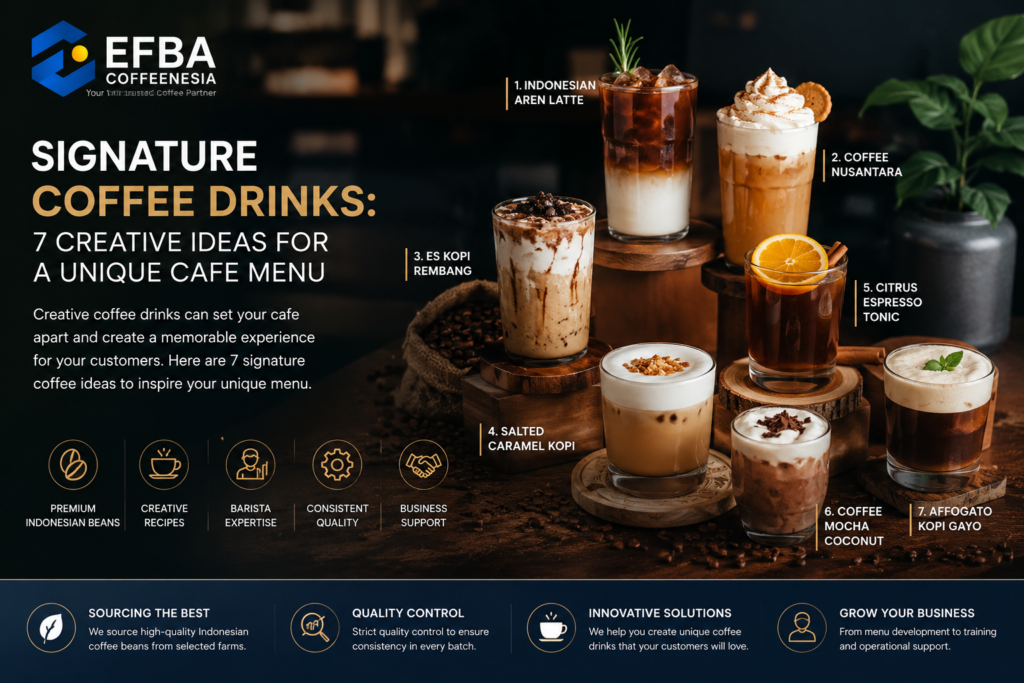
Coffee menus are no longer limited to espresso, cappuccino, americano, and cafe latte. Today, customers are increasingly interested in new flavors, creative presentations, and memorable drinking experiences. Therefore, cafes have an opportunity to develop signature coffee drinks that offer something different from standard menu options.
A signature drink is more than coffee with additional syrup. Instead, it combines coffee with carefully selected ingredients to create distinctive flavors, aromas, textures, and presentations. Citrus fruits, spices, coconut, sparkling water, herbs, and even cascara can transform familiar coffee into something completely different.
For cafe owners, developing signature coffee drinks can also strengthen brand identity. A unique recipe may eventually become a menu item that customers associate specifically with one cafe.
However, creating a good signature drink requires balance. Coffee should remain an important part of the flavor rather than being completely hidden by other ingredients.
In this guide, we explore seven creative ideas that cafes, baristas, and coffee enthusiasts can use as inspiration for developing a more distinctive coffee menu.
Table of Contents
ToggleWhat Are Signature Coffee Drinks?
Signature coffee drinks are beverages developed with distinctive recipes, flavor combinations, preparation methods, or presentations.
Unlike standard espresso-based beverages, signature drinks usually introduce additional ingredients that create a recognizable character. These ingredients may include fruit, herbs, spices, honey, sparkling water, coconut, or other complementary flavors.
For example, espresso can be combined with orange and tonic water to create a refreshing drink with bitterness, acidity, sweetness, and carbonation. Meanwhile, cold brew can be paired with coconut water to create a lighter tropical profile.
The goal is not simply to add as many ingredients as possible. Instead, every component should have a purpose.
As a result, successful signature coffee drinks allow customers to experience coffee from a different perspective while still recognizing its natural characteristics.
Why Should Cafes Create Signature Coffee Drinks?
A creative coffee menu can help a cafe differentiate itself in an increasingly competitive market.
Customers can find latte, cappuccino, and americano almost everywhere. Therefore, having several unique menu options gives customers another reason to choose a particular cafe.
Furthermore, signature coffee drinks can become part of a cafe’s identity. For example, one cafe may become known for tropical coffee beverages. Another may focus on coffee combined with Indonesian spices. Meanwhile, another business may specialize in refreshing sparkling coffee drinks.
There are several reasons why developing signature drinks can be valuable:
- Create menu differentiation. Unique recipes can distinguish a cafe from nearby competitors.
- Build brand identity. A recognizable drink can become closely associated with the cafe.
- Encourage customer curiosity. Unusual combinations encourage customers to explore something beyond their regular coffee order.
- Create seasonal opportunities. Signature beverages can be adjusted for seasons, events, or special campaigns.
- Explore coffee characteristics. Different ingredients can highlight fruity, chocolatey, nutty, spicy, or floral characteristics in coffee.
However, creativity should always be balanced with drinkability. A complicated recipe does not automatically create a better beverage. In fact, some of the best combinations are surprisingly simple.
1. Orange Espresso Tonic
Orange espresso tonic is a refreshing way to introduce customers to a different side of espresso.
The drink combines espresso with tonic water and citrus. As a result, it creates an interesting balance between bitterness, acidity, sweetness, and carbonation.
Orange works particularly well because citrus characteristics can complement naturally bright coffee. Therefore, this drink can become an interesting addition to a collection of signature coffee drinks.
How to Make Orange Espresso Tonic
Start by filling a glass with ice. Then, add chilled tonic water and a small amount of fresh orange juice or orange syrup.
Slowly pour a fresh espresso shot over the drink. Finally, an orange slice or peel can be added as a garnish.
A simple starting formula is:
- 1 shot espresso
- 100–120 ml tonic water
- 15–25 ml orange juice
- Ice
- Orange peel or slice
The exact ratio can be adjusted depending on the coffee.
For example, a naturally fruity coffee may require less orange. Meanwhile, a darker roast may benefit from slightly more citrus sweetness.
Therefore, baristas should experiment with different ratios before adding the drink to the permanent menu.
2. Coconut Cold Brew
Cold brew already has a naturally smooth and refreshing character. Adding coconut can introduce another layer of tropical flavor.
There are two main approaches to this drink.
First, coconut water can create a lighter and more refreshing beverage. Alternatively, coconut milk can create a richer and creamier texture.
Because of its versatility, coconut cold brew can become one of the easiest signature coffee drinks to customize according to a cafe’s identity.
Creating a Balanced Coconut Cold Brew
For a lighter version, combine:
- 100 ml cold brew coffee
- 60–80 ml coconut water
- Ice
- A small amount of coconut syrup if needed
The drink should remain coffee-forward. Therefore, avoid adding too much coconut syrup because excessive sweetness can hide the characteristics of the coffee.
For a creamier version, coconut milk can be used instead.
This variation creates a completely different drinking experience. Moreover, it may work particularly well with coffee containing chocolate, caramel, or nutty characteristics.
3. Pandan Coffee Latte
Pandan is widely recognized in Southeast Asian food and beverages. Its distinctive aroma can also create an interesting combination with coffee.
A pandan coffee latte combines espresso, milk, and pandan flavor. Consequently, the result can feel familiar yet modern, especially when the sweetness is carefully controlled.
This combination also provides cafes with an opportunity to incorporate regional flavors into modern signature coffee drinks.
How to Create Pandan Coffee
A simple version can use:
- 1 shot espresso
- 120–150 ml milk
- 10–15 ml pandan syrup
- Ice for an iced version
First, mix the pandan component with milk. Next, add ice and slowly pour the espresso over the mixture.
Alternatively, the ingredients can be shaken together for a more consistent flavor.
The key is moderation. Too much pandan can overpower the coffee. Therefore, the ideal recipe should allow both the espresso and pandan aroma to remain noticeable.
For cafes in Indonesia, this combination offers an opportunity to transform a familiar local flavor into a contemporary coffee beverage.
4. Honey Cinnamon Latte
Honey and cinnamon are simple ingredients, but they can completely change the character of a traditional latte.
Honey provides sweetness with a different flavor profile compared with regular sugar syrup. Meanwhile, cinnamon adds warmth and aromatic complexity.
Together, they create one of the easiest signature coffee drinks to introduce to a cafe menu.
Making a Honey Cinnamon Latte
A basic recipe can include:
- 1 shot espresso
- 120–150 ml milk
- 10–15 ml honey
- A small amount of cinnamon
First, mix the honey with warm espresso. Afterward, add steamed milk and finish with a small amount of cinnamon.
For an iced version, dissolve the honey into espresso before adding milk and ice.
Different types of honey may also produce different flavors. Therefore, cafes can experiment with locally sourced honey to create a more distinctive recipe.
However, cinnamon should be used carefully. Too much can dominate the aroma and make the coffee less noticeable.
5. Ginger Spice Coffee
Coffee and spices have a long history together in different cultures.
Ginger provides warmth, mild spiciness, and a strong aroma that can complement certain coffee profiles. Furthermore, additional spices such as cinnamon or cardamom can be introduced in small amounts to create greater complexity.
For cafes interested in exploring regional flavors, ginger spice coffee can become an interesting addition to a selection of signature coffee drinks.
Developing a Ginger Coffee Recipe
A cafe can start with:
- 1 shot espresso
- 100–120 ml milk
- Ginger syrup
- A small amount of cinnamon or cardamom
- Ice or steamed milk depending on serving style
The ginger component should provide warmth without becoming aggressively spicy. Meanwhile, other spices should remain supporting flavors.
This type of drink can be particularly interesting for cafes that want to incorporate Indonesian or Asian flavor inspiration into a modern coffee menu.
The recipe can also be developed into seasonal variations. For example, a warm ginger coffee can provide a comforting experience. In contrast, an iced ginger latte offers something lighter and more refreshing.
6. Cascara Coffee Fizz
One of the more interesting ways to expand a coffee menu is by exploring more than the roasted coffee bean.
Cascara is the dried outer layer of the coffee cherry. When brewed, it can produce a beverage with characteristics that may remind drinkers of fruit or tea rather than conventional roasted coffee.
Therefore, cascara can become an interesting ingredient for developing creative signature coffee drinks.
Creating Cascara Coffee Fizz
A simple concept can combine:
- Chilled cascara infusion
- Sparkling water
- Citrus
- Ice
- A small amount of syrup if needed
First, prepare the cascara infusion and allow it to cool.
Next, add it to a glass filled with ice. Then, add citrus and sparkling water before gently mixing the drink.
For a more coffee-forward variation, a small amount of espresso can also be introduced.
However, espresso should be tested carefully because it can quickly dominate the more delicate cascara characteristics.
The result is a refreshing beverage that provides customers with another perspective on the coffee fruit.
7. Tropical Coffee Mocktail
Coffee does not always have to be creamy, hot, or milk-based.
A coffee mocktail can combine coffee with fruit, acidity, sweetness, herbs, and carbonation to create an entirely different experience.
Tropical fruits are particularly interesting because they provide bright flavors that can complement certain coffees.
Possible ingredients include orange, pineapple, passion fruit, coconut, lemon, and lime.
If you enjoy experimenting with fruit-based coffee, discover more ideas in our guide to making fruity coffee at home.
Creating a Tropical Coffee Mocktail
One possible combination uses:
- 1 shot espresso
- 50 ml pineapple juice
- 15 ml passion fruit syrup
- 60–80 ml sparkling water
- Ice
First, add the fruit components and ice. Then, pour in the sparkling water.
Finally, slowly add espresso to create a layered presentation.
The recipe should be adjusted according to the characteristics of the coffee.
A bright, fruity coffee may integrate naturally with tropical flavors. Conversely, heavily roasted coffee may produce stronger bitterness.
Therefore, choosing the right coffee is just as important as selecting additional ingredients.
Choosing the Right Coffee for Signature Drinks
Choosing the right coffee is essential when developing signature coffee drinks.
Not every coffee works equally well with fruit, spices, milk, or sparkling ingredients. Therefore, baristas should understand the basic characteristics of each coffee before developing a recipe.
Coffee may present different characteristics depending on origin, variety, processing method, roast level, and brewing technique.
For example, coffee with fruity characteristics may work particularly well with citrus or tropical fruit. Meanwhile, chocolate and nutty profiles may pair naturally with milk, coconut, honey, or spices.
The roast level also matters.
A very dark roast can dominate delicate ingredients. Conversely, a lighter roast may introduce acidity that needs to be balanced carefully.
Therefore, recipe development should begin with the coffee itself. Taste the coffee first. Then, identify ingredients that can complement or contrast its characteristics.
Balance Is More Important Than Complexity
Balance is one of the most important elements of successful signature coffee drinks.
One common mistake when creating signature beverages is using too many ingredients. More ingredients do not necessarily produce a more interesting drink.
In fact, excessive flavors can make it difficult for customers to recognize the coffee.
A useful approach is to identify three main elements:
- Coffee character
- Primary complementary flavor
- Supporting element
For example, an orange espresso tonic uses espresso as the base, orange as the primary complementary flavor, and tonic water as the supporting element.
This simple structure can make recipe development easier.
Additionally, each ingredient should have a clear purpose. If removing an ingredient does not significantly change the experience, that ingredient may not be necessary.
How to Develop a Signature Coffee Menu
Developing signature coffee drinks requires more than creating one interesting recipe.
A cafe should build a menu where every beverage provides a different experience while maintaining a consistent brand identity.
For example, a balanced menu might include:
- One fruity coffee drink
- One creamy signature latte
- One sparkling coffee
- One spice-based drink
- One cold brew creation
- One coffee mocktail
- One seasonal or experimental beverage
This approach creates variety without making the menu confusing.
Furthermore, cafes should consider operational efficiency.
A drink may taste excellent but become difficult to serve during busy hours if it requires too many preparation steps.
Therefore, recipe development should consider both flavor and workflow.
Presentation Matters for Signature Coffee Drinks
Customers experience beverages with their eyes before tasting them. For that reason, presentation can strengthen the identity of signature coffee drinks.
However, presentation does not need to be complicated.
A simple orange peel, cinnamon dust, dried fruit, clear glass, or layered appearance may be enough to create visual interest.
The serving glass should also match the drink.
Sparkling coffee, for example, can look more appealing in a tall transparent glass. Meanwhile, a warm spice latte may benefit from a simpler presentation that emphasizes aroma.
Most importantly, presentation should remain practical and consistent. Customers should receive approximately the same experience every time they order the drink.
Testing Signature Coffee Drinks Before Adding Them to the Menu
Before adding new signature coffee drinks to the permanent menu, test each recipe several times.
Small adjustments to coffee, sweetness, acidity, and complementary ingredients can significantly change the final result.
First, prepare different versions with slightly different ingredient ratios.
Then, compare sweetness, acidity, bitterness, aroma, texture, and coffee intensity. Afterward, ask several people to taste the drinks without explaining which version is expected to be better.
Their feedback can provide valuable information.
Cafe owners should also calculate ingredient cost and preparation time. A creative beverage should still make sense from an operational and business perspective.
Therefore, the final recipe needs to balance three elements: flavor, consistency, and practicality.
Using Indonesian Coffee for Signature Drinks
Indonesia offers a diverse coffee landscape, making it particularly interesting for creative beverage development.
Different origins can provide different sensory characteristics. Therefore, cafes can experiment with Indonesian coffee when developing signature coffee drinks.
Rather than treating coffee simply as a caffeine base, baristas can design recipes around its natural characteristics.
For example, a brighter coffee can inspire a refreshing fruit-based beverage. Meanwhile, coffee with deeper chocolate or spice characteristics can become the foundation for a creamy or spice-forward drink.
This approach creates a stronger connection between the coffee and the final beverage.
For additional information about coffee production and the global coffee sector, you can explore resources from the International Coffee Organization.
Moreover, using Indonesian coffee can provide customers with an opportunity to discover different coffee characteristics through a more approachable format.
From Creative Drink to Cafe Identity
The strongest signature coffee drinks can eventually become part of a cafe’s identity.
Customers may initially visit because they are curious about an unusual combination. However, they may return because they cannot easily find the same experience somewhere else.
Therefore, a cafe should not only ask, “What unusual ingredients can we add to coffee?”
A better question is, “What kind of coffee experience do we want customers to remember?”
That question changes the recipe development process.
Instead of following every trend, cafes can create drinks that reflect their own identity.
For one cafe, that identity might involve Indonesian tropical ingredients. For another, it could focus on coffee and spices. Others may specialize in sparkling coffee or coffee mocktails.
A clear direction can eventually create a more recognizable menu.
Explore More Coffee Ideas with Coffeenesia
Creating memorable signature coffee drinks starts with understanding the natural character of coffee and combining it with complementary ingredients.
Therefore, cafes can experiment with fruit, spices, coconut, honey, or sparkling ingredients to create distinctive flavors.
Developing signature coffee drinks also requires careful attention to sweetness, acidity, aroma, and texture.
For more inspiration, explore our guide to making fruity coffee at home.
Additionally, you can learn more about the global coffee industry through the International Coffee Organization.
Ultimately, creative signature coffee drinks can help cafes build a stronger identity. Moreover, well-balanced signature coffee drinks can encourage customers to explore new flavors.
By continuously testing new combinations, cafes can develop signature coffee drinks that are distinctive, enjoyable, and memorable.
Conclusion
Signature drinks provide an opportunity to make a cafe menu more distinctive.
Orange espresso tonic offers a refreshing combination of coffee, citrus, and carbonation. Coconut cold brew introduces tropical characteristics, while pandan coffee creates a connection between familiar regional flavors and modern cafe culture.
Meanwhile, honey cinnamon latte and ginger spice coffee demonstrate how simple ingredients can transform a traditional coffee beverage.
Cascara fizz provides another perspective on the coffee fruit, while tropical coffee mocktails show how coffee can move beyond conventional serving styles.
Ultimately, successful signature coffee drinks combine creativity with balance.
Coffee should remain recognizable, complementary ingredients should have a clear purpose, and every drink should provide an experience customers want to enjoy again.
For cafes, this balance can transform creative signature coffee drinks into something much more valuable: memorable beverages that customers associate with the brand.
Frequently Asked Questions
What are signature coffee drinks?
Signature coffee drinks are beverages created with distinctive recipes, ingredients, preparation methods, or presentations. They are usually designed to provide an experience that customers cannot easily find on a standard coffee menu.
Why should cafes offer signature coffee drinks?
Signature coffee drinks can help cafes differentiate their menus, strengthen brand identity, and encourage customers to explore new flavors. A memorable signature drink may also give customers another reason to return.
What ingredients can be combined with coffee?
Coffee can be combined with ingredients such as orange, coconut, pandan, honey, cinnamon, ginger, cardamom, tonic water, sparkling water, and tropical fruits. However, each ingredient should complement the characteristics of the coffee.
Can fruit be mixed with coffee?
Yes. Citrus and tropical fruits can work particularly well with certain coffees. Orange, pineapple, passion fruit, lemon, and coconut are some options worth experimenting with.
What coffee is best for signature drinks?
It depends on the recipe. Fruity coffees may work well with citrus and tropical ingredients. Meanwhile, chocolate or nutty coffees can pair well with milk, honey, coconut, and spices.
How do cafes create signature coffee drinks?
Start by understanding the coffee’s flavor profile. Then, choose one primary complementary ingredient and a supporting element. Finally, test several ratios until coffee, sweetness, acidity, aroma, and texture feel balanced.
Can cascara be used in signature beverages?
Yes. Cascara can be brewed and combined with ingredients such as citrus and sparkling water to create refreshing beverages. It can also be explored alongside espresso for more experimental recipes.
How many signature drinks should a cafe have?
There is no fixed number. However, a smaller selection of carefully developed drinks is often more effective than offering many similar beverages. Each drink should provide a distinctive experience and remain practical for baristas to prepare consistently.
What makes a signature coffee drink successful?
Successful signature coffee drinks balance creativity, flavor, presentation, consistency, and practicality. Most importantly, the additional ingredients should complement the coffee instead of completely hiding its character.