
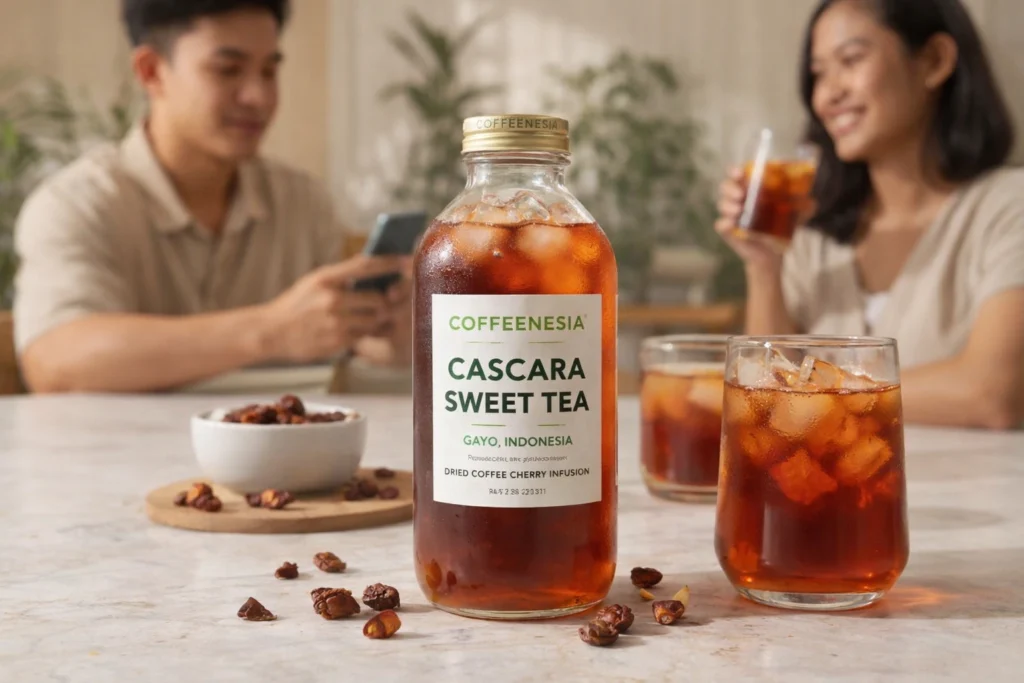
Cascara Sweet Tea is a 90% natural caffeine-light herbal drink that introduces a refreshing way to experience the coffee fruit beyond the bean. Instead of focusing on roasted coffee, this beverage highlights the dried husk of the coffee cherry, carefully processed to preserve its vibrant character and nutritional potential. In recent years, Cascara Sweet Tea has gained international recognition as a clean-label alternative to conventional tea and high-caffeine drinks. It offers gentle energy, layered flavor, and authentic origin value.
Origin and Gayo Heritage
Farmers in the Gayo highlands cultivate Arabica coffee at elevations between 1,200 and 1,700 meters above sea level, and that altitude directly shapes the quality of the coffee fruit used for Cascara Sweet Tea. Because the cool mountain climate slows cherry maturation, natural sugars concentrate more fully inside the pulp. As a result, when producers transform the dried husk into Cascara Sweet Tea, they preserve subtle sweetness and refined acidity that distinguish Gayo origin cascara from lower-altitude alternatives. This connection between terroir and final cup character strengthens the authenticity narrative that global buyers value.
During harvest, farmers handpick only fully ripe red cherries to protect flavor consistency. Immediately after pulping, they separate the outer skin and fruit layer, then dry it carefully under controlled sunlight with proper airflow. They monitor moisture levels closely and prevent contamination through disciplined handling. Through this process, Cascara Sweet Tea retains its natural aromatic compounds without relying on artificial enhancement. Moreover, by utilizing the coffee fruit husk, producers reduce agricultural waste and create additional revenue streams for farming communities. According to the International Coffee Organization at https://www.ico.org, sustainable value chain practices now emphasize by-product innovation, and cascara perfectly illustrates that shift.
Through structured supply management, Coffeenesia connects Gayo producers with international markets while maintaining traceability and quality assurance.
Flavor Profile and Sensory Character
Many first-time drinkers expect a beverage similar to brewed coffee, yet the sensory profile of Cascara Sweet Tea tells a completely different story. Although it originates from the coffee cherry, it does not carry roasted bitterness. Instead, it presents a bright reddish amber infusion with layered notes of dried cherry, hibiscus, honey, rosehip, and light tamarind. Because Gayo’s volcanic soil and high elevation nurture balanced fruit development, the resulting Cascara Sweet Tea expresses clarity and a clean finish rather than heavy tannin.
When brewed with precision, usually five to seven grams steeped in hot water for several minutes, the aroma opens with floral tones before revealing soft caramel sweetness. This complexity allows beverage developers to position Cascara Sweet Tea as both a standalone herbal infusion and a base for creative drinks. Compared with traditional black tea or high-caffeine coffee, cascara provides gentler stimulation. The Specialty Coffee Association at https://sca.coffee highlights the increasing global interest in diversified coffee fruit products, and Cascara Sweet Tea aligns with that movement.
Furthermore, its natural sweetness reduces the need for added sugar, which strengthens its appeal in health-conscious markets. Cafés often serve it iced with citrus slices or sparkling water, while wellness brands incorporate it into functional beverage lines. Consequently, Gayo Cascara Sweet Tea appeals to tea enthusiasts, coffee lovers, and consumers seeking innovative botanical drinks.
Cascara Sweet Tea Nutritional Content and Health Potential
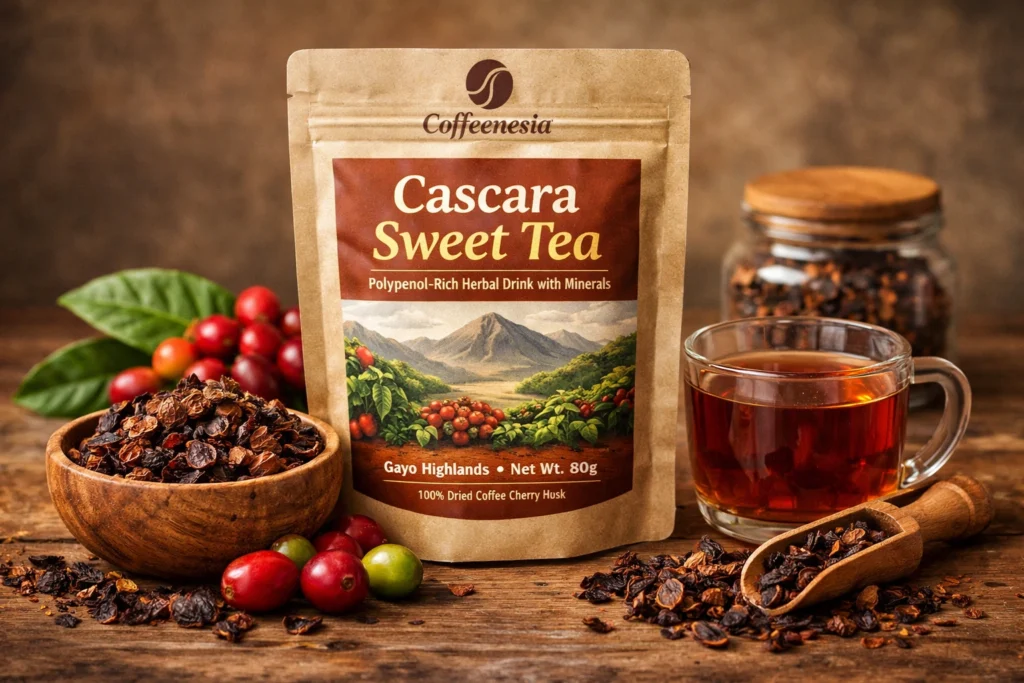
The nutritional potential of Cascara Sweet Tea continues to attract researchers and functional beverage developers. Because it derives from the coffee fruit husk, it naturally contains antioxidants such as polyphenols and chlorogenic acids. These compounds support the body’s ability to manage oxidative stress. Research indexed through PubMed at https://pubmed.ncbi.nlm.nih.gov discusses bioactive elements present in coffee fruit components, reinforcing interest in cascara as more than a simple infusion.
In addition to antioxidant properties, Cascara Sweet Tea delivers mild caffeine content that offers gentle alertness without overstimulation. Many consumers prefer moderate energy sources that help them maintain focus while avoiding the jittery sensation often associated with strong coffee. Since Cascara Sweet Tea contains lower caffeine than roasted beans, it fits perfectly into balanced lifestyle routines. At the same time, it contributes trace minerals and natural plant compounds derived directly from the fruit pulp.
Importantly, cascara production supports circular agriculture. Instead of discarding coffee husk as waste, producers convert it into a valuable herbal commodity. The Food and Agriculture Organization at https://www.fao.org emphasizes value-added processing as a strategy to enhance farmer income and reduce environmental burden. Through Cascara Sweet Tea, Gayo farmers strengthen economic resilience while meeting modern consumer expectations for sustainability and wellness-oriented beverages.
Cascara Sweet Tea Processing Standards and Quality Control
High-quality Cascara Sweet Tea depends on disciplined processing from the moment farmers separate the fruit skin. Producers dry the husk until moisture levels fall below safe thresholds, typically under twelve percent, to ensure stability during storage and export. They continuously turn the cascara under sunlight to promote even drying and prevent mold development. By maintaining hygienic conditions, they protect both flavor integrity and food safety.
After drying, workers sort the cascara manually or mechanically to remove defects and foreign materials. They store the finished product in clean facilities with controlled humidity. Packaging often includes food-grade liners inside sturdy cartons or vacuum-sealed bags, depending on buyer requirements. Through these steps, processors preserve aroma, color, and structural quality during international shipment. European importers frequently review compliance guidelines through the European Commission food safety portal at https://food.ec.europa.eu, and Gayo Cascara Sweet Tea aligns with these regulatory expectations.
Traceability strengthens buyer confidence even further. Each batch connects to a harvest period and origin zone, allowing importers to verify documentation and quality consistency. For beverage manufacturers, predictable cut size and stable moisture content simplify extraction control during brewing trials. As a result, Cascara Sweet Tea from Gayo transitions smoothly from farm-level innovation to export-ready herbal commodity without compromising safety or flavor performance.
If you wish to discuss specifications, packaging formats, or volume inquiries directly, you can contact our team via WhatsApp at https://wa.me/6285285469417 for prompt assistance.
Applications in Modern Beverage Innovation
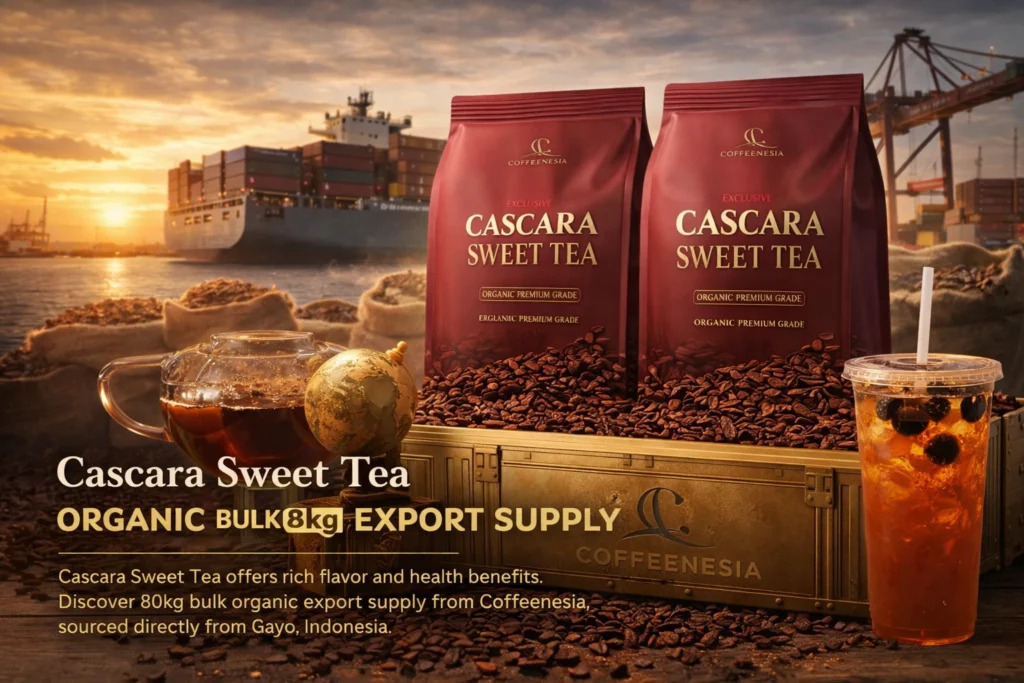
Across global markets, Cascara Sweet Tea now occupies a unique position between traditional tea and specialty coffee. Beverage brands value its flexibility because it adapts easily to hot infusion, cold brew, and ready-to-drink formulations. When companies develop bottled beverages, they often combine Cascara Sweet Tea with sparkling water, citrus extracts, or botanical infusions to create refreshing functional drinks.
Mixologists also experiment with cascara syrup derived from concentrated Cascara Sweet Tea. They blend it into craft mocktails and cocktails where fruity acidity enhances flavor complexity. Meanwhile, culinary innovators use cascara reduction in desserts, yogurt toppings, and baked goods. Because it retains subtle sweetness and bright character, it complements both savory and sweet applications.
Health-focused brands increasingly explore powdered cascara formats for nutraceutical blends. Although whole husk remains most common, fine grinding expands product possibilities. As plant-based beverage demand continues to grow, Cascara Sweet Tea provides a compelling origin story rooted in Gayo heritage. By pairing Indonesia’s reputable highland agriculture with disciplined processing, Coffeenesia offers global buyers a differentiated commodity that meets sustainability, functionality, and premium positioning criteria in competitive international markets.
To learn more about Coffeenesia’s origin commitment and broader portfolio, visit https://coffeenesia.id and explore Coffeenesia coffee from Gayo. For deeper insight into Cascara Sweet Tea and its direct connection to Gayo coffee heritage, you can also read https://coffeenesia.id/coffeenesia-coffee-from-gayo/ Cascara Sweet Tea.
FAQ Cascara Sweet Tea
- How should buyers store Cascara Sweet to maintain its quality?
To preserve freshness, buyers should store Cascara Sweet Tea in an airtight container away from direct sunlight, humidity, and strong odors. Ideally, maintain room temperature below 25°C with low moisture exposure. Because cascara absorbs surrounding aromas easily, sealed packaging protects its natural fruity profile. For long-term storage, use food-grade liners or vacuum packaging to retain aroma stability and prevent oxidation. - Can Cascara Sweet support private label beverage development?
Yes, Cascara Sweet Tea works well for private label concepts. Since it offers a unique origin story from Gayo, brands can position it as a premium botanical infusion. Moreover, its mild caffeine content allows companies to target wellness-oriented consumers. Producers can adjust cut size, packaging format, and volume specifications to match specific formulation and branding strategies. - Is Cascara Sweet Tea suitable for cold brew extraction?
Absolutely. In fact, cold brewing enhances its fruity brightness while reducing perceived acidity. To prepare it, steep cascara in cold filtered water for 8 to 12 hours under refrigeration. This method creates a smooth, refreshing base suitable for ready-to-drink beverages or sparkling infusions without overpowering sweetness. - What certifications can support Cascara Sweet export?
Exporters may pursue food safety certifications such as HACCP or ISO standards to strengthen international trust. Additionally, depending on target markets, organic certification or laboratory residue testing can enhance competitiveness. These measures help importers meet regulatory and retail compliance requirements efficiently. - Does Cascara Sweet Tea contain added sugar or artificial flavoring?
No, Cascara Sweet Tea contains no added sugar or synthetic flavoring. Its subtle sweetness comes naturally from the dried coffee fruit husk. Therefore, brands can confidently market it as a clean-label ingredient that aligns with current global demand for minimally processed beverages.